

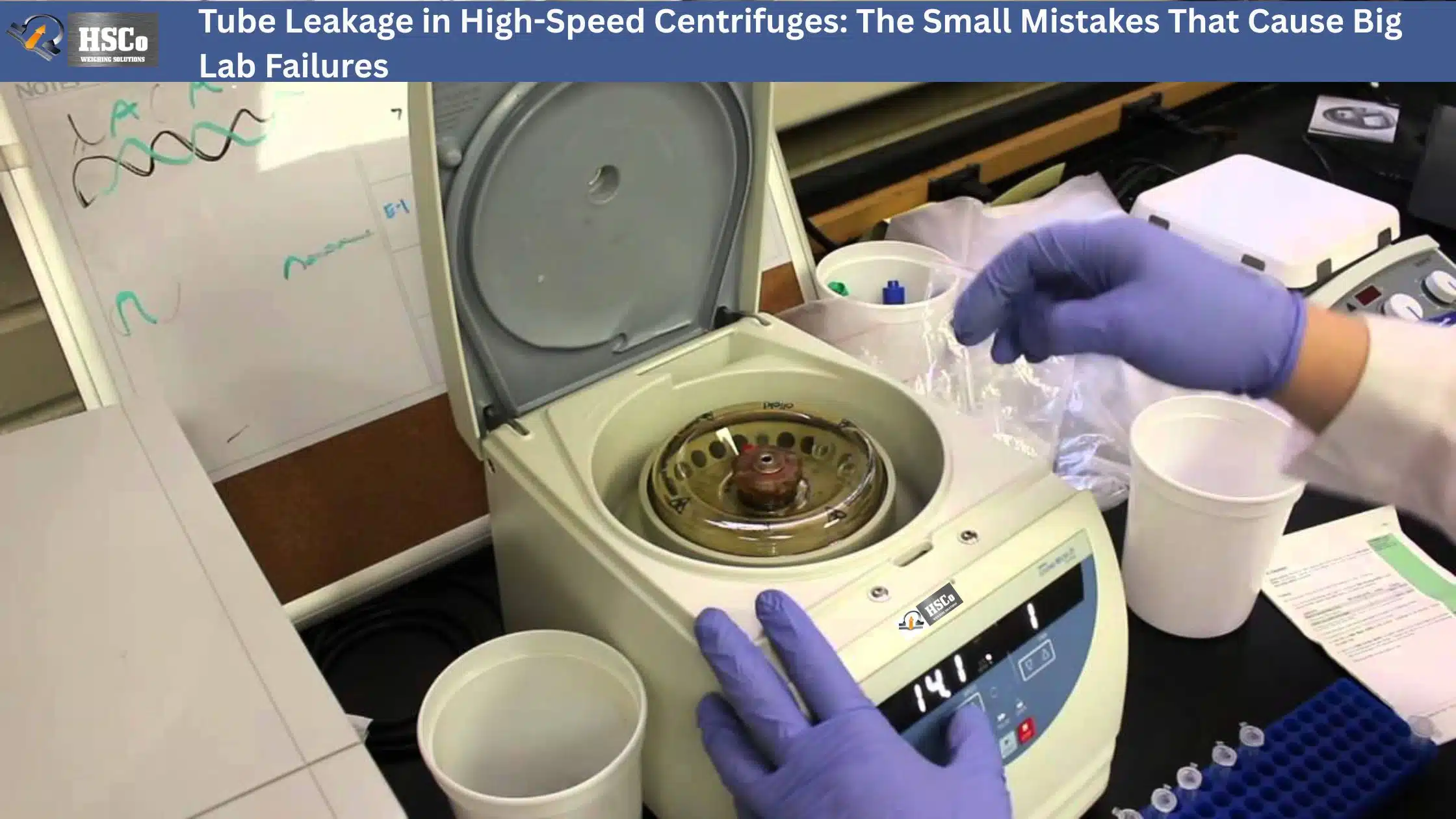
You know how annoying and scary tube leakage can be if you’ve ever opened a centrifuge and found liquid where it shouldn’t be. A small crack or bad setup in a high-speed centrifuge can quickly lead to a broken tube, dirty samples, and lost time. This isn’t just a problem in busy labs. It’s a problem with safety and dependability.
High-speed centrifuges from HSCo
HSCo's centrifuge range includes refrigerated models. Compare the listed instruments and ask the team to confirm the rotor, speed and sample capacity for your work. See HSCo centrifuges
The good news is? You can stop most tube leaks and breaks from happening. You can avoid most problems completely by choosing the right tubes, developing good habits, and paying attention before each run. Let’s talk about what makes tubes fail and how to stop them from happening.
What Causes Tube Leaks and Breaks in the First Place
Centrifuges that spin quickly put a lot of stress on tubes. When something goes wrong, it’s usually not random; it’s because of a small mistake that builds up under pressure.
Some common reasons are:
- Using tubes that aren’t rated for speed or force
- Putting too much or too little in tubes
- Tubes that are old or broken
- Using the wrong rotor or adapter
- Bad balancing.
Knowing these basics makes it much easier to stop things from happening.
Pick the Right Tubes for Fast Use
Not All Tubes Are the Same
Using “whatever tube is available” is one of the most common mistakes in labs. You might be able to get away with that at low speeds. You won’t be at high speeds.
Always make sure that your tubes are:
- Rated for the highest RPM or RCF that your centrifuge can handle
- Works with the type of rotor you have
- Made from materials that work well with your sample, like polypropylene, polycarbonate, and so on.
Check the Age of the Tube
Plastic tubes don’t last forever. Even though they look fine, they can become brittle over time.
As a general rule:
- Don’t use disposable tubes more than once.
- Keep track of how many times reusable tubes are used.
- Throw away tubes that have even the smallest cracks or cloudiness.
If you’re not sure, get a new one. A new tube costs a lot less than a broken centrifuge.
Always Fill Tubes the Right Way
Overfilling Is a Big Risk
When tubes are too full, the pressure builds up and the liquid can’t go anywhere. A lot of the time, that pressure gets out through the cap or the wall of the tube.
To stop this:
- Leave recommended space at the top
- Follow the fill limits set by the maker
- Handle viscous samples with extra care
Not Filling Enough Can Be a Problem Too
It’s surprising, but tubes that aren’t full can also break. If the tube doesn’t have enough support inside, it could collapse or change shape at high speeds.
Every time you run, make sure the tubes are balanced and full.
Balance Is Not Optional It’s Necessary
If you need a balance tube, fill it with a liquid that is as close to the sample’s density as possible. Water works in a lot of cases, but not all of them.
Use the Right Rotor and Adapters
Match the Tubes to the Rotor Design
If a tube fits loosely in an adapter, it’s going to cause problems. Moving while spinning raises the chance of cracks and leaks.
Always make sure:
- Adapters fit tubes tightly
- The adapters are clean and in good shape
- The rotor type fits the length and shape of the tube
Check Adapters Often
Just like tubes, adapters can wear out. Check for:
- Changing shape
- Cracks
- Rough edges.
If you push on a broken adapter, it can cut into a tube.
Be Careful When Setting Speed and Acceleration
Faster Isn’t Always Better
Running at full speed all the time puts more stress on the tubes. Don’t use it if your protocol doesn’t need it to go as fast as possible.
Think about:
- Using the lowest RCF or RPM that works
- Speeding up and slowing down slowly
- If you can, don’t brake suddenly
Gentler settings make tubes last longer and lower the risk of failure.
Chemical and Temperature Compatibility Are Important
Cold Can Make Some Plastics Break
When the temperature drops, some plastics in refrigerated centrifuges become less flexible. That makes it more likely that they will break.
Always make sure that tubes are:
- Rated for the range of temperatures you’re using
- Works well in frozen or almost frozen conditions
Be Careful of Chemical Reactions
Some solvents, reagents, or buffers can make plastic weaker over time. Before the run, make sure the tubes are compatible with the harsh chemicals you’re using.
Make It a Habit to Check Things Before You Run
Most problems can be avoided with a quick check before each run.
Before you start the centrifuge:
- Look for cracks or other problems in the tubes
- Make sure the caps or seals are tight and not broken
- Check that the tube is in the right place
- Check that the rotor lid is tight
This takes less than a minute and can save you hours of cleaning and downtime.
If a Tube Leaks or Breaks, Here’s What to Do
Things can still go wrong, even when you take precautions. When they do:
- Stop the centrifuge in a safe way
- Follow the rules for spills and biohazards in your lab
- Clean and sanitize the rotor and chamber
- Check the rotor for damage before using it again
Don’t ever ignore a leak. Leftover residue can cause corrosion or an imbalance in future runs.
A Little Mistake Can Have Big Effects in Real Life
To save money, a clinical lab once used tubes “just one more time.” A hairline crack that couldn’t be seen formed in one tube. It broke during a high-speed run, which contaminated the rotor and delayed testing for half a day.
The problem went away completely when they switched to a strict policy of replacing tubes. Sometimes it’s that easy to stop something from happening.
Conclusion
It’s not always a problem when tubes leak or break in high-speed centrifuges. Most of the time, they’re caused by small problems that can be fixed, like using the wrong tubes, not balancing them properly, or setting them up too quickly.
You can keep your samples, your centrifuge, and your team safe by picking the right tubes, filling and balancing them correctly, checking your equipment often, and following speed limits. A few simple habits can make your centrifuge runs much safer and smoother.
What is the most common reason for tubes to break in centrifuges?
The most common reason is using tubes that aren’t rated for high speed or RCF.
Is it safe to use centrifuge tubes again?
If the manufacturer says it’s okay, you can use reusable tubes again. However, you should check them carefully and replace them after a certain number of cycles.
Does balancing by volume work?
Weighing is a better way to balance, especially for fast runs or samples that are very dense.
Do refrigerated centrifuges leak more often?
They can be, especially if the tubes aren’t rated for low temperatures or get brittle when it’s cold.
What should I do if a tube breaks while I’m running?
Stop the centrifuge safely, follow spill procedures, clean it well, and check the rotor before using it again.