

It may seem easy to choose a viscometer, but when you’re in a lab trying to decide between a keypad-based model and a touchscreen model, it can be hard. Both measure viscosity accurately, but how you use them can make a big difference in how you work in the lab every day.
Compare keypad and touchscreen models
Both types are in HSCo's density and viscosity meter range. See the models side by side and ask for a quotation for the one that fits your lab. See both viscometer types
So, which one is best for your lab? The answer depends on how you work, who uses the tools and what kind of results you want. Let’s understand this in a simple and useful way.
What Is a Viscometer in Simple Terms?
A viscometer tells you how thick or thin a liquid is. Think about honey and water. Viscometers are used in labs to test:
- Coatings and paints
- Lubricants and oils
- Food items like sauces or syrups
- Drugs and chemicals
Accuracy is important, but so is how easy it is to use, especially in busy labs.
Keypad Viscometers: What They Are
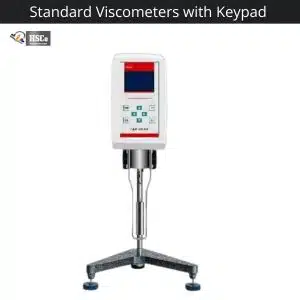
You can use the physical buttons on a keypad viscometer to change settings, start tests, and see results. They’ve been around for a long time and are still popular.
Why Labs Still Use Keypad Models
Keypad viscometers are known for being easy to use and dependable. Some of the main benefits are:
- Simple to use, even for people who have never used it before
- Gloves work well with physical buttons
- Not as sensitive to spills, dust, or moisture
- Most of the time, less expensive.
Operators in a lot of quality control labs do the same test over and over. They can do this quickly with a keypad model without having to go through menus.
When a Keypad Viscometer Is Useful
- Testing with a lot of samples
- Labs with staff that rotates or isn’t well-trained
- Dusty or vibrating industrial settings
- Setups that don’t cost a lot
Touchscreen Viscometers: What They Are

Touchscreen viscometers have a digital display, like a smartphone or tablet. You can get to settings, test programs, and data by touching.
Why Touch Screens Are Becoming More Popular
Touchscreen models are all about making things easier and more flexible. Some benefits are:
- A clear, modern interface
- Simple choice of method and setting of parameters
- Graphs and data storage built in
- Making reports faster
Touchscreens make it easier to change methods and keep track of trends in research labs or for advanced testing.
When Choosing a Touchscreen Viscometer Is a Better Option
- R&D or formulation labs
- Labs that use more than one test method
- When it’s important to log and export data
- Facilities that want to go paperless
Keypad vs. Touchscreen: A Side-by-Side Look
Simple to Use
- Keypad: Easy to use and understand
- Touchscreen: Easy to use, but you might need a little training
Lasting Power
- Keypad: Strong and long-lasting
- Touchscreen: Needs to be handled with care
How Fast It Works
- Keypad: Faster for tests that are the same over and over
- Touchscreen: Better for tests that are hard or have a lot of different parts.
Data Handling
- Keypad: Shows basic results
- Touchscreen: Advanced storage, charts, and exports
Cost
- Keypad: Usually lower initial cost
- Touchscreen: More features, higher price
Which One Is Easier for Your Team?

Here’s an easy way to make a choice:
Choose a Keypad Viscometer If:
- Your team likes things to be simple
- Tests are the same every time and are done the same way
- Most of the time, operators wear gloves
- The lab is a tough place to work
Choose a Touchscreen Viscometer If:
- You have to test different products or use different methods
- It’s important to be able to trace data
- You want to see results and look at trends
- Your lab is clean and has a good temperature
Tip: Don’t Just Think About Today
It’s easy to decide based on what you need right now, but think ahead. Ask yourself:
- Will testing get harder in the future?
- Will the requirements for audits get stricter?
- Do new employees need to learn things faster?
A keypad model might work for you now, but a touchscreen model might help you grow later.
Conclusion
Keypad and touchscreen viscometers are both great tools; they just work better in different types of labs. If your lab needs something that works well and is easy to use, a keypad viscometer is a good choice. A touch screen viscometer will feel like a natural upgrade if you need something that is flexible, can handle a lot of data, and is easy to use. Not just your budget, but also your workflow, should be the most important thing to think about when making a decision.
FAQs
Do touchscreen viscometers work better than keypad models?
No. The interface doesn’t affect accuracy; the measurement system does. Both can give you exact results.
Do touchscreen viscometers need more care?
They don’t need to be calibrated again, but the screen should be kept clean and safe from spills.
Can keypad viscometers keep track of data?
Basic models show results on the screen, but advanced keypad models may be able to store a small amount of data.
What kind is best for labs that make things?
Keypad viscometers are often the best choice for factories because they are fast and last a long time.
Is it harder to train touchscreen viscometers?
Not really. Most people get used to it quickly, especially if they already know how to use a smartphone or tablet.