

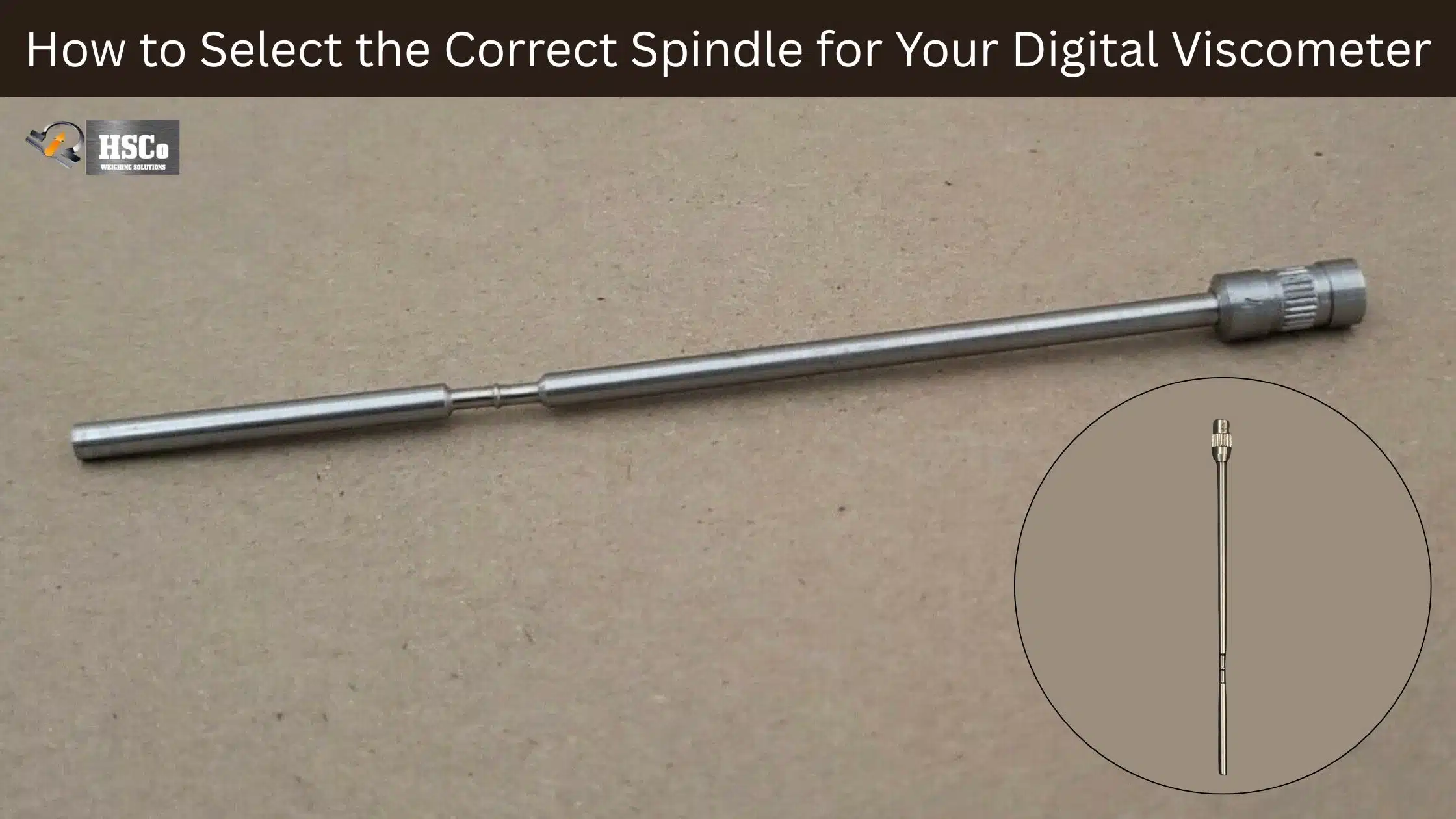
If you’ve ever used a digital viscometer, you already know this truth: the spindle you choose can make or break your test. Many customers assume the viscometer alone decides accuracy, but in real lab conditions, that’s only half the story. The spindle plays just as big a role in delivering reliable results. At HSCo, we often hear from customers who are confident in their instrument but confused by unstable or unexpected readings. In most cases, the issue isn’t the viscometer it’s the spindle selection. Pick the wrong one, and even the best digital viscometer will give confusing or misleading results.
See HSCo viscometers and spindles
HSCo's keypad and touchscreen viscometers are listed under density and viscosity meters. See the models and ask which spindle set your samples need. See HSCo viscometers
So let’s clear the confusion once and for all simply, practically, and without heavy technical talk.
What Is a Spindle, and Why Does It Matter?
A spindle is the rotating part of the viscometer that moves through the liquid during testing. As it turns, the liquid resists that motion. The viscometer measures this resistance and converts it into a viscosity value.
Think of it like stirring liquids at home:
- Stir water with a spoon. It moves easily.
- Stir the honey and it resists the spoon.
Different spindles are like different spoon shapes. Each one is designed to handle a certain thickness range. Using the right spindle keeps readings stable, accurate, and repeatable.
Why Spindle Selection Confuses So Many Users
Spindle selection isn’t always explained clearly. Many users ask:
- Why do I get fluctuating readings?
- Why does my viscometer show overload or zero torque?
- Why do two labs get different results on the same sample?
In most cases, the answer is simple: the spindle doesn’t match the viscosity of the sample.
Start with the Viscosity Range of Your Sample
Know Your Liquid First
Before choosing a spindle, you need a rough idea of how thick your sample is.
- Low viscosity: water, solvents, thin oils
- Medium viscosity: syrups, shampoos, coatings
- High viscosity: gels, creams, pastes centrifuge stopped in the middle of a cycle. for production
If you don’t know the range, start with a general-purpose spindle and adjust based on the torque reading.
Understanding Torque: The Key to Accuracy
Torque is the resistance the spindle feels while rotating. For most digital viscometers, the ideal torque range is between 10% and 90%.

What Happens Outside This Range?
- Below 10%: readings may jump or feel unstable
- Above 90%: the viscometer may overload or stop
If you’re outside this range, change the spindle not the speed first.
Different Types of Spindles and When to Use Them

Cylindrical Spindles That Are Standard
These are the spindles that people use the most.
Best for:
- Testing in a lab
- Oils, paints, and syrups
- Regular quality checks
They are easy to clean and work well with most samples from everyday life.
Spindles for Discs or Plates
These are for liquids that are very thin.
Best for:
- Solvents
- Oils that are light
- Chemicals with a low viscosity
They help the viscometer “feel” thin liquids better by increasing surface contact.
Spindles with a T-bar or Helical Shape
Instead of just spinning in one place, these spindles move through the sample.
Best for:
- Gels
- Things that don’t move easily
People often use them with viscometers that are mounted on a stand.
Match the Spindle to Your Application, Not Just the Liquid
Spindle choice also depends on how you’re testing.
Ask Yourself:
- Is this a research sample or routine QC?
- Do I need repeatability or exploration?
- Is the sample sensitive to shear?
For example, food products and cosmetics often need gentle testing, while industrial greases can handle more aggressive spindle types.
Don’t Ignore Speed and Container Size
Spindle selection doesn’t work alone.
Speed Matters
Changing speed affects torque. Always:
- Select the spindle first
- Then adjust speed to stay within the ideal torque range
Container Size Matters Too
Make sure that:
- The spindle is completely submerged
- There is enough space between the walls of the container
- The spindle requirement is met by the sample volume
Results can be wrong if you use small containers with big spindles.
Helpful Tips to Avoid Making Common Mistakes
- Don’t use the same spindle for all of your products
- Always check the torque before writing down the results
- Make sure spindles are clean and not broken
- For comparison tests, use the same spindle and speed
- Write down the type of spindle in your test reports
These little things make a big difference in how consistent you are.
How to fix it
- Remove and reseat the rotor.
- Check for a bent shaft or a damaged rotor (rare but serious).
- Make sure the machine is level—uneven surfaces impact speed.
- Avoid overloading the rotor with too many tubes or incorrect adaptors.
If the motor is worn or the bearings are failing, you’ll need professional service.
Conclusion
It’s not enough to memorize charts or try different spindles until you find the right one. You need to know your sample, your testing goal, and how your digital viscometer reacts to different situations. Once you understand how torque works, the range of viscosity, and the design of the spindle, the confusion goes away quickly. You won’t have to spend as much time fixing problems and will be able to trust your results more.
The right spindle will give you stable readings, accurate data, and trust in every test you run, whether you’re doing quality control, research, or production. That trust is what makes a viscometer more than just another lab tool; it’s a reliable way to make decisions.
FAQs
Can I use one spindle for all viscosity ranges?
No. Each spindle is designed for a specific range. Using one spindle for everything leads to inaccurate results.
Should I change speed or spindle first?
Always change the spindle first to bring torque into range, then fine-tune with speed.
What if I don’t know my sample’s viscosity?
Start with a standard spindle and medium speed. Check torque and adjust from there.
Do spindles affect repeatability?
Yes. Using the same spindle, speed and temperature ensures consistent results.
How often should spindles be replaced?
With proper care, spindles last years. Replace them if they’re bent, scratched, or damaged.