

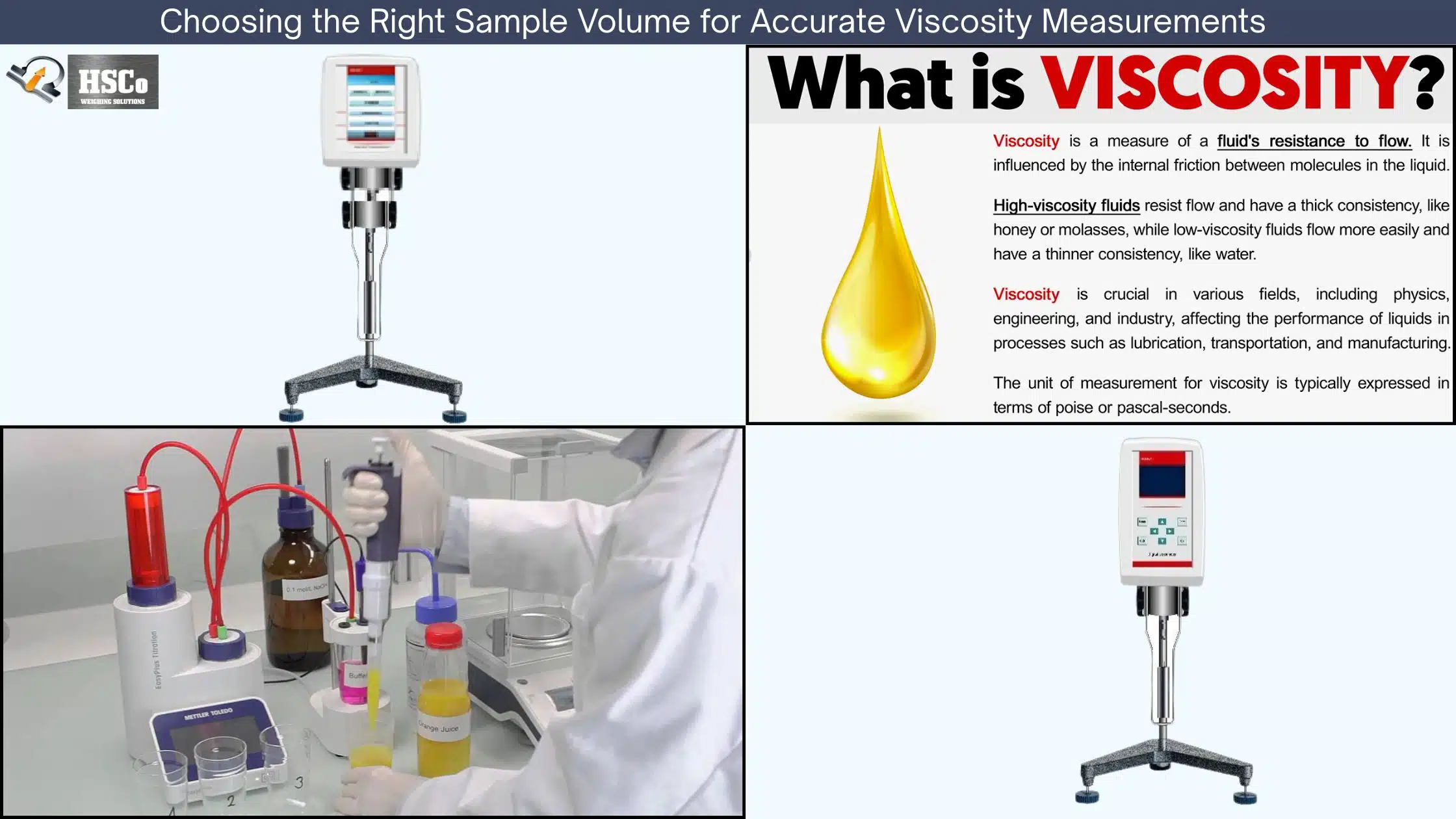
If you’ve ever run a viscosity test and thought, “Why don’t these results look right?”, there’s a good chance sample volume is part of the problem. Many people focus on spindle selection, speed, or temperature all important but overlook how much liquid they’re actually testing. Using too little or too much sample is one of the most common reasons viscosity readings turn unreliable.
Need a viscometer and the right spindle set?
HSCo's keypad and touchscreen viscometers are listed under density and viscosity meters. See the models and ask which spindle set fits your samples. See HSCo viscometers
The truth is simple: your viscometer can only give accurate results when the sample volume is correct. In this blog, we’ll break down why sample volume matters so much, what can go wrong when it’s incorrect and how to choose the right amount every time without overcomplicating things.
Why Sample Volume Matters More Than You Think
Viscometers measure viscosity by detecting resistance as a spindle rotates through a fluid. For that resistance to be measured correctly the spindle must interact with the sample in a very specific way.
When the sample volume is wrong, the spindle doesn’t experience uniform resistance. That leads to unstable torque, fluctuating readings or values that look believable but are actually wrong.
In short, sample volume directly affects accuracy, repeatability and trust in your data.
What Happens When Sample Volume Is Too Low
Using too little sample is one of the most frequent mistakes, especially when samples are expensive or limited.
Common problems with low sample volume:
- The spindle is not fully immersed
- Air gets pulled into the fluid
- Readings fluctuate or drift
- Torque values fall below the recommended range
When the spindle is only partially submerged, it encounters less resistance than it should. The viscometer may still display a number, but that number does not represent the true viscosity of the fluid.
Even worse, low volume can cause false low readings, which often go unnoticed until quality issues appear later.
What Happens When Sample Volume Is Too High
Using more sample than required might seem harmless, but it can also cause issues.
Common problems with excess sample volume:
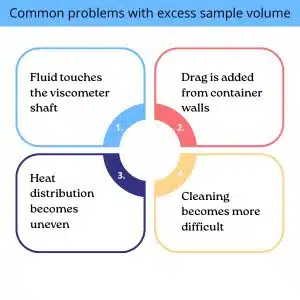
- Fluid touches the viscometer shaft
- Drag is added from container walls
- Heat distribution becomes uneven
- Cleaning becomes more difficult
When too much fluid gets on parts of the instrument that aren’t meant to be measured, the resistance goes up for no reason. This can push torque out of the ideal range, which can make viscosity readings higher than they really are
What Immersion Depth Is and Why It Matters
It is important that each spindle be submerged to the right depth. That depth makes sure that the spindle meets the same amount of resistance during the whole measurement.
Correct immersion means:
- The liquid gets to the spindle’s immersion mark
- The spindle is in the middle and not touching the container
- The shaft stays clean and dry above the fluid line
The results will not be correct if the fluid level is below the immersion mark. If it’s too high, the measurement can be wrong because of extra drag.
Recommended Sample Volumes: There Is No One-Size-Fits-All
The volume of the sample depends on a number of things, such as the type of spindle, the size of the container, and the test method.
Things that affect the amount needed:
- The size and shape of the spindle
- Model of a viscometer
- The diameter of the sample container
- The fluid’s viscosity range
For instance:
- Small spindles don’t need as much volume
- To keep proper immersion, big spindles need more volume
- For stable torque, fluids with a high viscosity often need to be immersed deeper
It’s important to always check your instrument manual for the right volumes.
How the Amount of Sample Affects Torque Readings
Torque is the most important part of measuring viscosity. Most viscometers only give accurate results when the torque is between 10% and 90%.
A wrong volume can lead to:
- Torque less than 10% means readings that are unstable and noisy
- Torque over 90% can cause overload errors or strain on the moto
The right sample volume helps keep torque in the sweet spot, where readings are stable, repeatable, and trustworthy.
Choosing the Right Container and Volume
The amount of the sample and the choice of container go hand in hand.
A good container should:
- Be wide enough to keep walls from affecting it
- Let the spindle spin freely
- Support a consistent depth of immersion
- Be tall enough to hold the required amount of samples
Using the wrong container can make the right sample volume act like the wrong one.
Helpful Tips for Always Getting the Right Sample Volume
You don’t need to do a lot of math to avoid mistakes with volume. Simple habits can make a big difference.
Before you test:
- Look at the immersion mark on the spindle
- Check the suggested sample size
- Use the same kind of container every time
While testing:
- Make sure the spindle is completely submerged
- Make sure the shaft is clean and dry
- During the test, keep an eye on the torque values
After the test:
- Write down the amount of sample used
- Take note of any changes to the container or setup
- For repeat tests, keep the volume the same
Being right is just as important as being consistent.
Common Misconceptions Regarding Sample Volume
“As long as the spindle is covered, the volume doesn’t matter.”
That’s not true. Results can be skewed by either partial immersion or too much fluid.
“More samples mean better accuracy”
Not all the time. Too much sample can add extra drag and temperature differences.
“Volume only matters for thick liquids”
Not true. Fluids with low viscosity are often more sensitive to mistakes that have to do with volume.
Sample Volume and Repeatability in Quality Control
In quality control labs, being able to do the same thing over and over again is very important. Even if the fluid hasn’t changed, the results will be different if the sample volume changes from test to test.
Using the same:
- Amount
- Container
- Spindle
- How hot it is
helps make sure your data is accurate and holds up during audits.
Conclusion
Choosing the correct sample volume is not a small detail it’s a core part of accurate viscosity measurement. Too little sample leads to unstable readings. Too much introduces unwanted resistance. Both can quietly damage data quality without obvious warning signs.
By understanding immersion depth, torque limits, and container effects, you can eliminate one of the biggest sources of error in viscosity testing. When sample volume is correct and consistent, your viscometer does exactly what it’s meant to do: give results you can trust.
FAQs
What happens if my sample volume is slightly off?
Even small deviations can affect torque and stability, especially for low-viscosity fluids.
Can I use the same volume for all spindles?
No. Each spindle has its own immersion and volume requirements.
Is minimum volume always better for saving sample?
Not if it compromises immersion or torque stability. Accuracy should come first.
Does sample volume affect calibration?
Yes. Calibration fluids also require correct volume to produce valid results.
Should I record sample volume in my test reports?
Absolutely. It helps with repeatability, troubleshooting, and audits.