


To keep workers safe, ensure data accuracy, and speed up operations, modern labs will need technology that is easy to use and works well by 2025. The lab equipment used for drug research, food safety testing, or other specific fields of study will have a big effect on the test outcomes. New technology that makes measurements more exact and speeds up the procedure will change how labs work in the near future. In order to satisfy standards and stay competitive, all research and manufacturing facilities must have the ten important tools identified in this paper by 2025.
Equip the lab with HSCo instruments
HSCo's laboratory range covers analytical instruments, centrifuges, ovens and furnaces, stirrers and balances. Start with the analytical instruments and ask for a quotation. See lab analytical instruments
Scales that function with computers
It’s still very critical to have the appropriate mass in the lab. If you get the balance right, every experiment, test, and procedure will give you findings that you can trust and replicate. When producing pharmaceuticals, looking at food ingredients, or doing very sensitive chemical studies, accuracy is vitally crucial. In many organizations, even a little change in mass can lead to false assumptions or lower quality products.
0.1 mg readability means that the sample may be weighed with the most accuracy, no matter how small it is. This level of accuracy is especially crucial when working with very delicate materials because even a slight variation in mass could impact the overall result.
Also, the safety against mechanical and electrical overload keeps the equipment from getting damaged by accident, which makes it last longer and ensures that the results are always the same. This feature is very crucial when weighing fragile or precious items because it keeps both the equipment and the samples safe.
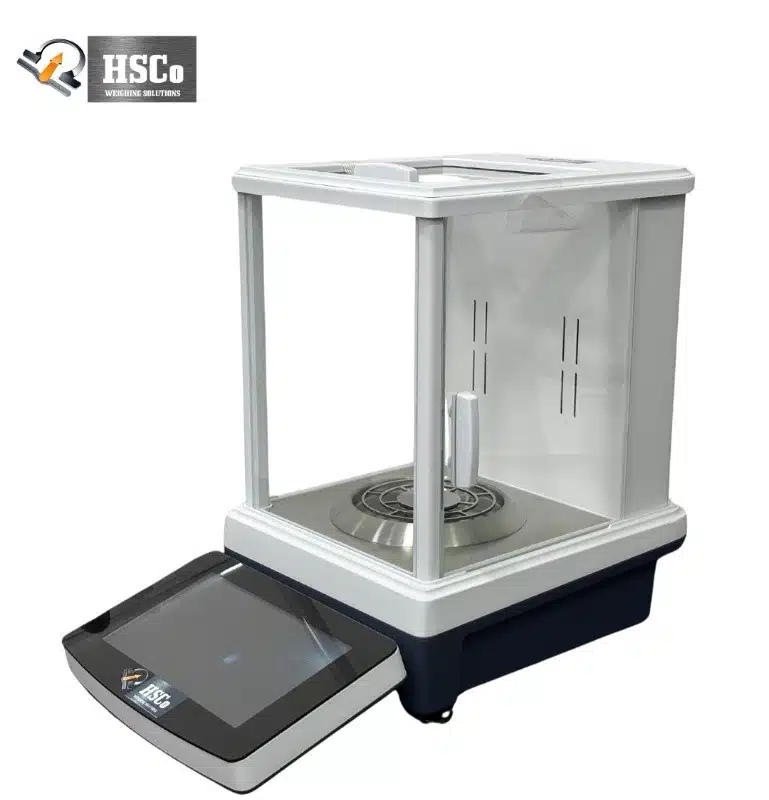
These scales also make sure that samples may be weighed without touching them or getting them wet, which could affect the results. This is very critical in drug development, because there is no room for error or guesswork. No matter what the components are solid, liquid, or powder the balance will give you very precise results.
These new scales can automatically log data, keep an eye on it in real time, and readily work with other lab management systems because they can talk to computers. This link ensures that records are always accurate, easy to discover, and follow the regulations. Also, you can simply adjust and change these scales with advanced software options. This saves time on manual duties and makes everything go more smoothly.
These automated scales are the most accurate and reliable way to weigh objects in labs that need to be very careful. They check that every test, experiment, and outcome fulfills the standards that are set.

Spectrophotometers
- Labs that need to know exactly how much light materials absorb utilize spectrophotometers. Scientists can discover how much of a chemical is there, find specific molecules, or keep an eye on how chemical processes are evolving by using these tools to see how much light goes through a sample. Spectrophotometers are highly useful for a lot of tasks, such as verifying the quality of food, doing biochemical analysis, and researching new medicines.
- Pick wavelengths and use a simple interface to watch reactions or evaluate the quality of medicine mixes. Spectrophotometers can pick certain wavelengths of light, which helps them deliver accurate tests that are specific to the material being evaluated.
- These technologies provide you with very accurate and reliable findings, whether you’re evaluating the purity of a chemical or looking at the absorption spectra of a medicine.
- Many current spectrophotometers come with easy-to-use software that helps you keep track of, evaluate, and store results. This makes the procedure go faster and more smoothly.
- This function is quite helpful in pharmaceutical labs, where it’s crucial to have reliable and consistent data to verify how safe and effective new formulations are.

Centrifuges
Centrifuges are immensely useful in commerce, science, and medical fields. These flexible tools are particularly useful in various areas since they can very precisely separate and concentrate materials. Centrifuges are very important for making sure that your tests and investigations are correct and reliable if you operate in a biotech company, a pharmaceutical lab, or a clinical research facility.
These methods work effectively to separate phases that don’t mix, like blood plasma or cellular samples that need to be concentrated so they can be studied more closely. These machines create a force that moves heavier particles to the bottom of the tube and holds lighter particles back. This difference allows you to see things more clearly than you might otherwise.
Businesses that need very accurate findings rely heavily on centrifuges. People use them for a lot of different activities, such as medication research and diagnostic tests. Centrifuges are used in clinical labs to separate plasma or serum from whole blood, for instance. After that, they test the complete blood for several health problems. In pharmaceutical research, they help break up cells so that DNA or proteins may be analyzed.
Labs can make the process work better for the sample they are working with by changing the speed and length of the centrifuge. Centrifuges are particularly valuable since they may be used for a wide range of examinations, from common medical testing to the most cutting-edge research.

Water baths are quite important in labs.
Water baths are very important tools in scientific and medical labs. One of the more advanced types is the Digital Water Bath. It lets you change the temperature and consistency of your samples, which makes sure that they are constantly heated evenly. This is very important for investigations that need even and accurate heating to get reliable results.
The Digital Water Bath makes sure that your samples are heated evenly and consistently, which is important for research that needs precise temperature control.
You may regulate the temperature perfectly, which makes sure that every test is done in the best possible conditions. This level of control is very important for fragile samples because even little changes in temperature might change the results.
Digital water baths today are not only effective, but they also save energy, which makes labs more eco-friendly and helps them use less energy.
These water baths are small, so they are perfect for labs that don’t have a lot of room.
The Digital Water Bath is an important instrument in many industries, such as biotech, pharmaceutical research, and clinical diagnostics. It is precise, saves energy, and takes up little space. It makes sure that the results are dependable and trustworthy by either gently heating the samples or maintaining the temperature steady.

Centrifuges that don’t get too hot are a good way to keep your samples safe.
When you’re working with fragile objects in the lab, it’s really vital to keep the temperature steady. In many cases, it’s necessary to use a centrifuge that doesn’t get too hot to keep your task safe. This is really crucial when you are working with samples that need to stay cool all the time.
A cold centrifuge keeps the temperature steady, which is highly crucial for keeping your sample from altering in any way. You need to modify the temperature not only for comfort, but also to keep the sample safe and make sure that biological processes happen as they should. If the sample becomes too hot, it could change in ways that you don’t want, which could render the results unreliable.
You can be sure that your sample is in good shape if the centrifuge stays at the proper low temperature. This is true for cells, proteins, and DNA. This level of control also helps with enzyme activity and other delicate tasks that could go wrong if the temperature fluctuates.
You need to maintain the samples cool while they are spinning in the centrifuge to make sure that the results of your study or diagnostic test are accurate and trustworthy. You can focus on the science because you know your instruments are working with you to keep your samples secure and provide you the best findings.

pH meters are important for labs to get accurate readings.
For getting reliable and consistent pH readings, pH meters are very important in scientific and industrial settings. Getting the right measurements while working with fragile materials in fields like chemicals, medications, or environmental monitoring can make the difference between a good outcome and one that could lead to misleading conclusions or even terrible effects.
pH is incredibly important in the pharmaceutical industry since it affects everything from how stable medications are to how safe and effective they are. Changes in pH, even little ones, might modify the way a molecule is built, which could cause it to respond in ways that are not intended or make it less successful as a treatment. It’s also very important to have the appropriate pH measurements to be confident that a chemical product is safe or that the air is clean.
One of the best things about modern pH meters is that they can read extremely little changes. This means they can keep a very careful check on pH levels, even when little changes are very important. When you look at the pH of a very weak solution, a complicated chemical mixture, or even water samples from the environment, high-resolution measurements make sure that your data is accurate and stays the same.