
Blogs
Platform scale for scrap: which 2.5 to 5 tonne size fits your factory?

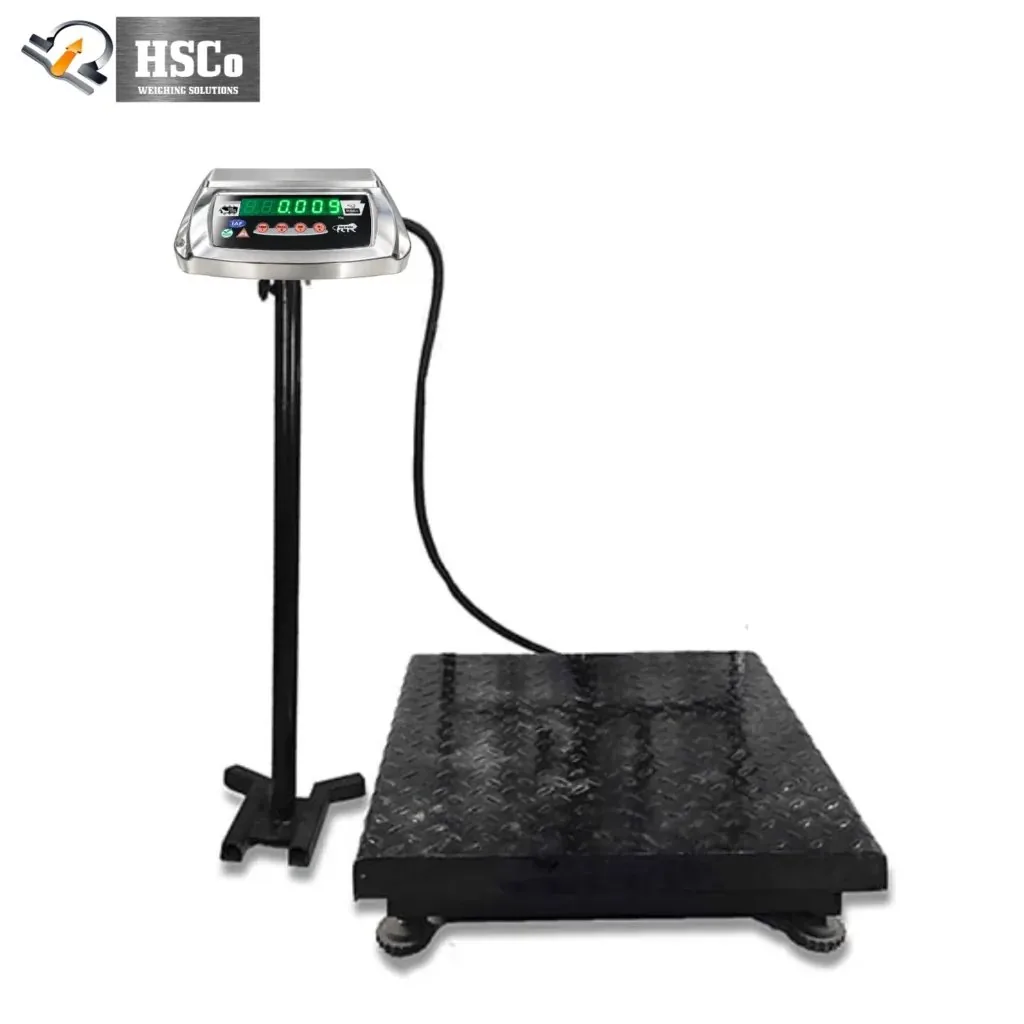
Choose a platform scale for scrap by two numbers: the weight of your heaviest full bin, bin included, and the size of that bin’s base. We advise a platform at least as big as the base, so every foot of the bin rests on it. Between 2.5 and 5 tonnes, the Hindustan Scale Company (HSCo) PLCHQHB comes as 2,500 kg on 100 × 100 cm, 3,000 kg on 120 × 120 or 150 × 150 cm, and 5,000 kg on 150 × 150 cm [2].
The Press Information Bureau reported on 2 November 2026 that the Ministry of Heavy Industries, with its public sector enterprises and autonomous bodies, earned ₹13,03,93,845 from scrap and e-waste disposal in the implementation phase of the Special Campaign for Disposal of Pending Matters 6, from 2 to 31 October 2026 [1].
For the worked example below, assume a lot of 55 tonnes of mild steel scrap sold at ₹27,500 a tonne (₹27.50 a kg).
What capacity should a platform scale for scrap have?
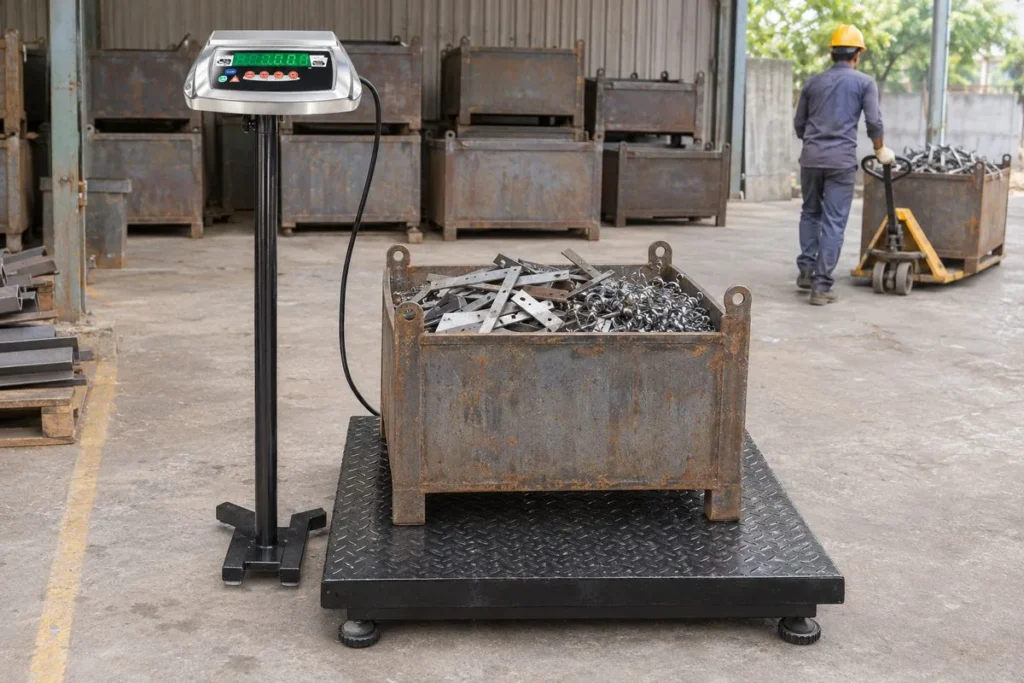
Pick the capacity from the heaviest batch on the platform: the scrap, the bin and anything else resting on it. Tare takes the bin’s weight off the display. The load cells still carry it, so the bin always counts against the capacity.
Does the platform size matter as much as the capacity?
For light, bulky scrap it often matters more. Light metal scrap and sheet offcuts take up a lot of room for their weight, so a full bin of them can weigh far less than the capacity. A bin that touches the floor, a wall or the indicator stand can give a wrong reading. Measure the base of your largest bin before you choose.
| PLCHQHB capacity [2] | Platform size [2] |
|---|---|
| 2,500 kg | 100 × 100 cm |
| 3,000 kg | 120 × 120 cm |
| 3,000 kg, large platform | 150 × 150 cm |
| 5,000 kg | 150 × 150 cm |
How many batches does a 55 tonne scrap lot take?
Take the bin’s weight off the capacity first, since the bin rides on every batch. Divide the lot by what is left and round up for the fewest batches. That assumes each bin can hold that much scrap. A bin of light scrap that is full at 1,000 kg needs 55 batches for 55,000 kg.
Fewest batches = lot weight ÷ (scale capacity − bin weight), rounded up
| Scale capacity | Scrap per batch with a 300 kg bin | Fewest batches for 55,000 kg | Value of the scrap in one full batch at ₹27,500 a tonne |
|---|---|---|---|
| 2,500 kg | 2,200 kg | 25 | ₹60,500 |
| 3,000 kg | 2,700 kg | 21 (20 full, 1 of 1,000 kg) | ₹74,250 |
| 5,000 kg | 4,700 kg | 12 (11 full, 1 of 3,300 kg) | ₹1,29,250 |
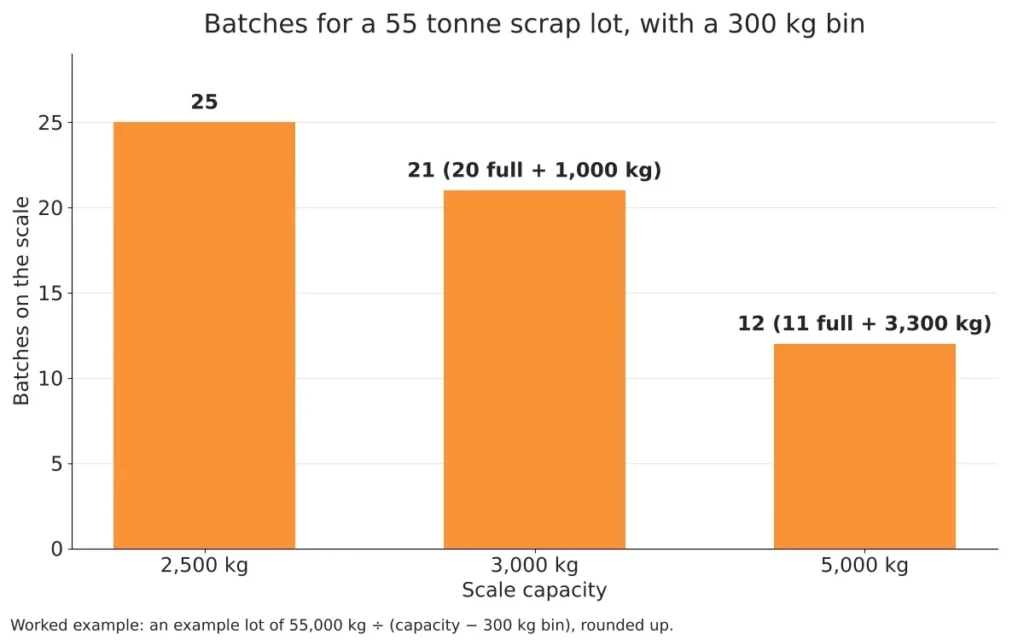
Each batch is a separate reading. If the scale has a steady error and records every batch 10 kg short, the 25 batches on the 2,500 kg scale lose 250 kg, worth ₹6,875 at ₹27.50 a kg.
How do you weigh scrap bins so the slip shows net weight?
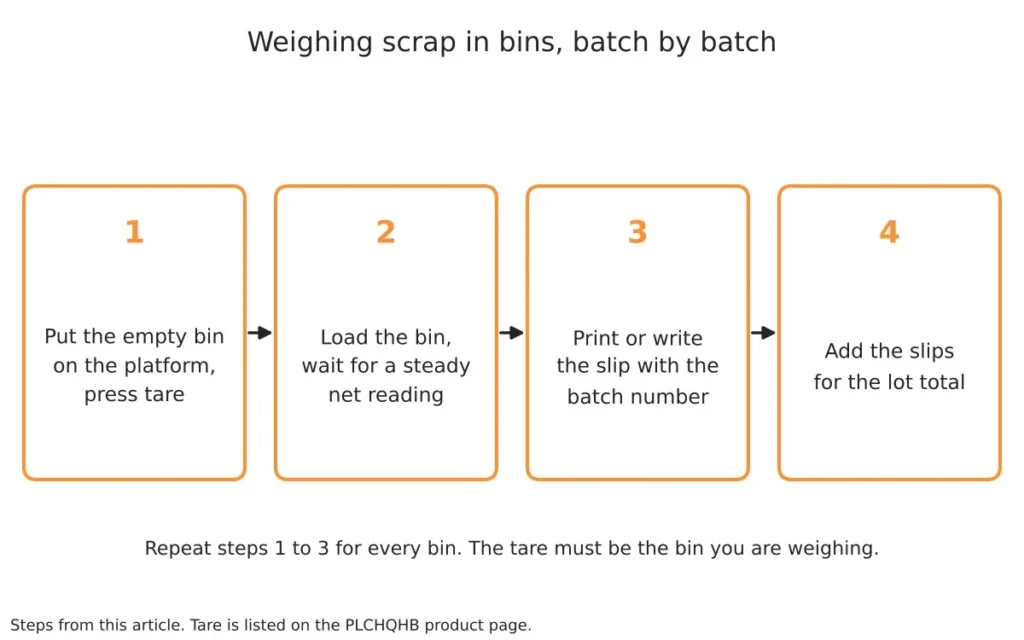
- With the platform empty, check that the display reads zero, and check the next due date on the verification certificate [7].
- Put the empty bin wholly on the platform and press tare, so the display reads zero with the bin on it. The PLCHQHB lists tare and zero among its functions [2].
- Load the bin while it stays on the platform, and wait until the reading stops changing. Write down or print the net weight with a batch number and the date.
- Let the other side read the weight on the big green display at the back of the PLCHQHB, which faces the customer [2].
- Tare again for every bin, with that bin empty.
- Add the batch slips for the lot total and check it against the quantity on the sale papers.
Must a scrap scale be stamped before you sell by weight?
Yes. Section 24(1) of the Legal Metrology Act, 2009 says that a person who has a weight or measure that is being, or is likely to be, used in any transaction must have it verified before putting it into such use [6]. A scale that weighs scrap for a sale is used in a transaction.
The Delhi Legal Metrology department says its verification certificate gives the date of stamping, the next due date, and the type and class of the instrument [7]. The PLCHQHB is Legal Metrology stamped [2]. Our stamping guide explains the certificate.
Which HSCo scale fits factory scrap?
Start with the PLCHQHB for bins on the floor. The next two suit scrap on pallet trucks or under a crane.
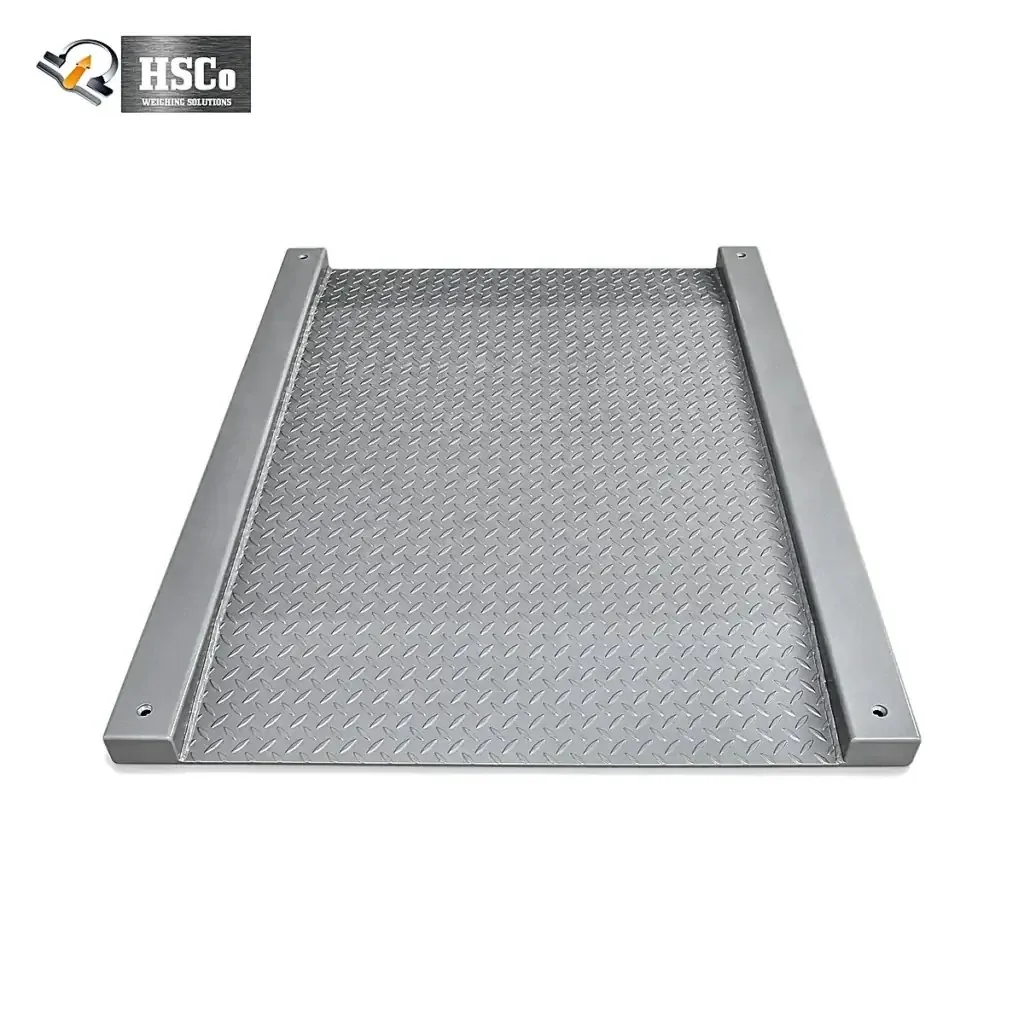
 PLCHQHB heavy duty platform scale: weighs 2,500, 3,000 or 5,000 kg on chequered mild steel platforms from 100 × 100 to 150 × 150 cm, on four IP67 load cells, with tare and a display on both sides [2]. For scrap bins on the shop floor.
- PLCHQIR internal ramp scale: has ramps built into a low-profile 1200 × 1200 mm platform, so pallet trucks roll on and off; 500 kg to 3,000 kg, accuracy ±1 kg to ±5 kg depending on capacity [3]. For scrap bins moved on pallet trucks.
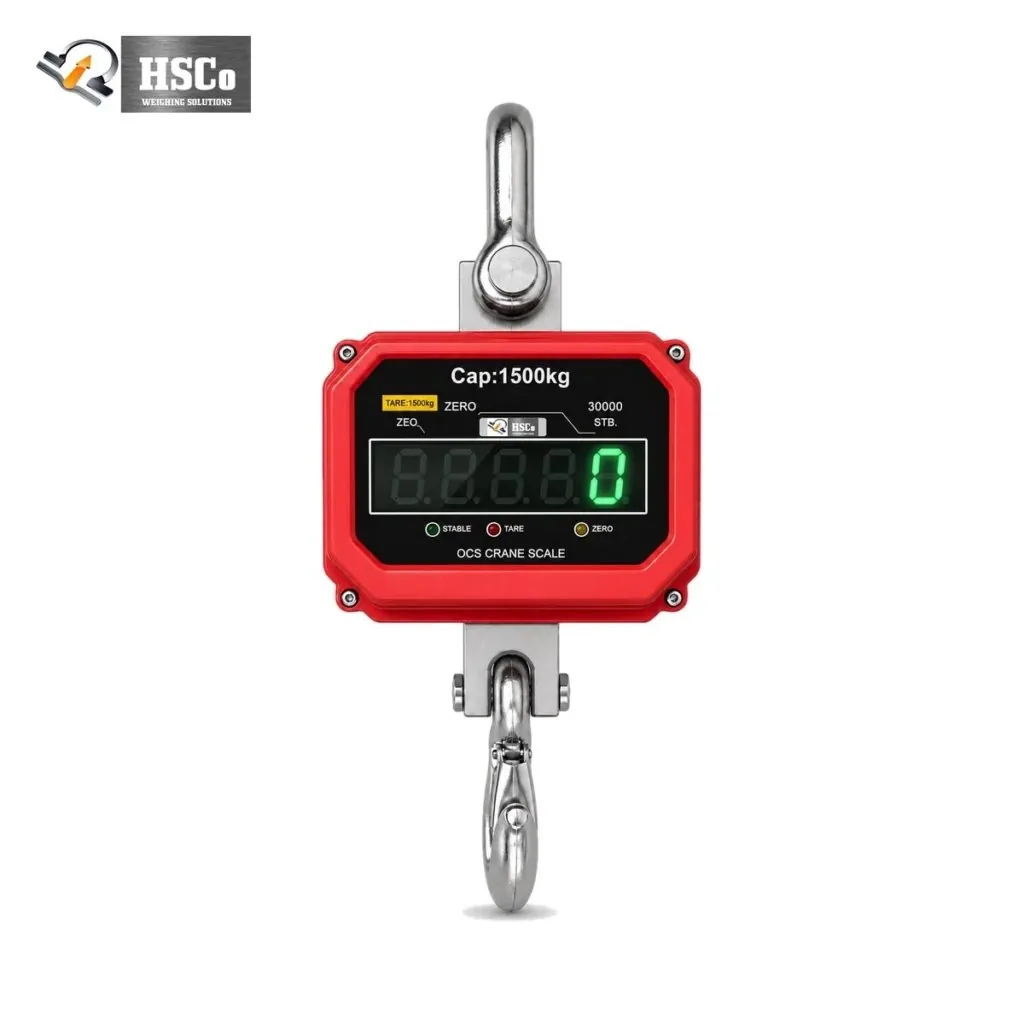
- CRH electronic crane scale: hangs from the crane and weighs 1 to 50 tonnes as the load is lifted, with a hand remote that works up to 10 m and up to 40 hours on a charge [4]. For scrap lifted by crane in foundries and steel plants.
- Thermal receipt printer for weighing scales: prints weight records and timestamps on thermal paper with no ink or ribbon, and connects by USB or RS-232 [5]. For a printed slip with every batch.

Our platform scales page lists the other sizes. Tell us your heaviest bin and the size of its base: call +91-7045922250 or write to hsc@hindustanscale.com.
Frequently asked questions
What size platform scale do I need for scrap bins?
A platform scale for scrap bins needs a capacity above your heaviest full bin, bin included. We advise a platform at least as big as the bin’s base, so the bin rests fully on it. The HSCo PLCHQHB comes as 2,500 kg on 100 × 100 cm, 3,000 kg on 120 × 120 or 150 × 150 cm, and 5,000 kg on 150 × 150 cm [2].
Does tare increase the capacity of a scale?
No. Tare removes the empty bin’s weight from the display, but the load cells still carry the bin. A 300 kg bin on a 2,500 kg scale leaves room for 2,200 kg of scrap. The PLCHQHB lists tare and zero among its functions and shows a digital overload indication when the load goes over [2].
Does a scale used to sell scrap need Legal Metrology stamping?
Yes. Section 24(1) of the Legal Metrology Act, 2009 requires a weight or measure that is being, or is likely to be, used in any transaction to be verified before it is put into such use [6]. Selling scrap by weight is a transaction. The Delhi Legal Metrology department says its verification certificate shows the next due date [7].
Sources
- Press Information Bureau, “Ministry of Heavy Industries and its CPSEs and ABs conclude Special Campaign for Disposal of Pending Matters 6 (SCDPM 6)” (pib.gov.in, 2 November 2026).
- Hindustan Scale Company, “PLCHQHB Heavy Duty Platform Scale – 2,500 to 5,000 kg, Chequered MS Platform, 4 Load Cells” (hindustanscale.com).
- Hindustan Scale Company, “Internal Ramp Scale PLCHQIR – Built-in Ramps, 500 kg to 3,000 kg” (hindustanscale.com).
- Hindustan Scale Company, “CRH Electronic Crane Scale – 1 t to 50 t, Remote, 40-Hour Battery” (hindustanscale.com).
- Hindustan Scale Company, “Thermal Receipt Printer for Weighing Scales – USB and RS-232” (hindustanscale.com).
- India Code, Government of India, “The Legal Metrology Act, 2009, Section 24” (indiacode.nic.in). Act No. 1 of 2010
- Weights and Measures Department (Legal Metrology), Government of NCT of Delhi, “FAQs” (weightnmeasures.delhi.gov.in).