


Hot Heat
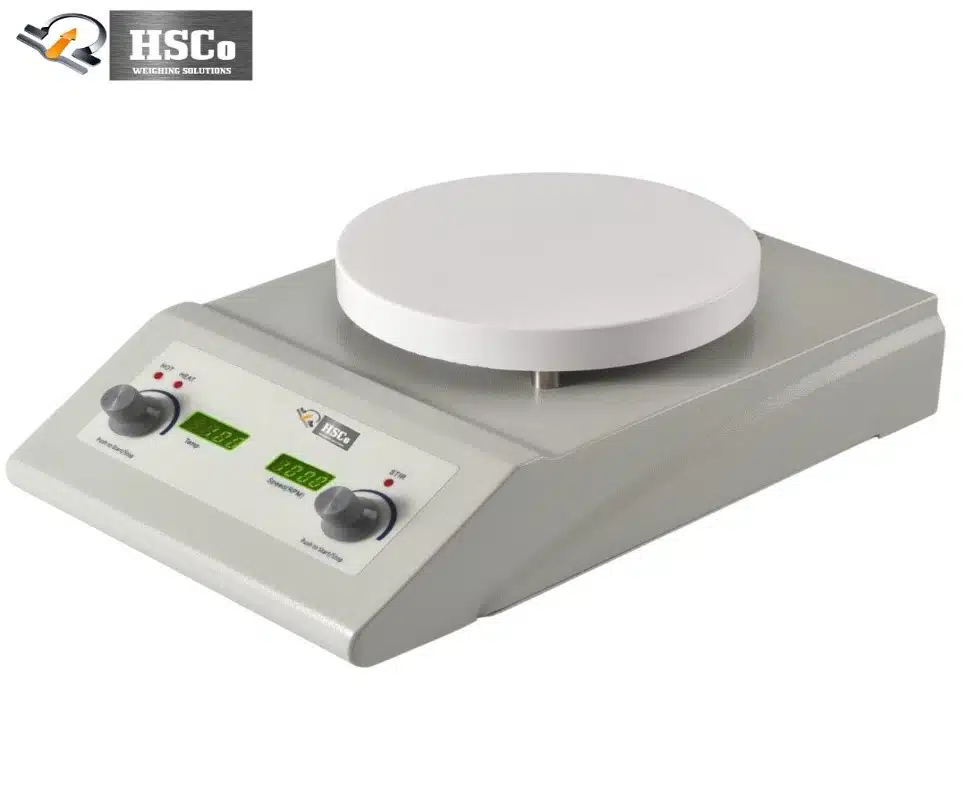
A hot plate is a compact and portable heating tool with a smooth heating surface, usually made of metal, ceramic, or glass-ceramic. Inside, a coil or cartridge heats up when you turn it on. In labs, hot plates are prized for their flame-free, safe heating, accurate temperature control, and, in some models, a built-in magnet for stirring liquids.
Looking for laboratory heating equipment?
See HSCo's temperature control equipment. Tell the team the laboratory hot plate, working temperature and bench space you need for a quotation. See temperature control equipment
How It Works
Hot plates heat by conduction. Electricity passes through a resistive coil or cartridge inside the plate, turning electric energy into heat. This heat then spreads directly into the vessel resting on the surface.
- A simple mechanical thermostat or a more advanced PID controller keeps the surface temperature within ±0.5 °C of the chosen setpoint.
- If the hot plate has a stirrer, an electromagnet sits under the heating surface. It creates a rotating magnetic field that spins a small stir bar inside the container, mixing the sample while it heats.
Main Uses
Labs rely on hot plates for several key tasks:
- Keeping reaction temperatures stable: Steady heat is critical for reproducible chemical syntheses.
- Concentrating volatile solvents: Heat gently drives off weaker solvents, increasing solution strength without boiling off the entire sample.
- Melting agar or wax: Works perfectly for preparing media or melting solid samples, all without an open flame.

Baths of Oil and Sand
These baths give even heating and keep it steady throughout.
Heating and Stirring at Once
Doing both at the same time keeps temperature the same from top to bottom.
Heaters for the Lab Checklist
Features to think about when picking:
Electric (Resistive)
- Heating coils or cartridges inside the surface
- Low-cost, works with dials or PID, and safe to 400 °C
Infrared or Halogen
- Sends out invisible light that heats without touching the sample
- Great for delicate samples that can’t handle direct heat
Induction
- Creates a magnetic field that heats only metal
- Heats fast and uses less energy
Head-to-Head with Other Lab Heaters
- Heat Source: Electric, flame, resistive, or hot liquid
- Temperature Control: Dial, flame height, thermostat, or thermostat in the bath
- Safety: No flame, auto shut-off, shielded, careful with spills or hot liquid
- Capacity: Up to 20 L, or any small flask from 50 mL to 5 L keeps working well
Uniformity Contact flat and stir Localised hot spots Great for flasks Slow response; consistent upkeep Low Low High (wear on the mantle) Moderate (change the oil and sand)
Choosing the Right Key
Best Material
Ceramic/glass-ceramic: resistant to chemicals, easy to clean, holds up to high temps
Metal: heats up fast, but can rust easily
Control Interface
– Analogue: simple on/off and heat ranges; inexpensive
– Digital/PID: set precise temperatures, can be programmed, protects from overheating
Surface Area and Setup
– Single vs Multi-Position: Decide whether you’ll heat a single flask or several at once
Power and Ramp Rate
– Watts: 1–2 kW heats quickly
– Programmable Ramps: Control how quickly the temperature changes
Safety Features
– Over-Temperature Cutoff: shuts heat off if it gets too high
– Hot Surface Indicators: lights or markings to show it’s too hot to touch
– Spill Protection: electronics are sealed to keep moisture out
–Thermal Insulation: stops heat and energy from leaking out
– Auto Shut-Off/Standby: turns off when you leave it alone
Industry Applications
– Pharmaceuticals and Biotech: Heating reactions and prepping media
Chemical / Analytical
Evaporating solvents, digesting samples, and preparing materials
Testing Food and Drinks
Pasteurising liquids and checking ingredient levels
Electronics
Pre-heating PCBs and triggering solder paste reflow
How to Set up and Look After Equipment
Set the instrument on a steady, level bench that won’t shake.
Before you start, inspect the power cords and all connections.
Always wear the correct PPE and don’t leave the instrument unattended while it runs.
Keep vents clear and, from time to time, clean the work surface.
Use traceable thermocouples to check and adjust calibration regularly.
Hot plates are the safest, most precise, and most flexible way to heat samples in labs and factories.