

Why Moisture Measurement Matters?
In industries like food processing, pharmaceuticals, and chemicals, knowing the moisture content of materials is crucial for ensuring product quality and consistency. Whether you’re baking bread, creating pills, or producing polymers, precise moisture measurement plays a vital role in getting things just right. Traditionally, moisture measurement has relied on methods like oven drying and the Karl Fischer titration method. However, modern moisture analyzers are quickly becoming the preferred choice.
Looking for a moisture analyzer?
HSCo's moisture measures are listed with the other laboratory instruments. See the models and ask for a quotation for your samples. See moisture analyzers
In this article, we’ll break down why moisture analyzers are a game-changer compared to traditional techniques. We’ll also look at how they save businesses valuable time and money while delivering more accurate and reliable results.
Traditional Moisture Measurement Methods: The Old Guard
- Oven Drying Method (Gravimetric Method)
The oven drying method involves heating a sample in an oven (typically at 100-105°C) until it reaches a constant weight. The moisture content is then determined by comparing the initial and final weights of the sample.- Pros:
- It’s affordable and widely available.
- Simple and doesn’t require specialized equipment.
- Cons:
- Time-Consuming: Depending on the sample, the drying process can take several hours.
- Labor-Intensive: Someone has to monitor the process and handle the samples, which takes time.
- Inconsistent Results: Different samples may take different amounts of time to dry, leading to less consistent outcomes.
- Pros:

- Karl Fischer Titration Method
This chemical method uses a reagent that reacts with water to measure moisture content. It’s particularly useful for low moisture content samples.- Pros:
- Highly accurate, especially for detecting very low moisture levels (as low as 0.01%).
- Cons:
- Expensive: The equipment and reagents are costly.
- Time-Intensive: Each test takes several minutes, and you also need to prepare the titration setup.
- Skill-Dependent: The process requires expertise to ensure precise results, which may not always be available in every setting.
- Not for All Samples: The method doesn’t work for all materials, especially those that might interact with the reagents.
- Pros:

Moisture Analyzers: The Fast, Accurate, and Easy Solution
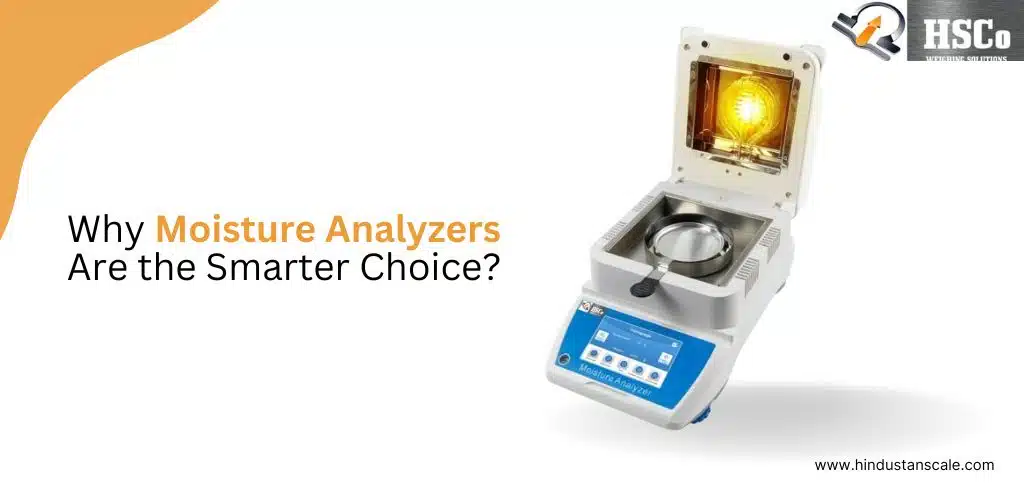
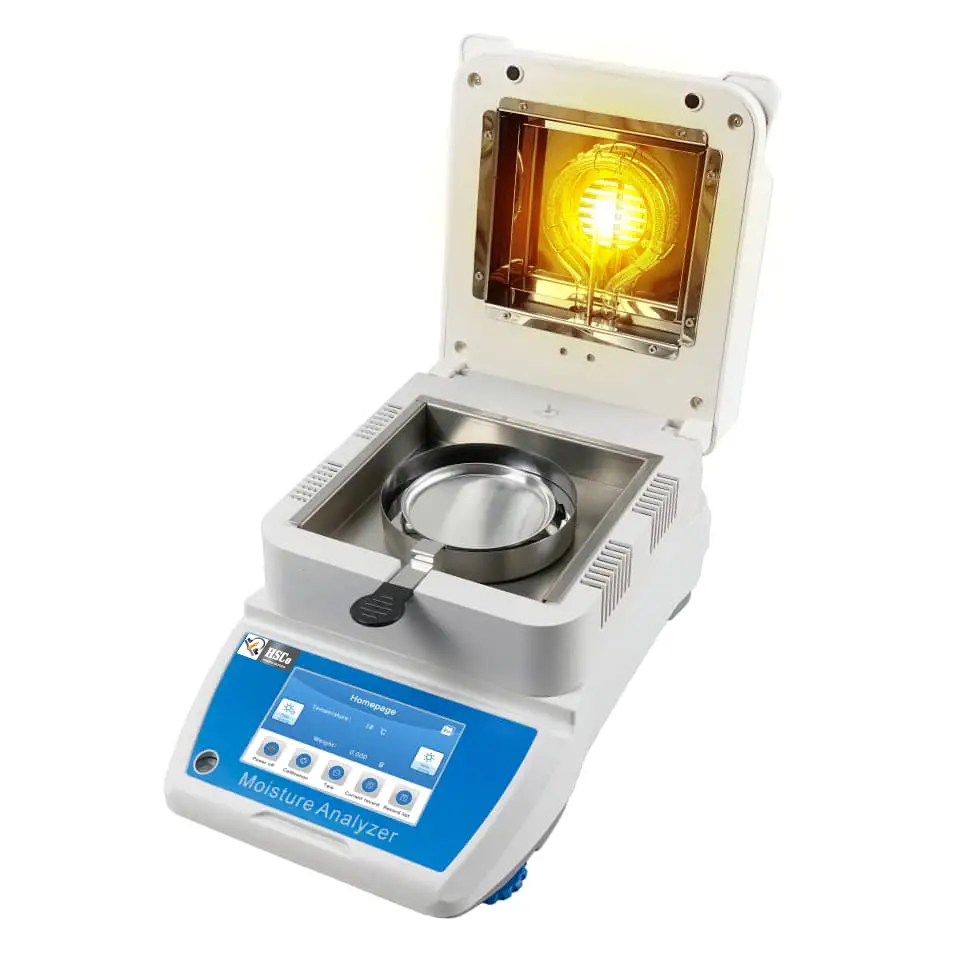
Moisture analyzers have become a modern alternative, offering a quicker, easier, and more efficient way to measure moisture content. These devices typically use heat (like halogen or infrared) and precise weighing mechanisms to determine moisture levels in just a few minutes.
Key Benefits of Moisture Analyzers
- Fast Results: Get accurate readings in just 5-10 minutes, saving you hours compared to traditional methods.
- User-Friendly: Moisture analyzers do most of the work automatically, which means fewer opportunities for human error and no need for complex setups.
- Highly Accurate: With built-in precision sensors, these devices ensure that your results are reliable and consistent, no matter the sample.
- Cost-Effective: You won’t need to buy expensive reagents, and the equipment itself is relatively affordable compared to alternatives like Karl Fischer titrators.
- Minimal Sample Prep: Unlike the oven method, you don’t need to weigh the sample before starting. Just place it in the analyzer and let it do the rest.
How Moisture Analyzers Save You Time and Money

One of the main reasons businesses are making the switch to moisture analyzers is the time and cost savings they offer. Let’s break it down:
Time Savings:
- Oven Drying: This method can take up to 4 hours per sample, leading to significant delays, especially if you need to analyze multiple samples.
- Karl Fischer: While accurate, each test takes several minutes, and you’ll spend additional time preparing the apparatus and handling the chemicals.
- Moisture Analyzers: Results in 5-10 minutes per sample, which speeds up the process, allowing you to handle more samples in less time.
Cost Savings:
- Oven Drying: While cheap in terms of equipment, it requires significant labor and energy, which can add up over time.
- Karl Fischer: Reagents are expensive, and the equipment itself can be a significant investment.
- Moisture Analyzers: No reagents are needed, and the automated process reduces labor costs. In the long run, the analyzer pays for itself through the time and money it saves.
Real-World Examples: How Moisture Analyzers Are Changing the Game
Case Study 1: Flour Moisture Testing in the Food Industry
A large flour mill was using the oven drying method to test moisture content. This process took up to 4 hours per sample, leading to substantial delays. With hundreds of samples to test each day, this was creating a bottleneck in production.
- Switch to Moisture Analyzers: After switching to moisture analyzers, the mill could test each sample in just 10 minutes.
- Outcome: The mill increased testing efficiency, processed more samples in a shorter period, and maintained better product consistency.
- Cost Savings: They cut their energy costs by 50% and labor costs by 30%, improving productivity and streamlining production.
Case Study 2: Pharmaceutical Moisture Testing
A pharmaceutical company was relying on the Karl Fischer method to measure moisture in tablets, but each test took around 20 minutes, and the reagents were costly.
- Switch to Moisture Analyzers: By switching to a moisture analyzer, they reduced test time to 3 minutes per sample.
- Outcome: Testing was faster, and the company no longer needed to purchase expensive reagents.
Cost Savings: They saved on reagents and reduced testing time by 80%, which allowed them to optimize production and improve the quality of their tablets.
Case Study 3: Polymer Resin Moisture Testing in Chemicals
A chemical plant was using the oven method for polymer resin testing, which took 3 hours per sample. This was a major hindrance in their fast-paced production environment.
- Switch to Moisture Analyzers: The plant now tests moisture content in just 15 minutes per sample.
- Outcome: Faster testing led to improved quality control, reduced resin waste, and increased production speed.
- Cost Savings: They reduced labor costs by 40% and energy costs by 30%, enhancing operational efficiency.
Conclusion: The Clear Choice – Moisture Analyzers
If you’re looking for a faster, more accurate, and cost-effective way to measure moisture content, moisture analyzers are the way to go. They offer a significant improvement over traditional methods like oven drying and Karl Fischer titration. Whether you’re in the food, pharmaceutical, chemical, or manufacturing industry, switching to a moisture analyzer can save you time, money, and energy while delivering consistent, reliable results.
By reducing testing time from hours to minutes, cutting labor costs, and eliminating the need for expensive reagents, moisture analyzers are a smart investment for businesses looking to streamline their operations. With proven results across industries, it’s clear that moisture analyzers are the future of moisture measurement.
Ready to take your moisture testing to the next level? Consider investing in a moisture analyzer and see how much more efficient your operations can be!