

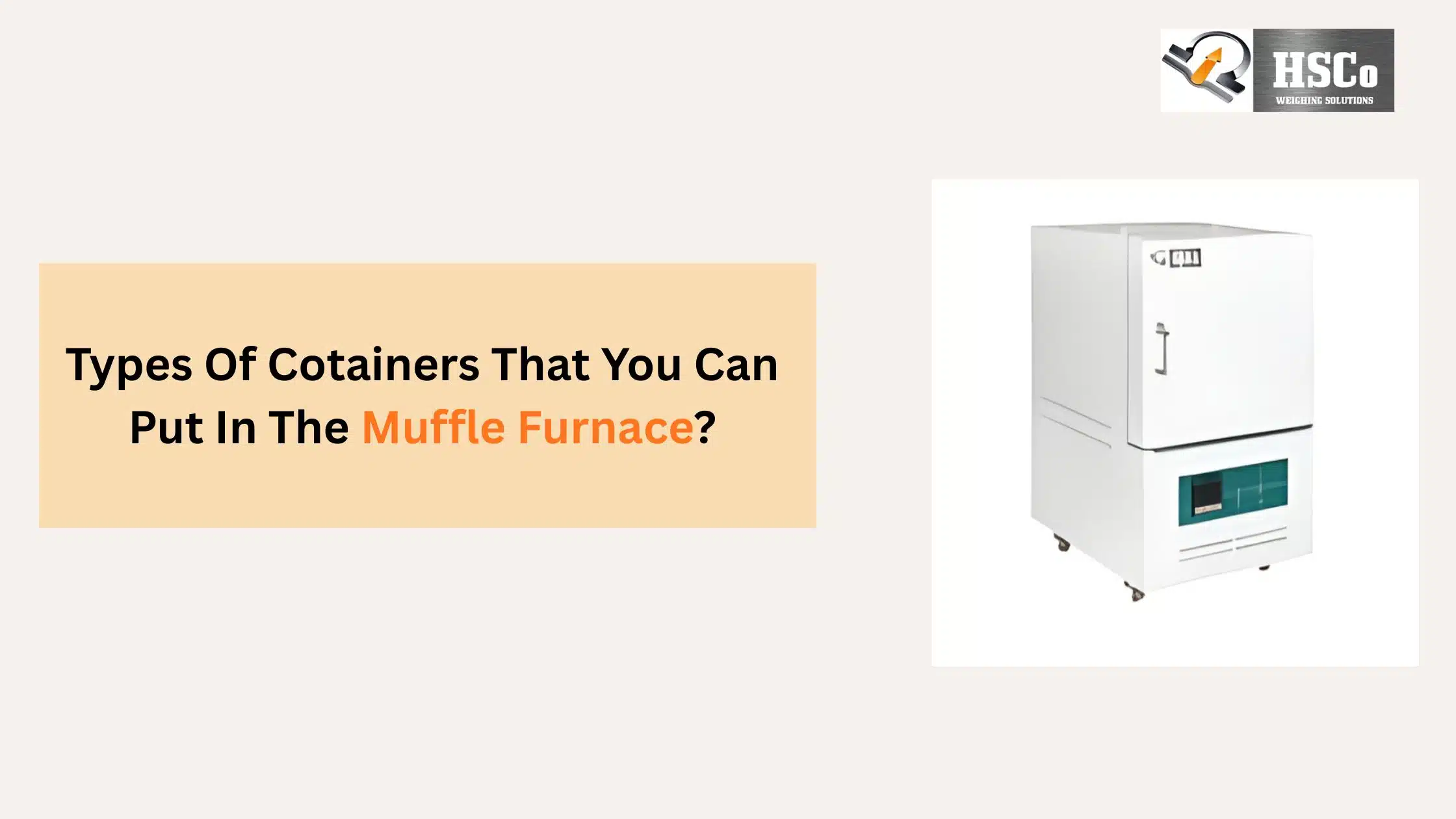
Muffle furnaces are very important for Labs, Metallurgical plants, Making ceramics
and doing material science work. They create a controlled high-temperature
environment for processes like ashing, annealing, heat treatment, melting, and
testing materials. But for these uses to work, picking the right container or crucible is
just as important as picking the furnace itself.
Different materials used to make containers react differently to heat, chemicals, and
stress. Choosing the right one makes sure that the experiment results are accurate,
the equipment lasts longer, and the operations are safer. This blog goes into great
detail about the pros and cons of the most common types of containers used in
muffle furnaces.
See HSCo muffle furnaces
See HSCo's ovens and furnaces, including ceramic fibre muffle furnaces. Ask the team to confirm which containers suit the quoted model. See ovens and furnaces
Why it’s important to pick the right container
The type of container used in a muffle furnace has a direct effect on:
- Heat transfer efficiency
- Resistance to chemicals
- Accuracy of results
- Levels of contamination
- Long-lasting at high temperatures
- Overall cost of running
Users can choose the best container material based on how hot it needs to be, how
it reacts with chemicals, how clean it needs to be, and how the furnace is built if they
know a lot about the different types.
Common Types of Muffle Furnace Containers
Here are the most common crucibles and containers, along with their pros and cons.
1. Crucibles made of ceramic
Ceramic crucibles are one of the most common types of containers used in muffle
furnaces. Most of the time, they are made of alumina, porcelain, or other ceramic
compounds that can handle high temperatures.
Pros:
- Most ceramic crucibles can easily handle temperatures between 1200°C and 1600°C.
- Good Chemical Stability: They don’t rust or get dirty so they can be used for ashing, testing materials and burning organic matter.
- Low Cost: You can find ceramic crucibles for a low price and in a lot of places.
- Minimal Reaction With Samples: Great for getting pure samples and accurate test results.
Cons:
- Ceramic is delicate and can break if dropped & exposed to high heat.
- Not very good at dealing with sudden changes in temperature: It is often necessary to preheat to avoid cracking.
- Not Good for Strong Reducing Environments: Some ceramics break down when they are in a furnace. with a lot of reducing agents.
Best Uses:
- Ashing
- Tests for loss on ignition (LOI)
- Catalyst and chemical residues study
- Ways to heat labs that are common
2. Quartz Containers
Quartz crucibles and dishes are made from extremely pure silica. They have frequent applications in special laboratory work for accurate testing.
Pros:
- Quartz can handle high temperatures without losing its stability. This allows it to handle fast heating and cooling without cracking.
- Very High Purity: This is the best choice when even small amounts of dirt can change the results.
- High Chemical Resistance: Quartz can safely handle most chemicals, but not hydrofluoric acid.
- Transparent Walls: In some cases, this lets you keep an eye on things while they are heating up.
Cons:
- High Cost: These containers cost more than ceramic and metal ones.
- Lower Maximum Temperature Than Some Metals: Usually only goes up to about 1100°C to 1200°C.
- Alkalis can hurt them: Strong bases can break down quartz containers
Best Uses:
- Chemistry that looks at things analytically
- Sample preparation that needs very pure materials
- Heat treatment with quick changes in temperature
3. Containers made of stainless steel
When being able to handle very high temperatures isn’t as important as mechanical
strength and durability, stainless steel containers are used.
Pros:
- Impact Resistance: Stainless steel doesn’t break as easily as ceramics do when dropped.
- Good Corrosion Resistance: Can handle a lot of different chemical environments.
- Steel crucibles can be heated and cooled many times without breaking.
- Easy to find and affordable
Cons:
- Stainless steel usually has a maximum temperature range. 900°C to 1100°C depending on the grade.
- Not good for environments that oxidize at high temperatures: Can corrode or scale beyond safe levels.
- Possible contamination: Metal ions may contaminate delicate samples.
Best Uses:
- Heating metal in general
- Heat treatment of samples that don’t need very high temperatures
- Hard places where damage from impacts is a worry.
4. Crucibles made of nickel alloy
Nickel containers are very common in chemical labs. Especially when working with
strong alkaline substances.
Pros:
- Nickel is very stable with sodium and potassium hydroxides which can break glass or ceramic containers.
- Good Heat Transfer Efficiency: and distributes heat evenly.
- Strong mechanical strength
Cons:
- Nickel doesn’t stand up to many acids and acidic salts very well.
- Moderate temperature limits: Usually safe up to about 900°C to 1100°C.
- More expensive than stainless steel
Best Uses:
- Fusion reactions that include alkaline substances
- How analytical labs break down samples
- Places where ceramic or quartz would break down when exposed to alkali
5. Platinum Crucibles
Platinum containers are some of the best choices on the market. They are used in advanced labs and research settings. That need the highest levels of purity.
Pros:
- Platinum doesn’t react with most chemicals, so you can be sure that your results will be free of contamination.
- Very High Melting Point: Good for use at high temperatures.
- Long Service Life: If you take care of them, platinum crucibles will last for many years.
Cons:
- Very Expensive: Platinum is the most expensive material on this list for containers.
- Soft Metal: Can change shape if not handled correctly.
- Some Materials May Alloy with It: When heated, some metals can weaken or bond with platinum.
Best Uses:
- Research in material science
- Analysis of trace chemicals
- High-value lab procedures that can’t have any contamination
6. Crucibles made of graphite
People often use graphite crucibles in high-temperature situations where they need to be inert or reducing.
Pros:
- Graphite can handle temperatures over 2500°C which is very high.
- Great Heat Transfer: Quick and even heating.
- Low cost for high performance
Cons:
- Not Good for Oxidizing Environments: Graphite burns in air at high temperatures which limits where it can be used.
- Absorbs Some Materials: If not cleaned well, it may hold onto dirt.
- Can Wear Over Time: With repeated use it gets thinner over time.
Best Uses:
- Furnaces that use a vacuum
- Melting metal
- Reducing atmospheres and special processes used in industry
How to Pick the Right Container for Your Use?
When choosing a crucible or container think about these things:
- Temperature of operation
- Nickel or stainless steel for low to medium heat
- Ceramic, quartz, graphite, or platinum can handle high heat
2. Compatibility with chemicals
- Strong acids → quartz or platinum
- Nickel comes from strong alkalis.
- General materials → ceramic
3. Budget
- Cheap → ceramic or stainless steel
- Nickel or graphite in the middle range
- Platinum is the highest quality.
4. Risk of getting dirty
- Always pick the material that is least likely to react with your sample.
Conclusion
Containers are very important for making sure that processes done in muffle
furnaces are safe, effective, and correct. There is no one container that is best for all
situations. The best material, on the other hand, depends on how hot it needs to be,
how much chemicals it can handle, how sensitive the sample is, how much it costs
and the conditions inside the furnace.
Users can make smart choices that will improve the performance of the furnace and
make experiments more reliable for years to come by learning about the pros and
cons of ceramic, quartz, stainless steel, nickel, platinum and graphite containers.