

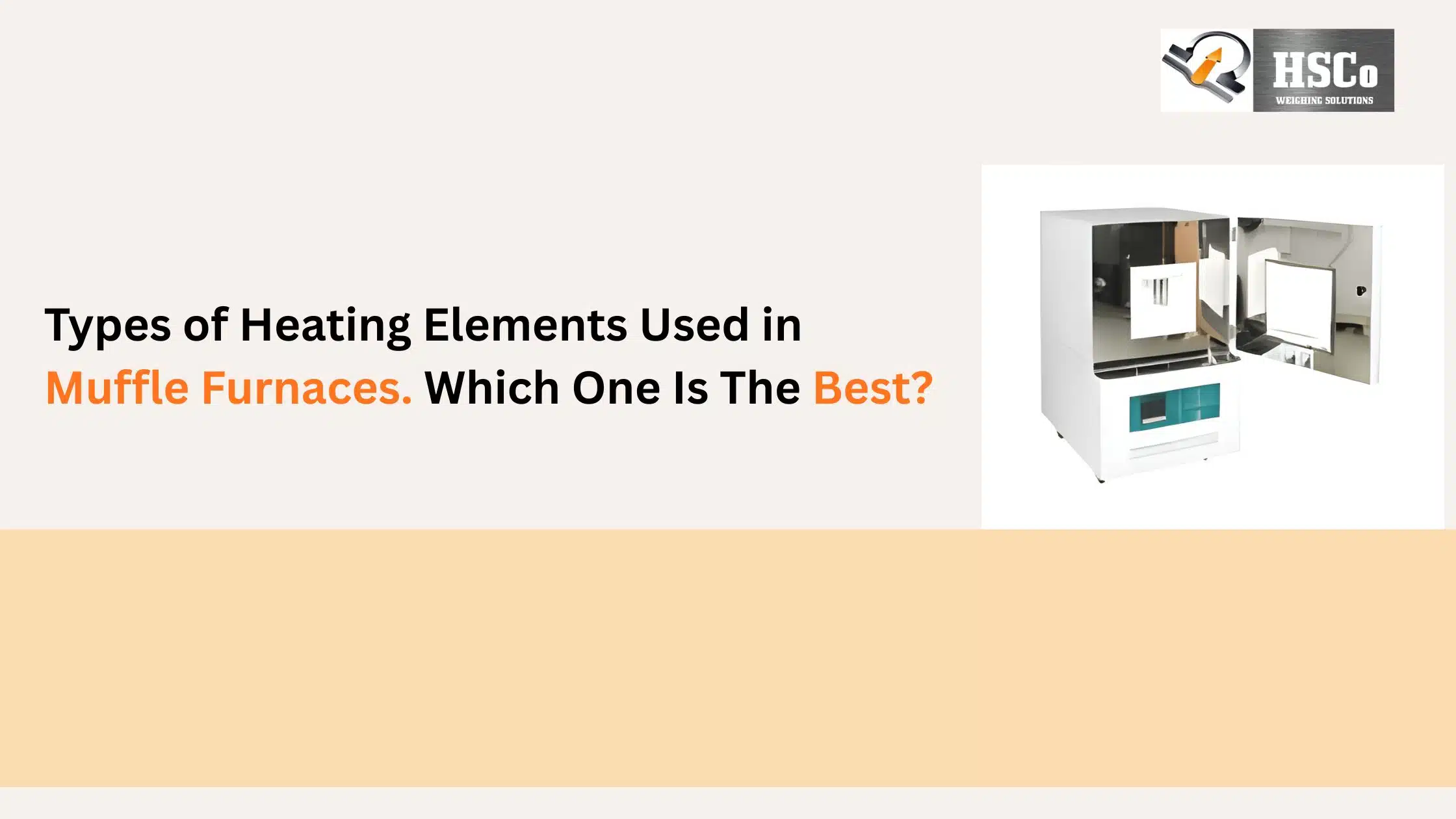
Muffle furnaces are widely used in laboratories, material research canters, and industrial facilities for high-temperature heating applications such as ashing, annealing, glassware treatment, metal heat treatment, and material testing. At the heart of every muffle furnace lies a critical component the heating element. It determines not only the maximum achievable temperature but also the furnace’s efficiency, durability, cost and suitability for different applications.
Today, several types of heating elements are used in muffle furnaces, each with its own advantages and limitations. In this blog we will take a detailed look at the most common heating elements how they compare and which one performs best depending on operational needs.
Looking for a muffle furnace?
HSCo lists ceramic fibre muffle furnaces in its ovens and furnaces range. Send your required temperature and chamber size for a quotation. See muffle furnaces
Understanding the Role of Heating Elements in a Muffle Furnace
The heating element is the component responsible for converting electrical energy into heat. When powered, it generates elevated temperatures inside the furnace chamber while remaining isolated from direct contact with the sample being processed. A good heating element must provide:
- Stable heat generation
- Long operational life
- Resistance to oxidation and mechanical wear
- Efficient power usage
- High temperature tolerance
Different materials behave differently under thermal stress, corrosion, and long-term heating cycles, which is why selecting the right heating element is extremely important.
Types of Heating Elements Used in Muffle Furnaces
Below are the most commonly used heating elements in modern muffle furnace systems.
1. Nichrome (Nickel-Chromium) Heating Elements
Nichrome, an alloy of nickel and chromium, is one of the oldest and most widely used heating materials. Its popularity comes from its reliability and cost-effectiveness.
Key Features
- Generally used in low to medium temperature muffle furnaces
- Can operate continuously up to 1100°C
- Offers high oxidation resistance
- Low manufacturing cost
Nichrome is ideal for applications such as ceramics firing, heat treatment, and general laboratory heating tasks. While durable, it does degrade over time when exposed to repeated heating cycles. At higher temperatures, its life expectancy decreases.
Suitable For
- Educational labs
- Basic research applications
- Low-temperature industrial processes
2. Kanthal (FeCrAl Alloy) Heating Elements
Kanthal is a ferritic alloy of iron, chromium, and aluminum, commonly used in higher performance furnaces. It has better oxidation resistance and longer service life than nichrome.
Key Features
- Operational range up to 1300°C
- Longer lifespan due to alumina oxide layer formation
- Stable performance under thermal fatigue
- Relatively low maintenance
Kanthal elements are ideal for continuous operations and industrial-grade processes where reliability matters.
Suitable For
- Thermal processing industries
- Metallurgy
- Ceramic and glass processing
Limitations
- More expensive than nichrome
- Not suitable for ultra-high temperature furnaces
3. Silicon Carbide (SiC) Heating Elements
Silicon carbide heating elements are a major upgrade for high-temperature furnaces. They provide excellent heating stability and can operate at temperatures up to 1550°C.
Key Features
- Rapid heat-up and cooldown rates
- Excellent thermal shock resistance
- Good electrical conductivity
- Long operational life
SiC elements are self-heating and capable of running at higher temperatures without deformation or rapid wear.
Suitable For
- Metal oxide research
- Heat treatment of metals and alloys
- High-temperature sintering
Limitations
- Higher cost
- Resistance increases with age, requiring adjustments in power
4. Molybdenum Disilicide (MoSi₂) Heating Elements
MoSi₂ elements are widely accepted as the modern industry standard for extremely high-temperature muffle furnaces. They can safely reach temperatures of up to 1800°C.
Key Features
- File stable even in oxidizing environments
- Forms a protective layer of silica during use
- Capable of continuous high-temperature operation
- Energy-efficient with minimal power loss
These elements are often found in advanced laboratories and industries requiring precision and reliability at extreme temperatures.
Suitable For
- High-temperature sintering
- Glass melting
- Advanced material heat treatment
- Military and aerospace component processing
Limitations
- Higher initial cost
- Brittle compared to metal-based elements
5. Graphite Heating Elements
Graphite elements are typically used in specialized applications requiring inert atmospheres, such as vacuum furnaces. They can reach temperatures above 2500°C.
Key Features
- Very high melting point and temperature tolerance
- Ideal for reducing or controlled atmospheres
- Efficient heat conductivity
Suitable For
- Advanced metallurgy
- Semiconductor production
- Research requiring high purity heating environments
Limitations
- Cannot be used in open air due to oxidation
- Higher installation and maintenance cost
Which Heating Element Is the Best?
There is no single “best” heating element for all applications because the ideal choice depends on:
- Required operating temperature
- Frequency of use
- Operating atmosphere
- Budget
- Application type
However, in general:
Best for Low to Medium Temperatures (Up to 1100°C)
- Nichrome or Kanthal
- Affordable
- Long-lasting
- Widely available
Best for High Temperatures (1300°C to 1600°C)
- Silicon Carbide (SiC)
- Fast heating
- Good durability
- Excellent for industrial applications
Best for Ultra-High Temperatures (Up to 1800°C and Beyond)
- Molybdenum Disilicide (MoSi₂)
- Reliable
- High efficiency
- Best for research and advanced heat treatment
Best for Vacuum or Controlled Environments
- Graphite
- Highest temperature capability
- Suitable for special processes
If we consider overall performance, durability, and temperature capability, MoSi₂ heating elements are often regarded as the best all-around choice for modern high-performance muffle furnaces, especially in research and industrial applications requiring long-term stability at elevated temperatures.
Conclusion
Heating elements are the backbone of a muffle furnace, and choosing the right one is critical for achieving consistent results, long service life, and energy efficiency. While Nichrome and Kanthal remain excellent choices for everyday laboratory and industrial tasks, Silicon Carbide and Molybdenum Disilicide represent the future of high-temperature heating technology.
Before selecting a furnace or upgrading heating elements, it is always worth considering the temperature requirement, application, cost limitations, and operational environment. With the right choice, a muffle furnace can deliver many years of stable, reliable, and precise performance.