

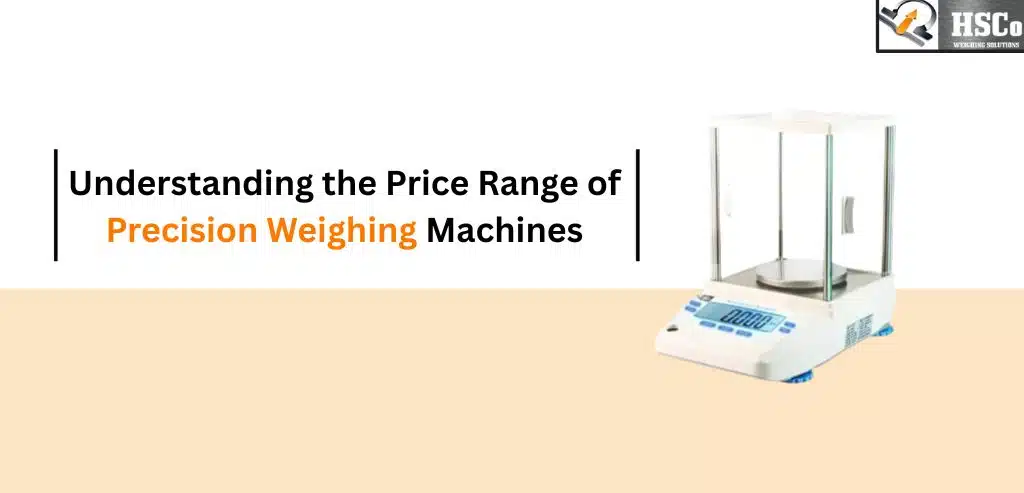
Precision weighing machines are essential for industries where precise measurements are essential. Whether used in laboratories, pharmaceutical firms, or manufacturing plants, these machines give very precise weight readings. Their prices, however can differ considerably based on various factors including accuracy, capacity and features. This article will explain into the determinants of precision weighing machines’ pricing, give you a clear idea of the price range and give tips on how to think before buying. By the conclusion, you’ll know exactly what affects pricing ,and how to achieve the perfect balance for your requirements.
See precision scale prices
HSCo's precision scales start from Rs. 700 (ex-GST) and go up to laboratory balances. See the range with capacities and prices. See precision scales
What are precision weighing machines?
Precision weighing machines are high-accuracy instruments that are used to weigh objects with very high accuracy usually to the milligram, or even microgram level. As opposed to standard weighing scales, which may provide a wider range of weights but with lower accuracy, precision scales are constructed to weigh small quantities of mass with high sensitivity. These machines have a significant function in industries such as pharmaceuticals, research facilities and quality control manufacturing, where small variations in weight can have significant effects.
For instance, a pharma manufacturing company would utilize precision weigh scale equipment in order to get exact dosage of medicines
active ingredients. These scales provide much more detail than a standard kitchen or industrial scale, which may only read to the nearest gram.
Key Features That Affect the Price of Precision Weighing Machines
Accuracy and Resolution
The main factor of the price of precision weighing machines is accuracy. Machines that offer higher accuracy (e.g., 0.001g or even down to microgram levels) are significantly more expensive. This is because achieving such fine resolution requires advanced technology and specialized components to minimize error and fluctuation.
Weighing Capacity
The capacity of the scale impacts its price. Weighing balances that are capable of higher loads (e.g., up to 30 kg or higher) tend to be more costly because they need stronger, more durable components to keep accurate readings over a wider weight range.
Build Material and Durability
Such materials as stainless steel are harder and more resistant to corrosion, so they will work best for industrial and lab settings. Scales that are made of more durable materials will last longer but are more expensive than plastic, or lighter materials, which are not always as long-lasting but lower in cost.
Calibration Choices
Scales that have automatic calibration are more costly compared to those that need manual calibration.Internal calibration, which adjusts automatically the accuracy of the scale over time, can increase the price, but it lowers the requirement for external calibration services.
Connectivity and Add-on Features
New precision weighing equipment is usually used with advanced features like USB, Bluetooth, or Wi-Fi connectivity allowing for data logging or remote monitoring. While these features add convenience, they also increase the price due to the added technology and functionality.
Brand Reputation and After-Sales Support
Well-known brands in the weighing scale industry often charge a premium for their products, but in return, they offer better reliability, longer warranties, and superior after-sales support. For many businesses, the peace of mind that comes with a trusted brand is worth the extra cost.
Price Range Breakdown by Category
When considering a precision weighing machine, the price range is typically divided into three categories, each offering different features and capabilities based on your needs:
- Low-End (₹8,000–₹20,000): Basic scales with limited precision (0.1g to 0.01g), manual calibration, and minimal features. Ideal for less sensitive applications, such as general lab tasks or light industrial use.
- Mid-Range (₹20,000–₹75,000): Offers moderate precision (e.g., 0.01g), automatic calibration, and better durability. Suitable for moderate-scale lab or industrial use, with some smart features like data logging.
- High-End (₹75,000 and above): Provides top-tier accuracy (0.001g or finer), advanced connectivity (Bluetooth/Wi-Fi), and internal calibration. Designed for specialized applications in pharmaceutical research, quality control, and scientific research, often with industry certifications.
The price varies significantly depending on the required features, accuracy, and capacity. Low-end versions generally address general weighing requirements, whereas high-end versions offer the accuracy and functionality required for important industrial or scientific applications.
Hidden and Additional Costs to Keep in Mind
When purchasing a precision weighing machine it is important to be aware of several hidden and additional expenses that are often overlooked:
- Third-party or annual calibration services: Most precision scales require frequent calibration to maintain their accuracy, a constant expense.
- Spare parts and maintenance: Although good machines are long-lasting you may have to replace some parts over the time.
- Extended warranties: These increase the price but can be a source of comfort particularly for high-end models.
- Integration or customization with laboratory software: When your scale requires integration into specialized software, setup charges may be added.
These additional fees can become costly so it’s critical to include them in your total cost of ownership.
How to Select the Proper Machine for Your Budget?
Selecting an appropriate precision weighing machine is a function of several factors:
Understand your primary use case: various applications have different degrees of accuracy that they require. For instance measuring medications may require extremely fine accuracy, whereas measuring materials used in industry may not require such precision. Knowing your specific use can assists you in choosing the right scale.
Choose necessary accuracy, and capacity: If your work does not need very high precision (such as microgram-level precision), or if the objects you are weighing are not very heavy, you can save money by selecting a machine with lower precision and lower capacity. This helps to keepcheck on the costs in without sacrificing performance.
Set a realistic budget and match features accordingly: Identify the key features you need (e.g., precision, weighing capacity, calibration) and align them with your budget. Don’t spend more money on features that you won’t use, including advanced connectivity or smart technology, if they’re not going to bring value to your operation.
Avoid paying extra for features you won’t use: Some advanced features such as wireless capabilities or data logging may be unnecessary if your application doesn’t need them. Concentrate on the central functionality you need, do not pay for add-ons that will not enhance your everyday operations.
Consider long-term reliability and spare part availability: Choose a brand that is known for its durability and the ready availability of spare parts. A good brand will minimize the likelihood of costly repairs in the future and keep your scale working precisely for many years.
Hindustan Scale Company provides professional advice, and guidance to assist you in making the proper choice of precision weighing machine based on your requirements and budget, guaranteeing that you receive maximum return on investment.
Conclusion
It is important to understand the numerous factors influencing precision weighing machine cost when purchasing it. With numerous models to choose from, it’s important to select a machine that suits your operational requirements and budget. If you’re in a laboratory, pharmaceutical firm, or industrial environment, there is a precision scale to meet your needs. If you’re not sure which model you need, contact Hindustan Scale Company for professional advice and personalized recommendations.