

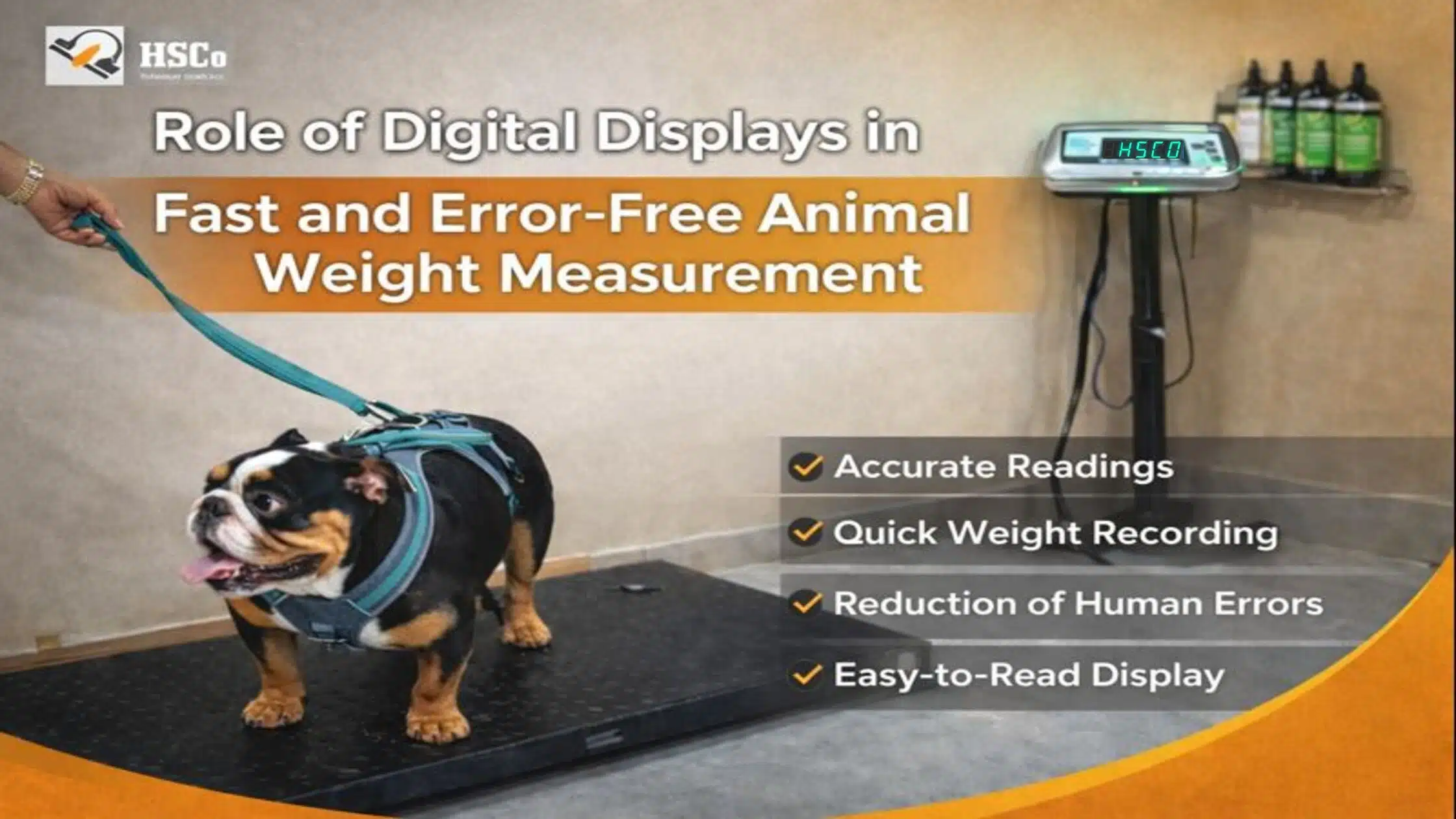
If you’ve ever tried weighing an animal on a busy farm day, you know how quickly things can go sideways. The animal shifts, someone misreads the dial, The animals start jumping suddenly. That’s where digital displays make a real difference. They take a process that used to feel fussy and uncertain and turn it into something fast, clear, and reliable.
Animal scales with a clear digital display
Compare HSCo's electronic animal scales for livestock weighing. Ask about the display, platform size and records needed at your weighing point. See animal husbandry scales
Digital displays aren’t just about “modern equipment.” They directly reduce human error, speed up routine tasks, and help you make better decisions whether you’re managing cattle, sheep, goats, poultry, or even pets in a clinic setting.
Why weight accuracy matters more than people think
Animal weight isn’t just a number you record and forget. It affects daily choices and long-term results.
Here’s what accurate weight impacts right away.
- Medication and deworming doses (Underdose can fail, overdose can harm)
- Feed planning (prevent waste and improve growth)
- Health monitoring (weight loss often shows up before obvious illness)
- Breeding and marketing decisions (timing matters, and weight confirms readiness)
Even a small mistake like reading 20 kg too high or too low can throw off treatment or profitability.
The biggest problem with traditional weighing: human error
Old-school systems often depend on people reading a dial, estimating small lines, or writing the number down while the animal is still moving. That’s a recipe for “close enough” math.
Common issues include:
- Misreading the scale due to poor angle or low light
- Confusing units (kg vs lb)
- Writing down the wrong number in a hurry
- Getting different readings depending on who is measuring
When you’re weighing multiple animals back-to-back, even careful people make mistakes. Digital displays reduce that risk by showing clear numbers that are hard to misinterpret.
How digital displays make weighing faster
Speed is not just convenient, it can improve animal handling too. The longer weighing takes, the more stressed animals (and people) get.
Digital displays help by:
If animals move around or jump off of an open scale, the readings may not be right. Enclosed scales stop things from moving, which makes weight measurements more accurate and stable.
This level of accuracy is very important for:
1) Showing instant readings
Most digital indicators stabilize faster than manual dial reading. You don’t need to “guess where the needle settles.” You see the number.
2) Using weight-hold and stabilization features
Many systems include a function that “locks” the weight once it’s stable, even if the animal shifts after.
That’s especially useful for:
- Nervous calves
- Wriggly goats
- Dogs on clinic scales
- Poultry crates being moved in and out
3) Reducing back-and-forth communication
With an analog setup, one person reads, another writes, someone asks, “Was that 312 or 321?” Digital displays reduce those repeat checks. The number is clear, and often visible from a distance.
The real value: fewer mistakes in records and dosing
Accuracy becomes most important after the animal steps off the scale when you use the number for something important.
Better dosing decisions
Let’s say you’re giving dewormers to 40 goats. If weights are estimated or misread, dosing becomes uneven. Some animals won’t get enough (treatment fails), others get too much (wasteful and potentially risky). Digital displays help you do based on real weights, not rough guesses.
Cleaner recordkeeping
Many digital display systems pair well with:
- Manual entry on a phone or tablet
- Built-in memory for last readings
- Bluetooth or USB transfer to herd management software (depending on the model)
That means fewer “paper smudges,” fewer transcription errors, and less time later trying to decode handwriting.
Features to look for in a good digital weighing display
Not all digital indicators are equal. If you’re investing, a few features make day-to-day use much smoother.
- Bright, easy-to-read screen (especially in sun or low light)
- Stable reading / motion filtering
- Tare function (critical for crates, cages, or platforms)
- Unit toggle (kg/lb, ideally with a lock to prevent accidental switching)
Nice-to-have features
- Weight hold
- Rechargeable battery
- Water/dust resistance for farm conditions
- Connectivity (Bluetooth/Wi-Fi/USB) if you track data digitally
Practical tips for more accurate animal weights
Even with the best digital display, technique still matters. Here are a few simple habits that keep results consistent:
Before weighing
- Place the scale on level ground
- Zero the display before each animal (or each batch)
- Remove mud buildup from platforms (it can affect readings)
During weighing
- Keep the animal centered on the platform
- Wait for the stable indicator (if available)
- Use a calm, steady approach—rushing makes animals move more
After weighing
- Record the weight immediately (or use the indicator’s memory feature)
- Double-check unit settings (kg/lb) at the start of every session
Where digital displays make the biggest difference
You’ll notice the benefits fastest in situations where speed and accuracy matter most:
High-volume weighing days
Vaccination, deworming, selling, or sorting days are hectic. Digital displays keep things moving.
Young or restless animals
Animals that won’t stand still are much easier to weigh with stabilization and hold functions.
Health monitoring and recovery
If you’re tracking weight gain or loss over time, consistent readings matter. Digital displays reduce “noise” in the numbers, so trends are easier to trust.
Conclusion
Digital displays turn animal weighing into a clearer, faster, and more dependable routine. They reduce misreads, cut down on record errors, and support better decisions in feeding, treatment, and herd management. Whether you’re weighing a few animals a week or running large batches through a chute, a good digital indicator helps you work smarter—and with a lot less second-guessing.
FAQs
1) Are digital animal scales more accurate than analog scales?
In most cases, yes. Digital displays reduce misreading errors and often include stabilization features that make results more consistent, especially with moving animals.
2) What does the “tare” function do?
Tare lets you subtract the weight of a crate, cage, or container so the display shows only the animal’s weight.
3) Can digital displays work outdoors on farms?
Yes, but choose a model with good brightness, strong casing, and dust/water resistance if you’ll use it in harsh conditions.
4) How do I get stable readings if the animal keeps moving?
Use a scale with motion filtering or “weight hold.” Also keep the platform level, center the animal, and wait for the stable indicator before recording.
5) Do digital weighing systems help with recordkeeping?
Absolutely. Many indicators store readings or connect to apps and software, which reduces handwriting mistakes and saves time when managing herd data.