
Blogs
Verified gross mass: how to weigh an export container

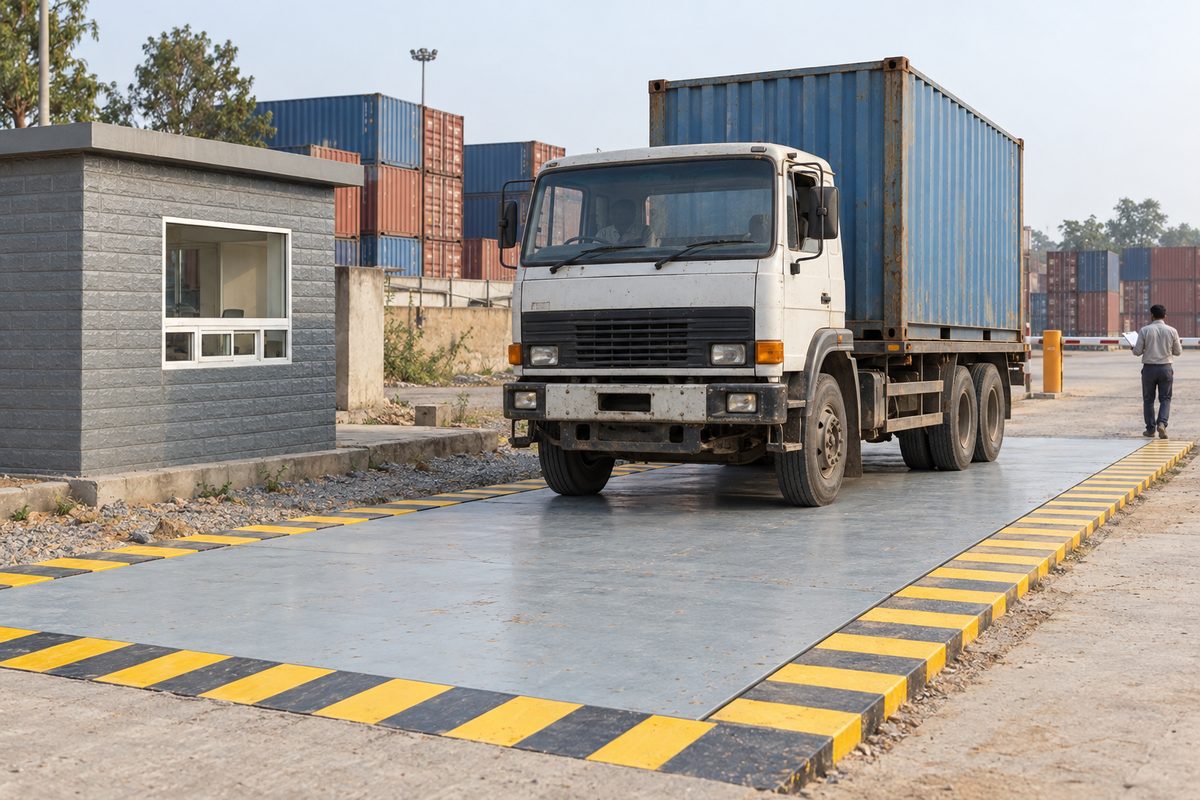
Verified gross mass (VGM) is the weight of a packed container, made up of the cargo, its pallets, dunnage and securing material, plus the container’s own tare [4]. Under SOLAS, a packed container covered by regulation VI/2 is not loaded onto the ship without it [10]. You get it by weighing the packed container or by adding weighed contents to the tare [4, 5].
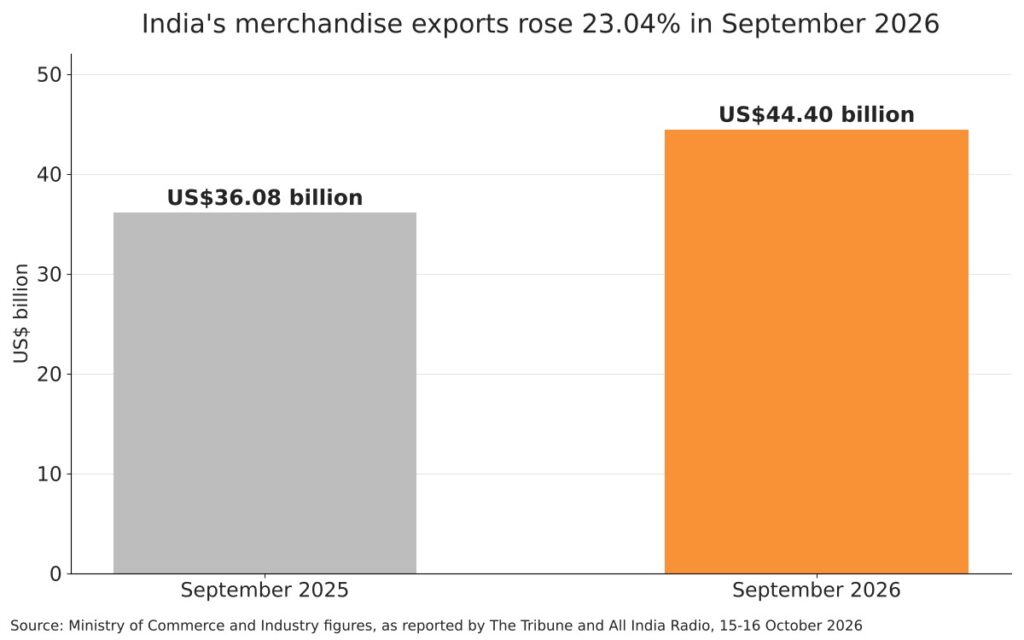
India’s merchandise exports were US$44.40 billion in September 2026, against US$36.08 billion in September 2025, in Ministry of Commerce and Industry figures reported on 15 and 16 October 2026 [1, 2, 3]. The Tribune and ANI both put the rise at 23.04% [1, 2].
What is verified gross mass and who has to declare it?
The shipper declares it. Since the SOLAS amendments took effect on 1 July 2016, the shipper states the verified gross mass in a shipping document signed by a person duly authorized by the shipper, and submits it to the master or his representative and to the terminal representative early enough for the ship’s stowage plan [4, 5, 10].
Under Method 2, whoever packs the container needs a weighed figure for each item that goes into it. Original sealed packages with their accurate mass clearly and permanently marked on them need not be weighed again [11].
How do Method 1 and Method 2 work?
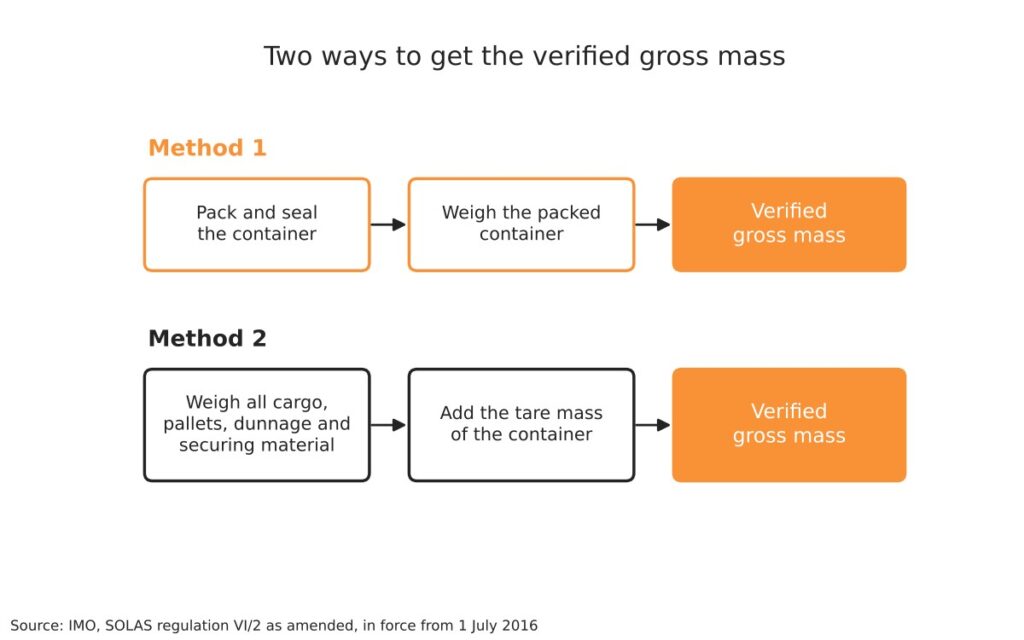
- Method 1: weigh the packed and sealed container [4, 5].
- Method 2: weigh all packages and cargo items, including pallets, dunnage and other securing material, and add the tare mass of the container [4].
For Method 1, SOLAS asks for calibrated and certified equipment [5, 10]. For Method 2, the IMO asks for a certified method approved by the competent authority of the State where packing of the container was completed [4]. In India, rule 7 and Annexure I of the Merchant Shipping (Carriage of Cargoes and Oil Fuels) Rules, 2026, notified in the Gazette on 2 September 2026, set out both methods [12]. The Directorate General of Maritime Administration (DGMA) cargo safety page is a directory of approvals, with their validity dates, for dedicated secure website providers and their weighbridges and for shippers approved for Method 2 [6]. When checked on 19 October 2026, the page linked to weighbridge-list downloads for some providers and referred readers to the provider’s website for others, and it listed expired approvals too, so check that the one you rely on is still valid [6].
How do you work out verified gross mass under Method 2?
Add every weighed item, then the tare. Here is a worked example for one 20-foot container of cartons on pallets stacked two high, with illustrative figures. Use your own readings and your container’s tare.
VGM = cargo + pallets + dunnage and securing material + container tare
| Item | Worked example |
|---|---|
| Cargo on 20 pallets, 850 kg each | 17,000 kg |
| 20 empty pallets, 25 kg each | 500 kg |
| Dunnage and lashing | 120 kg |
| Container tare | 2,250 kg |
| Verified gross mass | 19,870 kg |
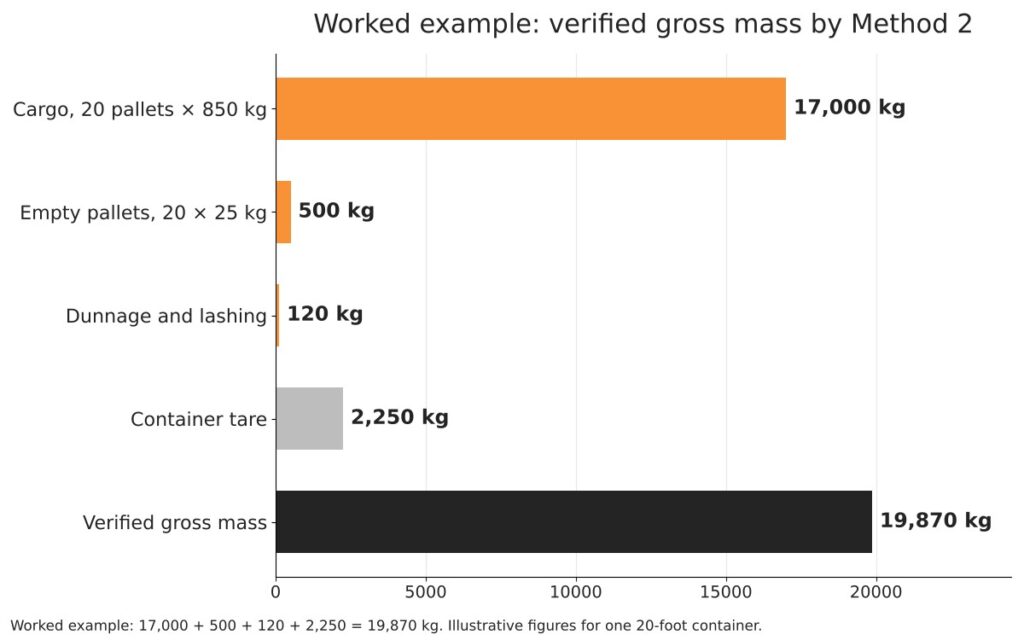
Leave out the empty pallets and the declared figure falls to 19,370 kg, which is 500 kg or about 2.5% short.
How do you get the verified gross mass on a weighbridge?
Method 1 weighs the packed and sealed container [4, 5], and the UK guidance allows calculations within Method 1 [5]. On a truck weighbridge, one way is two readings, the truck with the container and the same truck and trailer without it.
VGM = truck with packed container − same truck and trailer without the container
Worked example: 34,870 kg with the container and 15,000 kg without it gives 19,870 kg, the same figure Method 2 gave above. In India, Annexure I of the 2026 Rules says the weighbridge operator provides the VGM in a tamper-proof document [12].
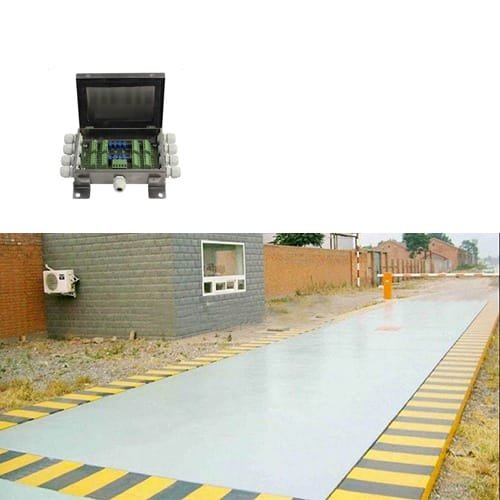
- Ask the weighbridge operator to show that the weighbridge is electronic, calibrated and certified by the Department of Legal Metrology, holding valid ISO 9001:2015 (or updated standard) quality certification, protected against tampering with its calibration and, if required, able to weigh the loaded container with the truck [12]. The operator must also check its calibration with standard weights at frequent intervals and record those checks [12]. Check on the DGMA directory that the weighbridge is on the list of a dedicated secure website provider whose approval is current [6].
- Check that the empty deck reads zero before the truck drives on.
- Take both readings with the same truck and trailer, with nothing else changed on board.
- Have a person the shipper has authorised sign the shipping document, with that person’s name, designation, phone number and email, and submit it electronically with a digital signature [12]. Upload the Form-1 details on a dedicated secure website, and forward that information electronically to the master or his representative as soon as the container’s gross mass is verified [12]. Keep the operator’s tamper-proof document and give it to the master or his representative on request [12].
Which HSCo scale fits a container stuffing yard?
For Method 1 at a yard, the weighbridge must meet Annexure I paragraph 11, its operator must submit Form-3, and it should appear on a dedicated secure website provider’s weighbridge list [6, 12]. Under Method 2, the shipper weighs the cargo and the pallets by a certified method approved by the competent authority [4, 12].
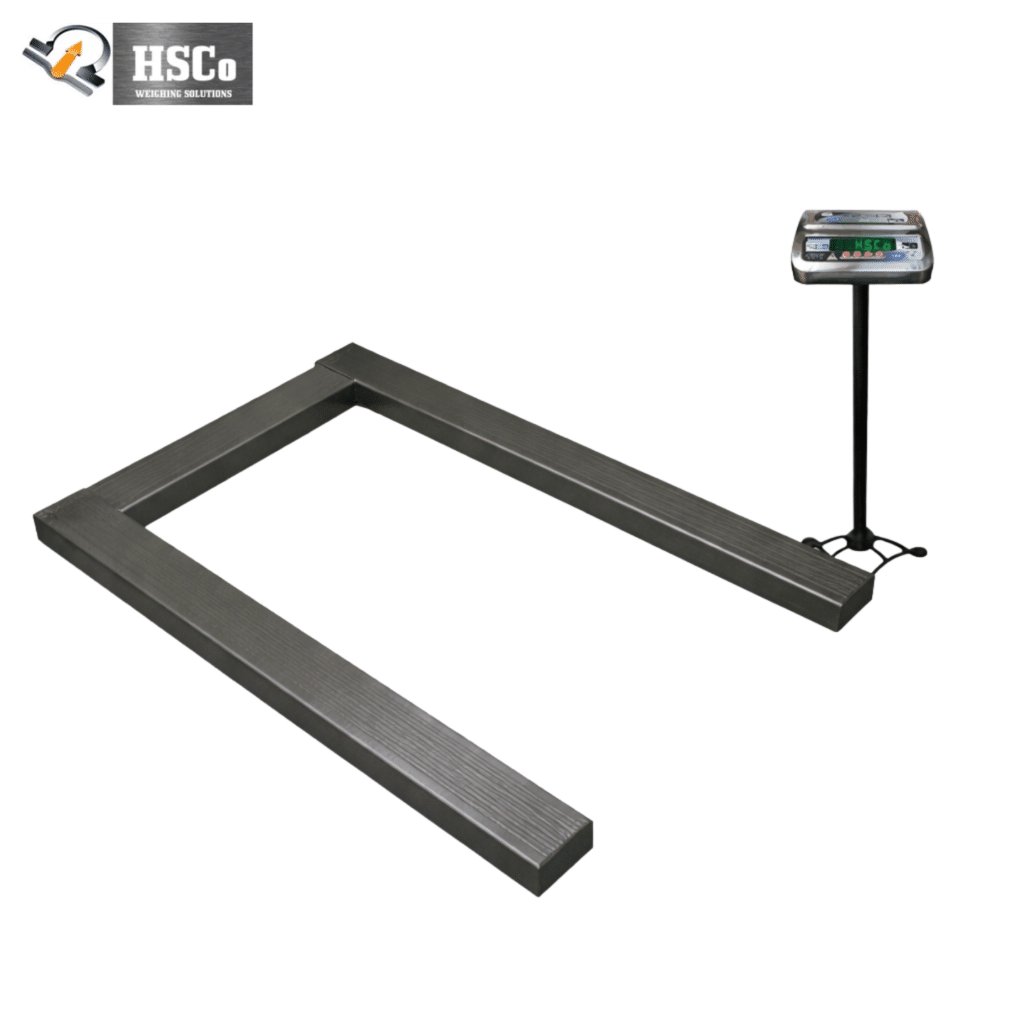


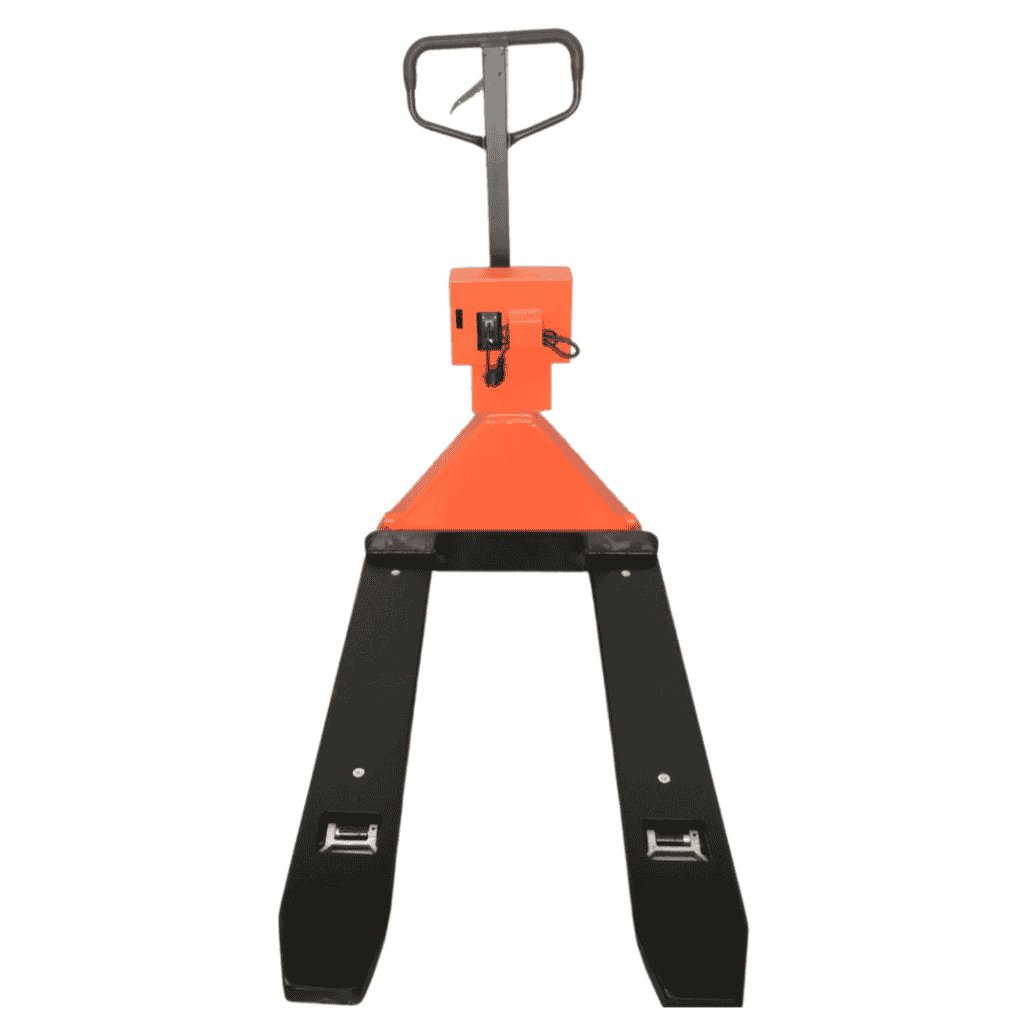
More scales for docks and container yards are on our weighing scales for ports and shipping page, and our dharam kanta weighbridge page covers weighbridge sizes. Call +91-7045922250 or write to hsc@hindustanscale.com.
Frequently asked questions
Does verified gross mass include the weight of the container?
Yes. Verified gross mass includes the tare mass of the container itself. Under Method 2 the shipper weighs all packages and cargo items, including pallets, dunnage and other securing material, and then adds the tare mass of the container [4]. Under Method 1 the packed and sealed container is weighed, tare and all [4, 5].
Who is responsible for the verified gross mass of a container?
The shipper is responsible for the verified gross mass of a container. The IMO says the shipper states the verified gross mass in the shipping document and submits it to the master or his representative and to the terminal representative early enough for the ship’s stowage plan [4]. This has applied to packed containers covered by SOLAS regulation VI/2 since the SOLAS amendments entered into force on 1 July 2016 [4, 5].
When did verified gross mass become mandatory?
Verified gross mass became mandatory on 1 July 2016, when amendments to SOLAS regulation VI/2 entered into force [4]. The amendments came through IMO resolution MSC.380(94), and the IMO guidelines on verified gross mass are MSC.1/Circ.1475 [4]. On ships covered by the rule, a packed container without a verified gross mass is not loaded, except containers on a chassis or trailer driven on or off a ro-ro ship on short international voyages [10].
Sources
- The Tribune, “India’s exports rise 23% in September as merchandise trade deficit narrows” (tribuneindia.com, 15 October 2026). Tribune News Service report
- ANI, “India’s merchandise exports jump 23% to USD 44.4 billion in September, trade deficit narrows” (tribuneindia.com, 15 October 2026). ANI report carried by The Tribune
- All India Radio News, “India’s merchandise exports to US touch 51 billion dollars during April-September 2026” (newsonair.gov.in, 16 October 2026).
- International Maritime Organization, “Verification of the gross mass of a packed container” (imo.org). SOLAS regulation VI/2, resolution MSC.380(94), MSC.1/Circ.1475
- Maritime and Coastguard Agency (UK), “Verification of the gross mass of packed containers transported by sea” (gov.uk, 10 June 2015). Published 10 June 2015, last updated 28 April 2020
- Directorate General of Maritime Administration, “Cargo Safety” (dgma.gov.in). Cargo Branch, Nautical Wing: approvals under MS Notice 04 of 2016
- Hindustan Scale Company, “Weighbridge HSCRCTWB 10-120 t, 11 Sizes” (hindustanscale.com).
- Hindustan Scale Company, “Pallet Truck Scale with Printer 2-3 t, HPT” (hindustanscale.com).
- Hindustan Scale Company, “U Shaped Pallet Scale 2000 kg x 0.5 kg” (hindustanscale.com).
- International Maritime Organization, “Resolution MSC.380(94): Amendments to the International Convention for the Safety of Life at Sea, 1974, as amended” (imo.org, 21 November 2014). SOLAS regulation VI/2 paragraphs 4 to 6
- International Maritime Organization, “MSC.1/Circ.1475: Guidelines regarding the verified gross mass of a container carrying cargo” (imo.org, 9 June 2014). Paragraphs 5.1.1 to 5.1.2.1
- Ministry of Ports, Shipping and Waterways, “Merchant Shipping (Carriage of Cargoes and Oil Fuels) Rules, 2026” (dgma.gov.in, 2 September 2026). Gazette of India Extraordinary, Part II Section 3(i); rule 7 and Annexure I