
Blogs
Sweet box weight: should the box count as sweets on your bill?

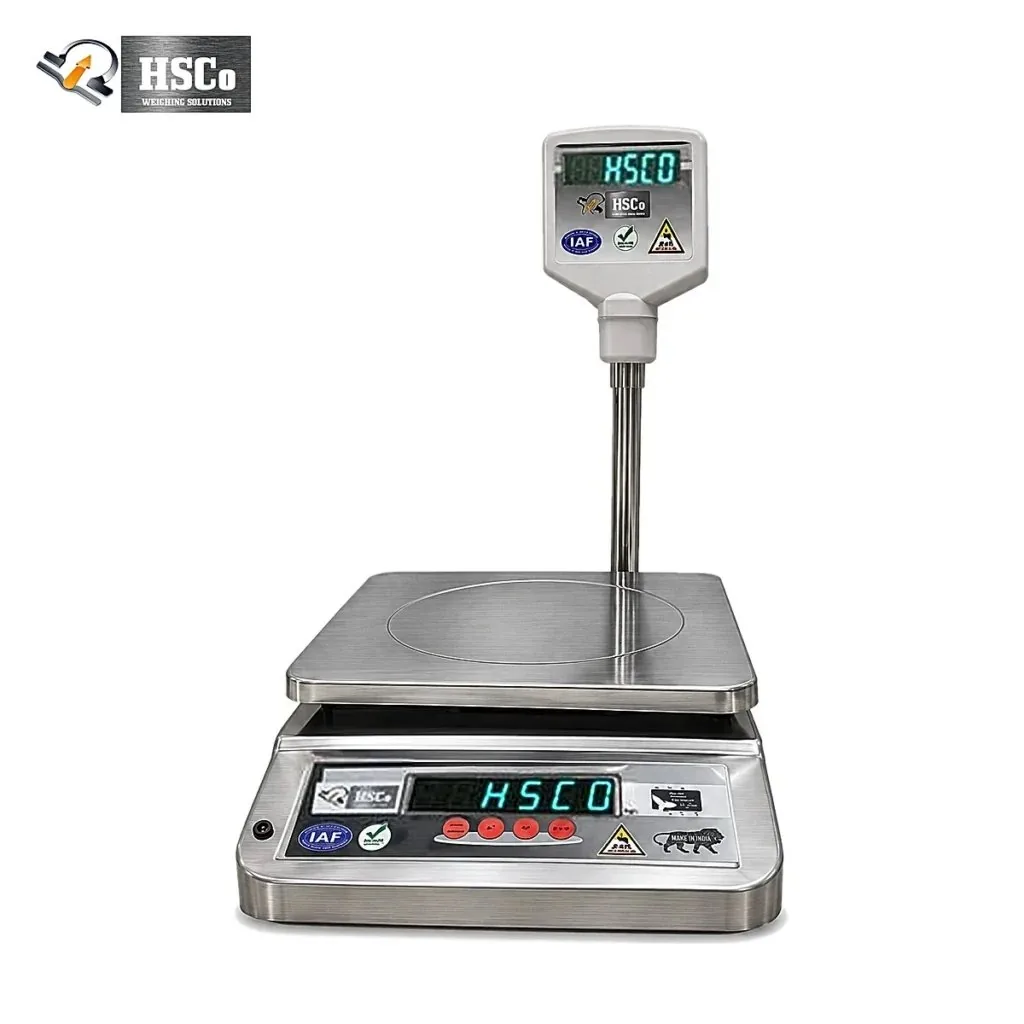
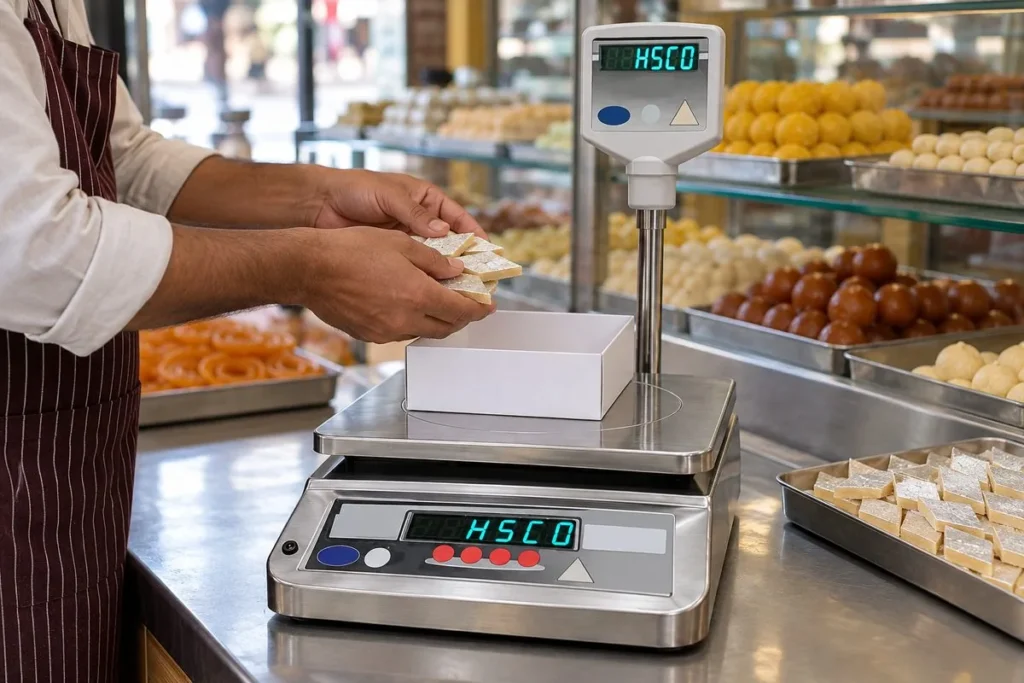
The weight of a sweet box should not be billed as sweets. The Kerala Legal Metrology Department tells buyers to make sure they get the full net weight of the sweets, without the weight of the packaging box [1]. The box may sit on the scale, as long as the shop puts it on empty, presses tare and only then fills it, so the sweet box weight never reaches your bill.
IANS reported on 21 October 2026 that Gujarat’s Legal Metrology Department checked about 455 establishments, including sweet shops, savoury outlets, dry fruit stores and other businesses, on 16 and 17 October 2026 [2]. According to the same IANS report, the department found irregularities at 251 of them and collected about ₹5.42 lakh in compounding fees [2]. The faults IANS listed included supplying less than the stated weight, not getting weighing scales re-verified and stamped, not displaying verification certificates and not holding packer registration [2].
Is it legal to bill the sweet box weight as sweets?
No. The rate per kg on the board is the price of the sweets, so every gram of box counted in the billed weight is a gram of sweets you do not get. Section 30(a) of the Legal Metrology Act, 2009 covers a seller who, selling by weight, delivers less than the quantity contracted for or paid for [3]. If a 50 g box is left untared and the scale reads 1 kg, you are billed for 1 kg and get 950 g of sweets.
How much does sweet box weight add to your bill?
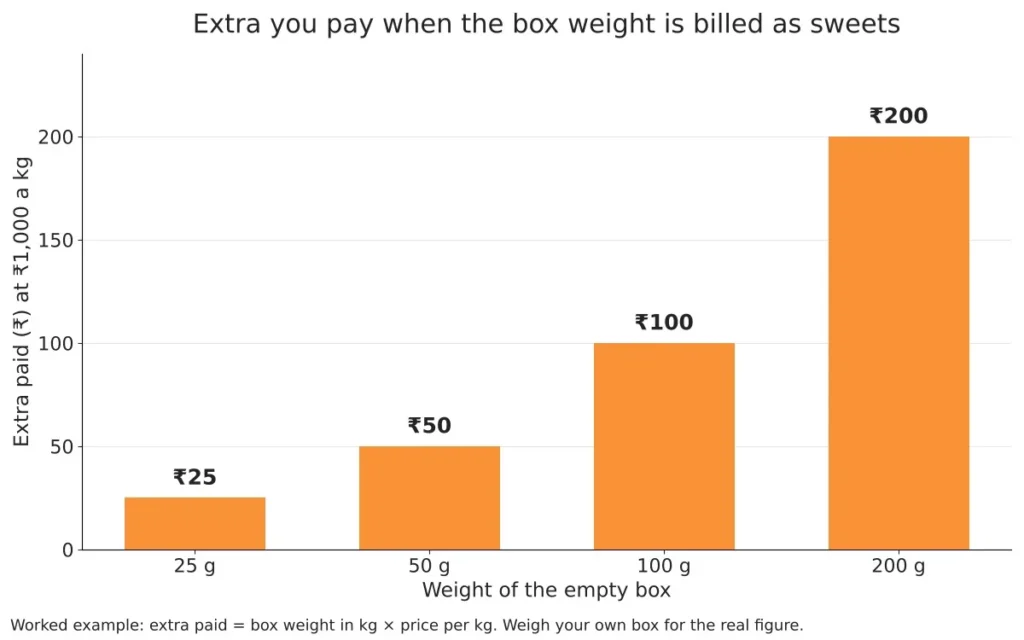
If the box weight is included in the billed weight, without tare or subtraction, you pay for the box at the sweets’ own rate. Work it out with one multiplication.
Extra paid = weight of the empty box in kg × price of the sweets per kg
| Empty box | Sweets in a box billed as 1 kg | Extra paid at ₹1,000 a kg |
|---|---|---|
| 25 g | 975 g | ₹25 |
| 50 g | 950 g | ₹50 |
| 100 g | 900 g | ₹100 |
| 200 g | 800 g | ₹200 |
The ₹1,000 a kg rate and the box weights are examples, not market figures. Weigh your own empty boxes on a stamped scale and use those weights.
How does the tare button take the box off the weight?
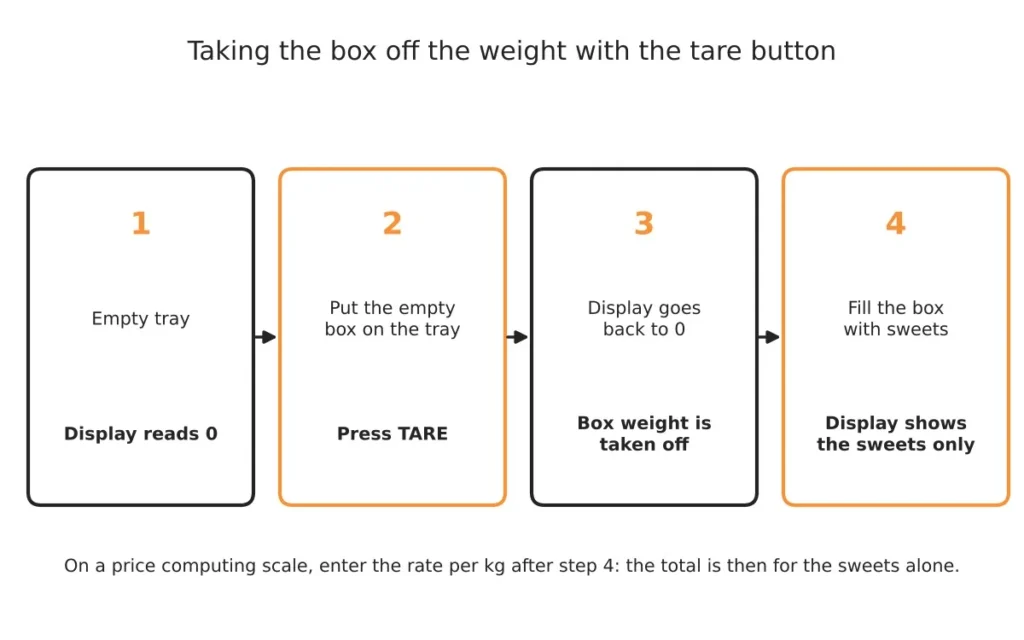
The tare button sets the display back to 0 with the box on the tray, so the scale then shows only what goes into the box. Tare is listed among the functions of the SSBP30 and ABSWR shop scales [6, 7]. Our post on the tare button has more.
- Check that the display reads 0 with the tray empty. If it does not, press zero.
- Put the empty box on the tray and press tare.
- The display goes back to 0, so the box weight is taken off.
- Fill the box with sweets. The display shows the sweets only, and on a price computing scale the total for the rate you enter is for the sweets alone.
How can you check a sweet box at the counter?
- Ask the shop to put the empty box on the scale first, where you can see it, and to press tare before adding sweets. The Kerala Legal Metrology Department asks buyers to check that the box weight is not included in the weight of the sweets [1].
- Look for the stamp and the verification certificate. Gujarat’s inspectors found shops that had not displayed verification certificates, IANS reported [2].
How often must a sweet shop scale be stamped again?
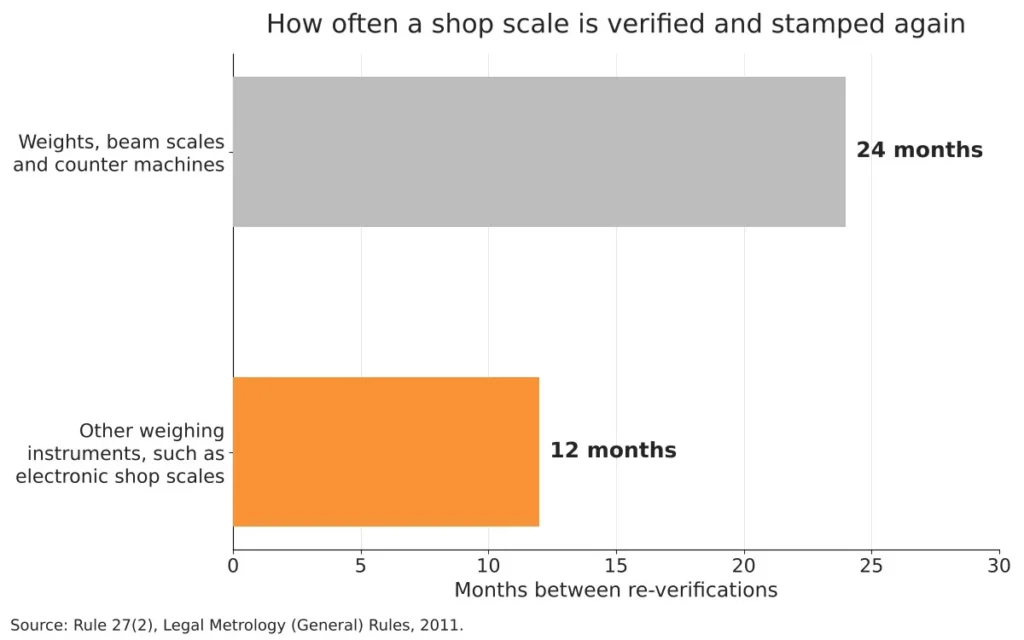
An electronic shop scale is re-verified and stamped every 12 months. Section 24 of the Legal Metrology Act, 2009 requires a weight or measure used in a transaction to be verified before it is put to that use [3]. Rule 27(2) of the Legal Metrology (General) Rules, 2011 sets 24 months for the instruments in clause (a), 60 months for storage tanks and 12 months for every other weight or measure, which includes electronic scales [4, 5]. Clause (a) covers weights, capacity and length measures, tape, beam scales and counter machines, and an amendment of 18 December 2025 added petrol and diesel fuel dispensers to it [4, 9].
Rule 27(4) adds that a weight or measure repaired before its due date must be re-verified and stamped before it goes back into use [4]. Our post on government stamping shows how to read the certificate and its renewal date.
Which HSCo scale fits a sweet shop counter?
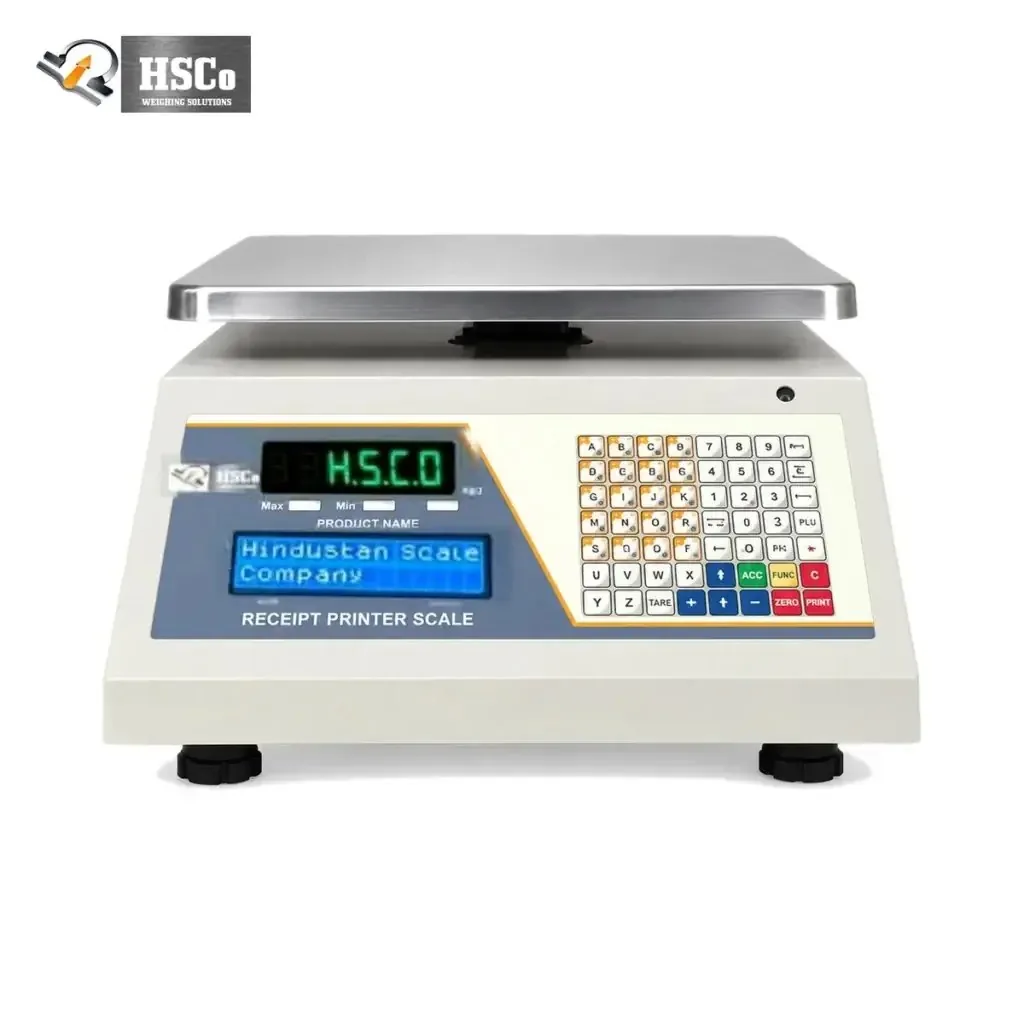
All three scales below weigh up to 30 kg and come stamped [6, 7, 8]. Choose by how you bill: weight only, weight with price, or a printed label or receipt.
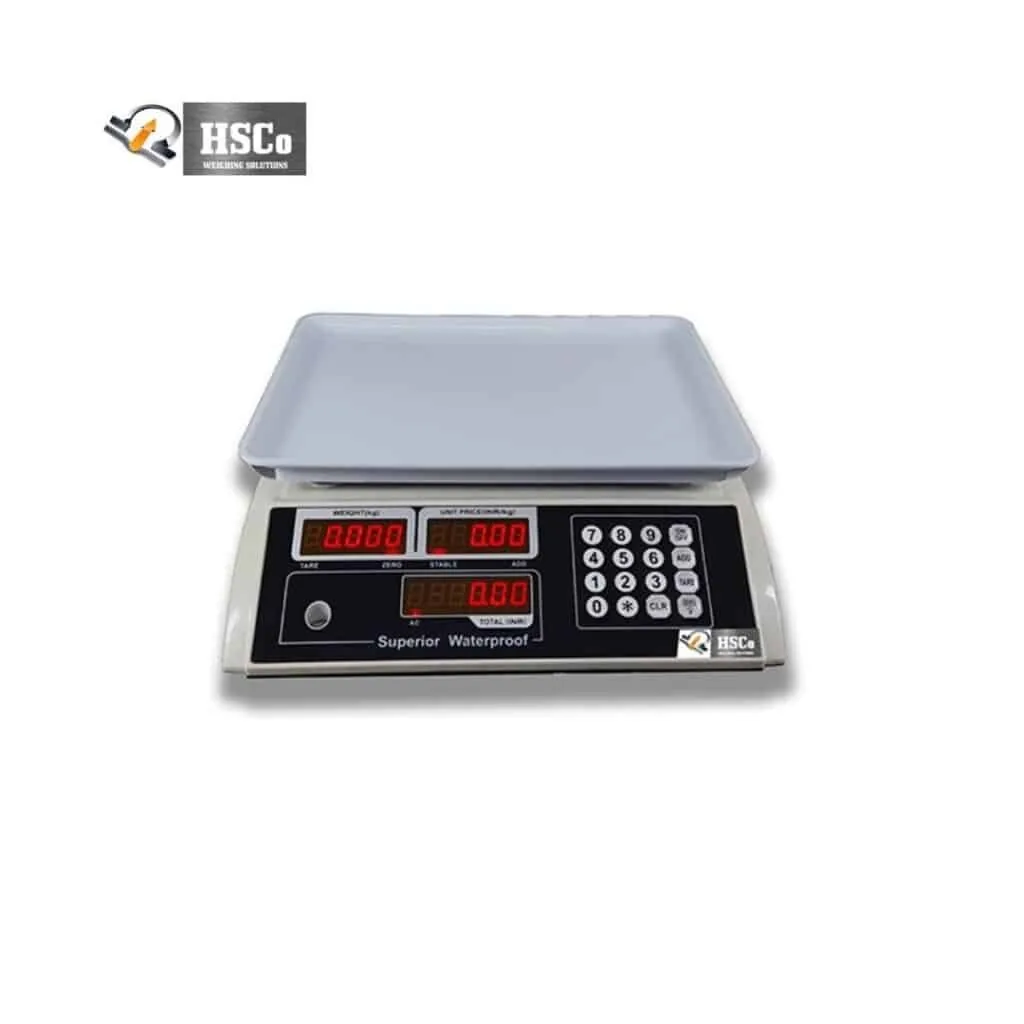
 SSBP30 table top scale with pole display: weighs up to 30 kg in 1 g steps on a 250 × 300 mm stainless-steel tray, with tare, a front display and a pole display for the customer [6], which suits a sweet shop that bills by weight.
- POS barcode printing scale: weighs up to 30 kg, in 1 g steps up to 10 kg and 5 g steps up to 30 kg, and prints barcode labels or receipts, with memory for 2,000 products [8]. Shops that pack boxes ahead of a busy day can label each one.
More counter scales are on our weighing solutions for sweet shops page. Tell us what you sell and how you bill: call +91-7045922250 or write to hsc@hindustanscale.com.
Frequently asked questions
Should the sweet box weight count as sweets on the bill?
No. The Kerala Legal Metrology Department advises buyers to make sure they receive the full net weight of the sweets, without the weight of the packaging box [1]. The sweets can still be weighed in the box, as long as the shop puts the empty sweet box on the scale, presses tare so the display reads 0, and then adds the sweets.
How much does an untared 50 g sweet box add to the bill?
A 50 g sweet box included in the billed weight without tare is charged at the sweets’ own rate. At ₹1,000 a kg, the box adds ₹50 to the bill, and a box billed as 1 kg holds 950 g of sweets. At ₹600 a kg, the same 50 g box adds ₹30. These rates are worked examples, not market prices.
What does the tare button do on a shop scale?
The tare button on a shop scale sets the display back to 0 with a container on the tray, so the scale shows only what is added after that. Tare is listed among the functions of the HSCo SSBP30 and ABSWR scales [6, 7]. In a sweet shop, the empty box goes on first, then tare, then the sweets.
How often must an electronic shop scale be stamped in India?
An electronic shop scale is re-verified and stamped every 12 months under Rule 27(2)(c) of the Legal Metrology (General) Rules, 2011 [4]. Weights, beam scales and counter machines go 24 months between re-verifications under Rule 27(2)(a) [4]. Section 24 of the Legal Metrology Act, 2009 requires verification before a weight or measure is used in a transaction [3].
Sources
- Legal Metrology Department, Kerala, “Consumer Guidance” (lmd.kerala.gov.in). Official consumer guidance; item on sweets and the packaging box.
- Social News XYZ, “Gujarat finds irregularities at 251 shops during festive checks, collects Rs 5.42 lakh” (socialnews.xyz, 21 October 2026). IANS wire story. Not linked: only official sites may be linked. Also carried by english.punjabkesari.com and tennews.in.
- Government of India, India Code, “The Legal Metrology Act, 2009 (sections 24 and 30)” (indiacode.nic.in). India Code did not answer during writing, so it is not linked; the same Act text was read on the FAOLEX copy.
- Ministry of Consumer Affairs, Food and Public Distribution, “The Legal Metrology (General) Rules, 2011, G.S.R. 71(E) (rule 27)” (megweights.gov.in, 7 February 2011). Gazette copy hosted by the Legal Metrology Department, Meghalaya; rule 27 on periodical verification.
- Hindustan Scale Company, “What Is Government Stamping And Why Is It So Important?” (hindustanscale.com, 14 April 2021). First published 14 April 2021; the page shows an update on 28 September 2026.
- Hindustan Scale Company, “SSBP30 Table Top Scale with Pole Display – 30 kg × 1 g, Stainless Steel Body and Tray” (hindustanscale.com).
- Hindustan Scale Company, “ABSWR Waterproof Price Computing Scale – 30 kg, Weight, Rate and Total” (hindustanscale.com).
- Hindustan Scale Company, “POS Barcode Printing Scale – 30 kg, Label and Receipt Printer” (hindustanscale.com).
- Ministry of Consumer Affairs, Food and Public Distribution, “Legal Metrology (General) Seventh Amendment Rules, 2025, G.S.R. 905(E)” (consumeraffairs.gov.in, 18 December 2025). Substitutes rule 27(2)(a): adds fuel dispensers (petrol and diesel) to the 24-month list.