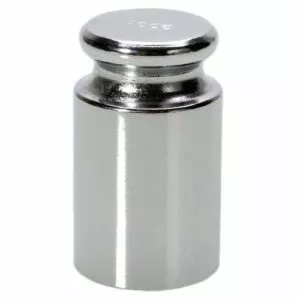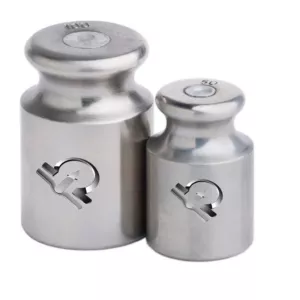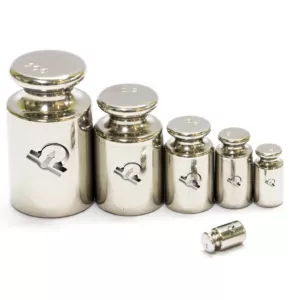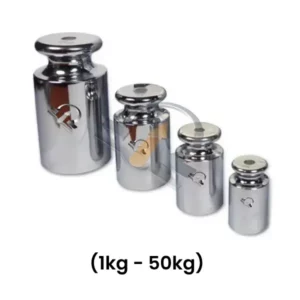
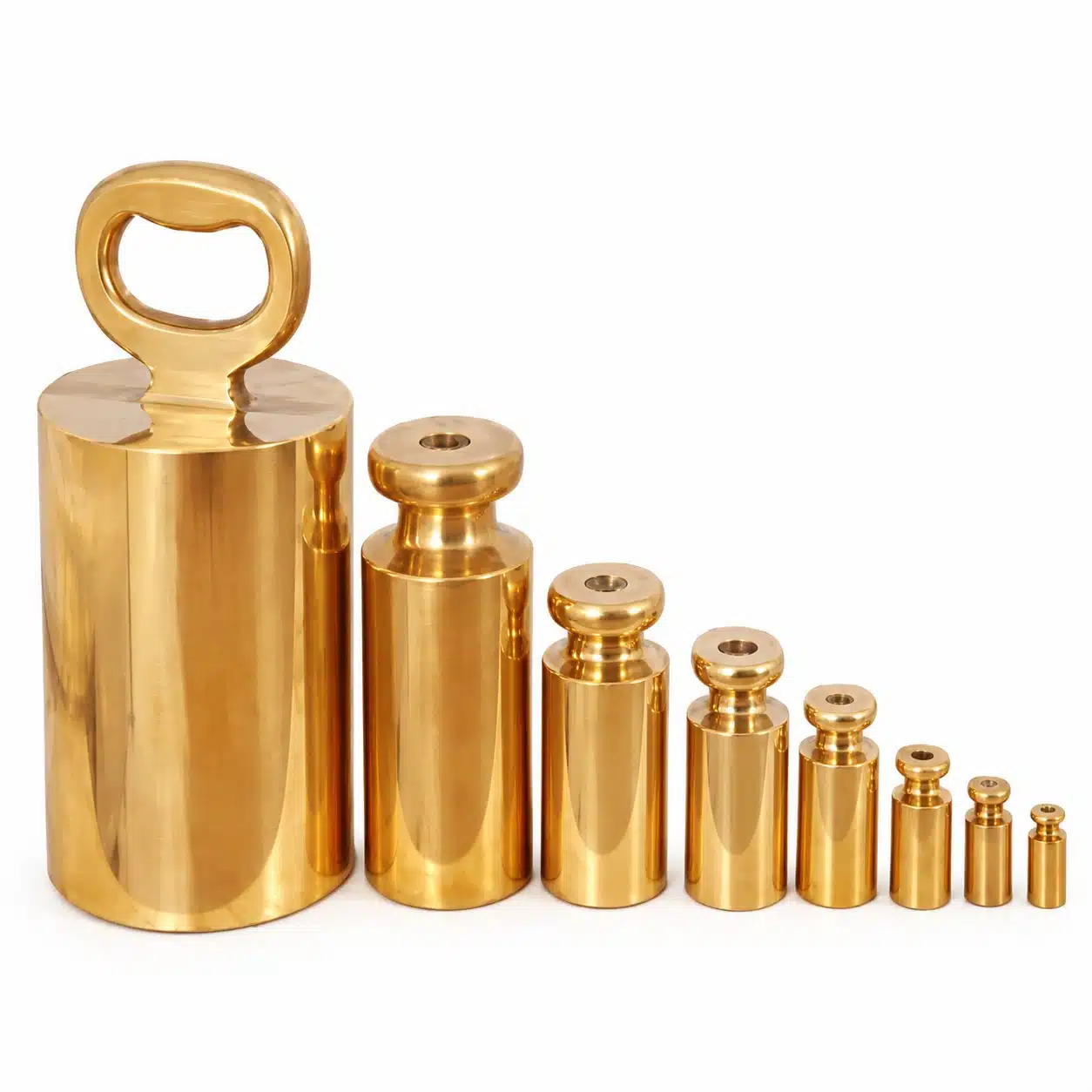

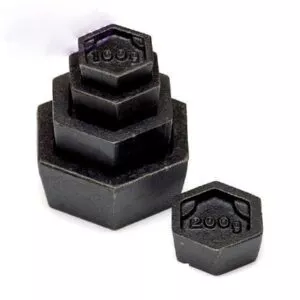
HSCo brass bottle weights are cylindrical calibration weights with a lifting knob, polished to a smooth, glass-like finish and laser-marked with their value. Brass does not react with most acids and alkalis, which is why pharma companies often choose it. Weights run from 1 g to 50 kg.
Why buyers choose brass
- Chemically inert. Does not react with most acids and alkaline materials, so it suits pharma and chemical labs.
- Smooth polished finish. Dust does not settle easily on the surface.
- Laser-etched markings. The value is marked by laser, not stamped into the weight.
- Classic bottle shape. Easy to lift by the knob and stable on the pan.
Specifications
| Material | Brass, polished |
|---|---|
| Shape | Cylindrical bottle weight with knob |
| Values | 1 g, 2 g, 5 g, 10 g, 20 g, 50 g, 100 g, 200 g, 500 g, 1 kg, 2 kg, 5 kg, 10 kg, 20 kg, 50 kg |
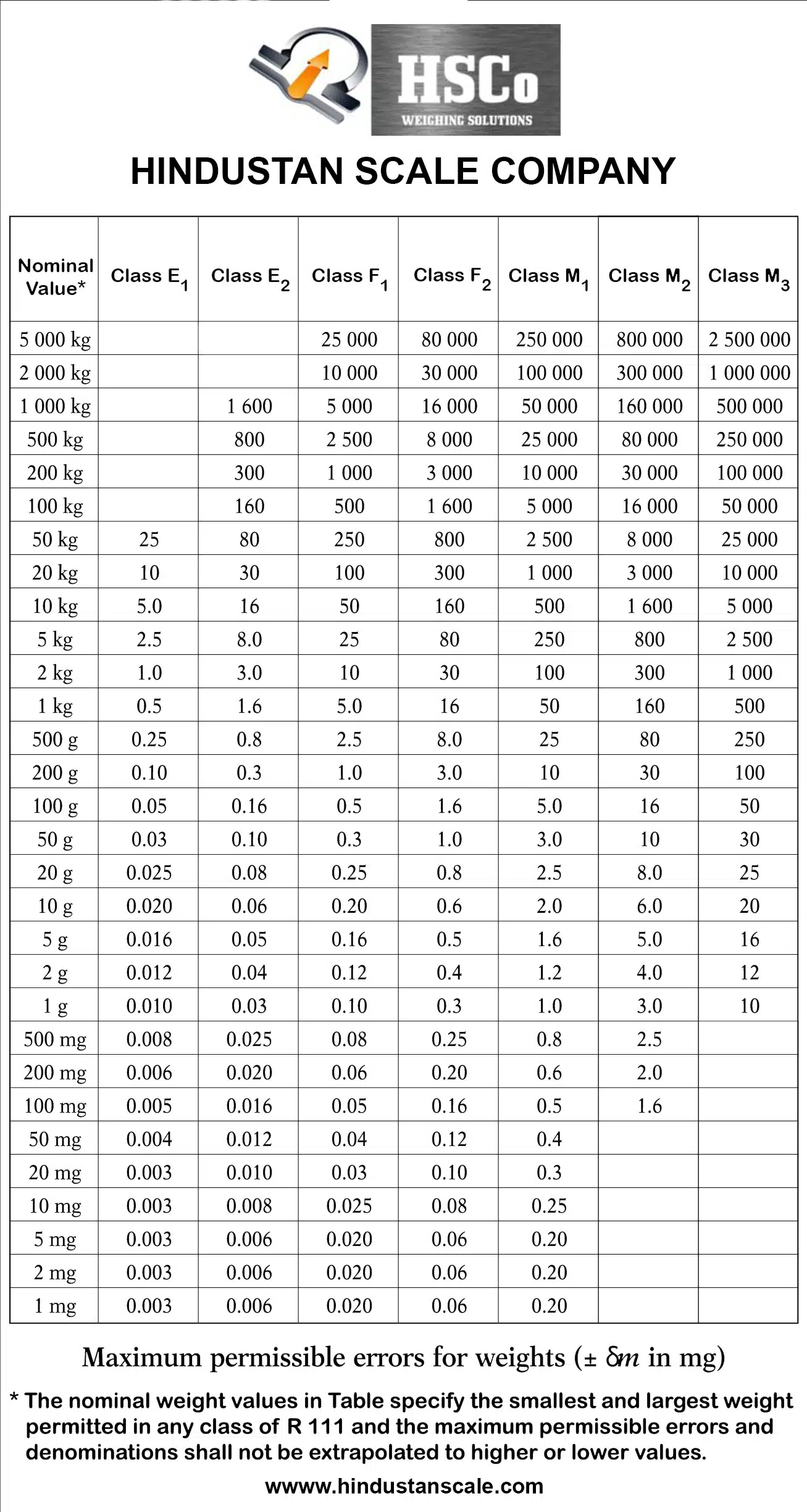
| Accuracy class | M1 |
| Marking | Laser-etched |
| Warranty | 1 year |
Brass or stainless steel?
Brass weights cost roughly twice as much as stainless-steel weights, so they are chosen where chemical resistance matters most. For bulk calibration needs, stainless steel calibration weights are the industry standard and do the same job. Browse all testing and calibration weights.
Questions buyers ask
Why are brass weights used in pharma?
Brass is inert to most acids and alkalis, so it stays stable in chemical environments.
Which values are available?
From 1 g to 50 kg; choose above.
Are brass weights more expensive than stainless steel?
Yes, about double. Stainless steel is the more economical choice for bulk.
How are they marked?
By laser etching.
Order or ask for a quotation
Call or WhatsApp +91-7045922250 or email hsc@hindustanscale.com with the values, quantity and whether you need stamping or a calibration certificate. Hindustan Scale Company, Mumbai, since 1955.