
Blogs
Black pepper bulk density: how to check it on a scale before you buy

Quick answer
Black pepper bulk density, also called litre weight, is the weight of one litre of peppercorns in grams. FSSAI sets a minimum of 400 g/l for whole black pepper, with at most 13.0% moisture and 10.0% light berries [1]. To check it, fill and tap a 1-litre measure as the FSSAI method describes, level it and weigh it to the nearest gram [7].
Onmanorama reported that the Kochi terminal market touched ₹760 a kg for black pepper on 13 November 2026, depending on the grade, a record at that time [2]. It linked the rise to buying ahead of winter [2]. Real deals vary with grade, but if you pay one price a kg for a whole lot, you pay that price for each kg of light berries or extra water too.
What is the bulk density of black pepper?
Bulk density is the mass of pepper that fills a fixed volume, written in grams per litre (g/l). Whole black pepper sold as food in India must reach at least 400 g/l under FSSAI standard 2.9.15 [1]. The same standard describes light berries as generally immature berries without a kernel, with an apparent density below 300 g/l [1]. A lot with a higher share of light berries tends to have a lower bulk density, though berry size and packing also play a part.
| FSSAI limit for whole black pepper [1] | Value |
|---|---|
| Moisture, maximum | 13.0% by mass |
| Bulk density, minimum | 400 g/l |
| Light berries, maximum | 10.0% by mass |
| Pinheads, maximum | 4.0% by mass |
| Mouldy berries, maximum | 3.0% by mass |
How do you check black pepper bulk density with a weighing scale?
FSSAI’s lab methods for spices give the procedure, as method FSSAI 10.018:2021 [7]. It uses a cylindrical 1-litre measure with a lid, made of aluminium alloy, brass or stainless steel, 95 mm across and 142 mm deep inside. It weighs the pepper to the nearest gram, so use a calibrated scale that reads in 1 g steps or finer and can carry the filled measure.
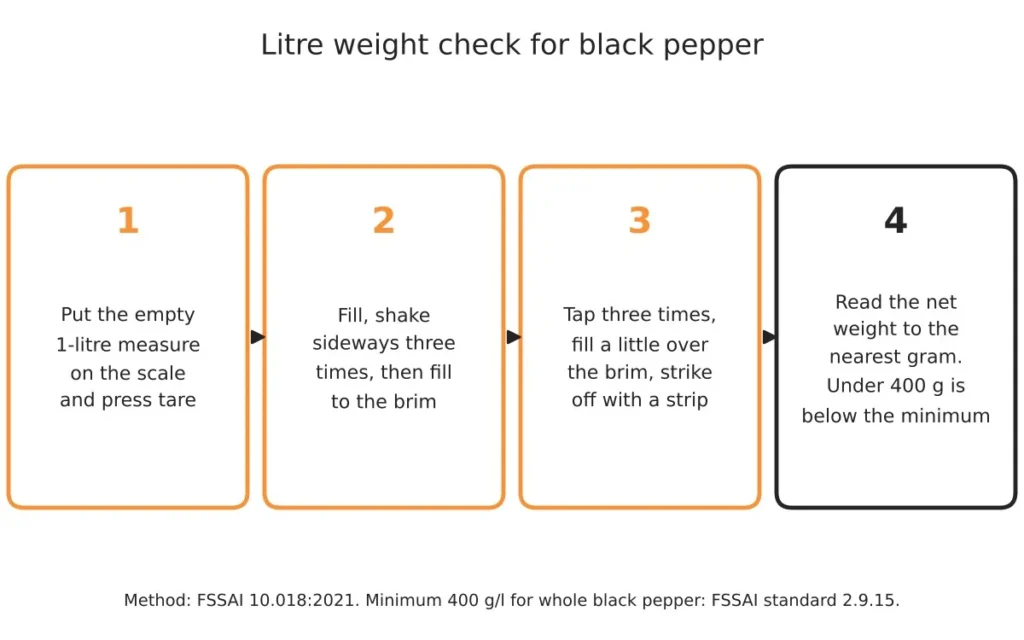
- Put the empty measure on the scale and press tare, so the display shows 0 g.
- Fill the measure with pepper, shake it lightly sideways three times, and fill it again to the brim [7].
- Tap the measure on a level, hard surface three times, changing its position each time, and fill it again to a little over the brim [7].
- Move a thin, straight metal strip, about 10 mm wide and 150 mm long, across the top to remove the extra pepper [7].
- Read the net weight to the nearest gram. With a 1-litre measure, that number is the bulk density in g/l.
What share of the bill is for light berries at ₹760 a kg?
Light berries go on the scale and into the bill with the sound berries. FSSAI allows up to 10.0% light berries by mass in whole black pepper [1]. In a 100 kg lot at that limit, 10 kg can be light berries. At an assumed flat price of ₹760 a kg for the whole lot, the Kochi figure Onmanorama reported for 13 November 2026 [2], those 10 kg are ₹7,600 of the bill.
How much weight does wet black pepper lose as it dries?
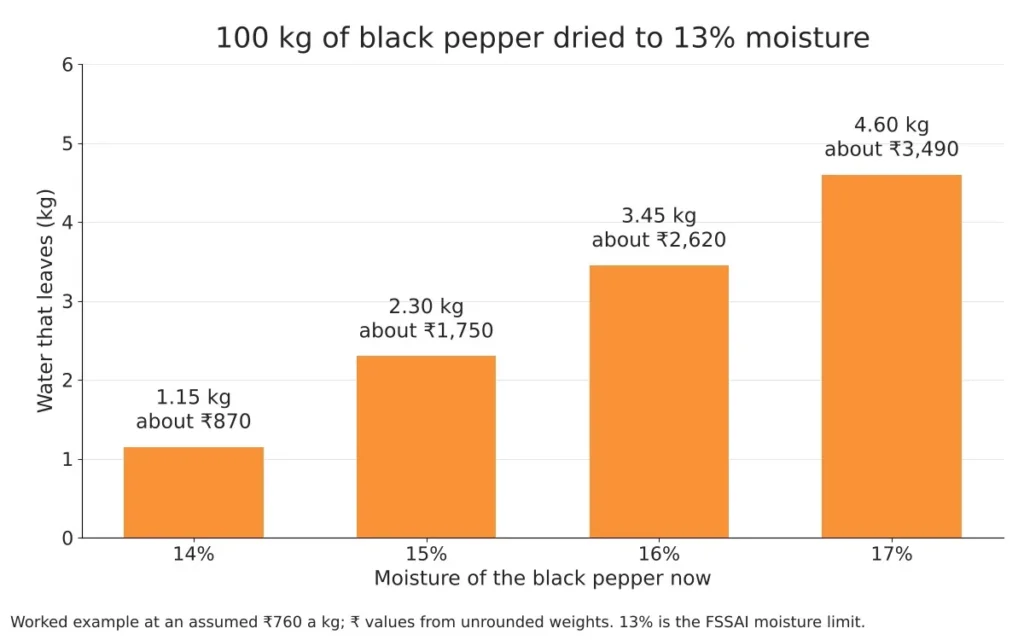
Whole black pepper may hold at most 13.0% moisture [1]. If a wetter lot dries down to 13% in your godown, you can work out its weight at 13% from the moisture now. The sum takes moisture on a wet basis and assumes that only water leaves while the dry matter stays the same:
Weight at 13% = weight now × (100 − moisture now) ÷ 87
| Moisture now | 100 kg dries to | Water that leaves | Value of weight lost at an assumed ₹760 a kg, worked from unrounded weights |
|---|---|---|---|
| 14% | 98.85 kg | 1.15 kg | about ₹870 |
| 15% | 97.70 kg | 2.30 kg | about ₹1,750 |
| 16% | 96.55 kg | 3.45 kg | about ₹2,620 |
| 17% | 95.40 kg | 4.60 kg | about ₹3,490 |
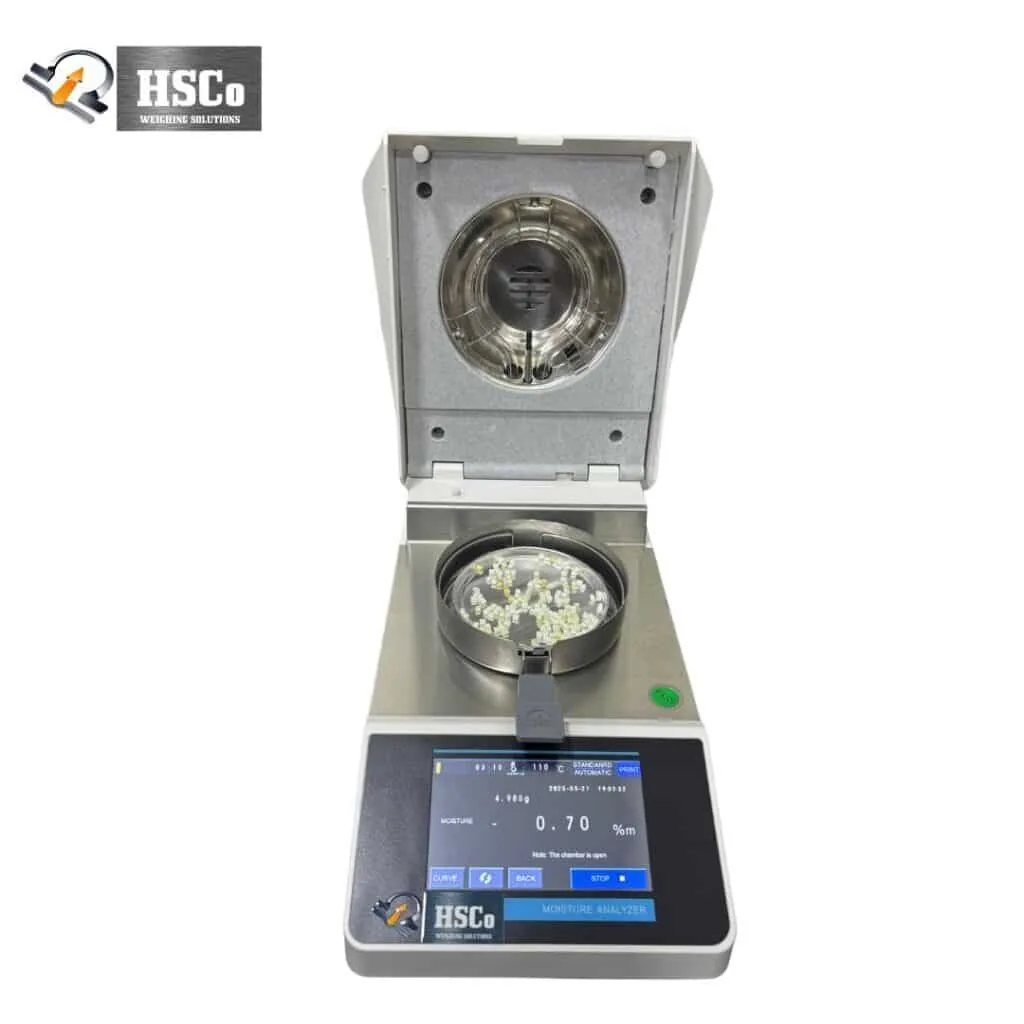
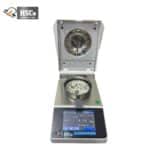
A moisture analyzer gives you the moisture figure for this sum. The MA110.5E weighs a sample of up to 110 g and dries it with a halogen heater, and its product page says it measures moisture in minutes instead of hours in an oven [4]. FSSAI’s lab methods for spices measure moisture by Dean and Stark distillation or the Karl Fischer method [7], so treat the analyzer reading as a quick screening figure and send a sample to a lab when the result decides the price.
Which HSCo scale fits a pepper godown?
These three cover the litre weight check, moisture test and full bags.
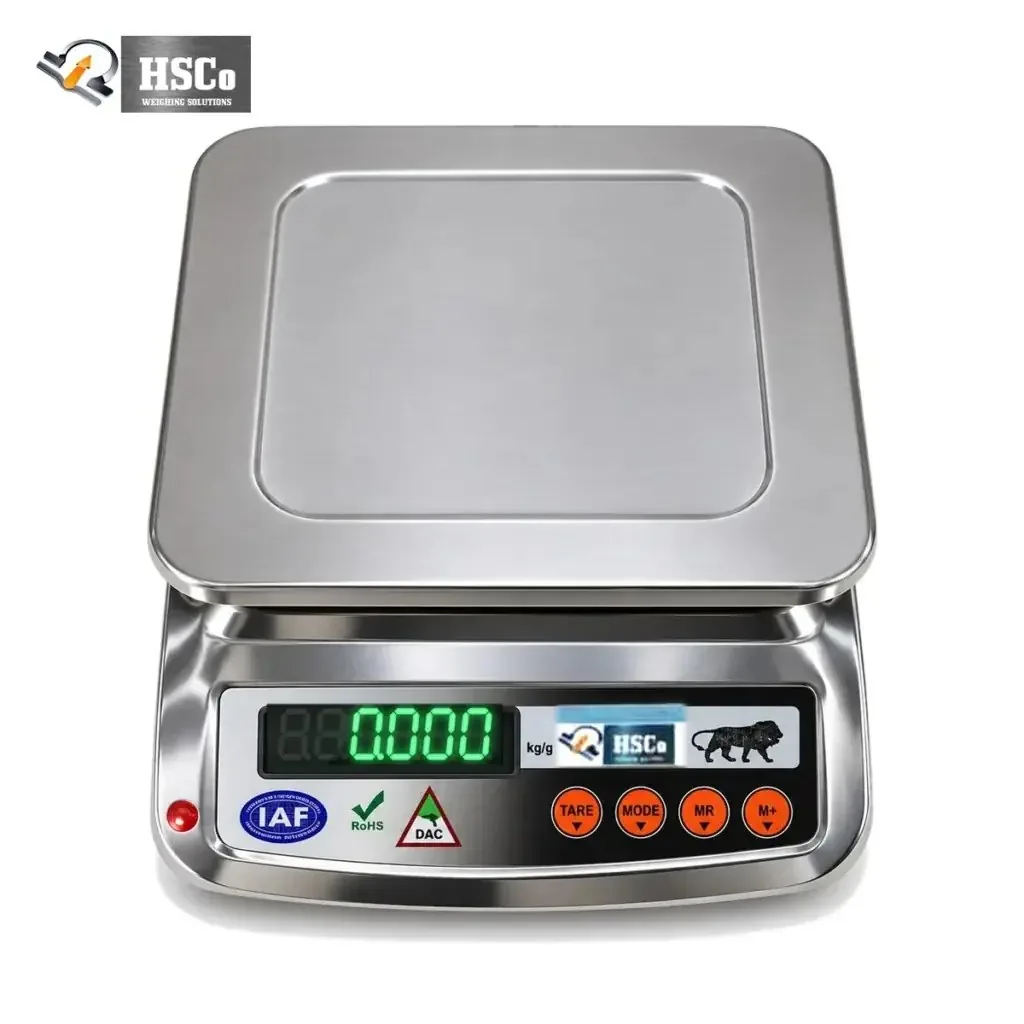
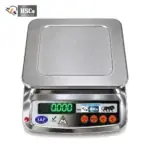
 SSX table top scale: weighs up to 10 kg in 1 g steps on a 140 × 160 mm stainless-steel tray, runs on a rechargeable battery during power cuts and comes government stamped [3]. For the litre weight check.
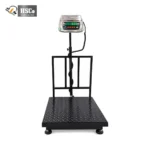
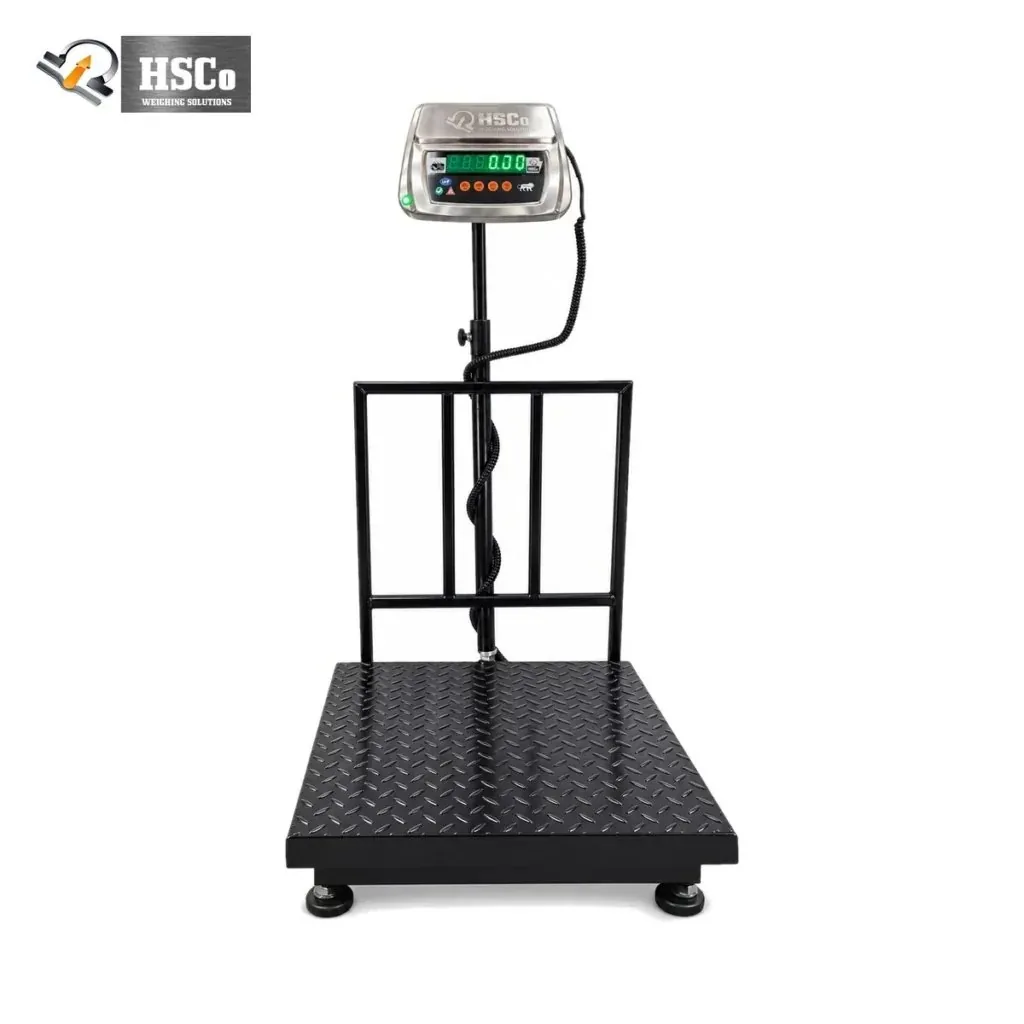
- PLCHQB platform scale: weighs 500 kg or 1,000 kg with 50 g or 100 g readability on a chequered MS plate, with displays front and back, and is Legal Metrology stamped [5]. For weighing sacks and lots.
More scales for farm produce are on our weighing scales for agriculture page. Our post on government stamping explains how Legal Metrology stamping works [6]. Tell us what you weigh and how many bags a day: call +91-7045922250 or write to hsc@hindustanscale.com.
Frequently asked questions
What is the minimum bulk density of black pepper in India?
FSSAI sets the minimum bulk density of whole black pepper at 400 g/l, in its standard 2.9.15 for black, white and green peppers [1]. The same standard caps moisture at 13.0% and light berries at 10.0% by mass [1]. If the pepper from a 1-litre measure, filled by method FSSAI 10.018:2021 [7], has a net weight below 400 g, the black pepper is under the minimum.
What are light berries in black pepper?
FSSAI describes light berries as generally immature berries without a kernel, with an apparent density lower than 0.30 g/mL or 300 g/L [1]. Whole black pepper may hold up to 10.0% light berries by mass [1]. A higher share of light berries tends to lower the bulk density of a black pepper lot.
What was the black pepper price in Kochi in November 2026?
Onmanorama reported on 15 November 2026 that black pepper in the Kochi terminal market touched ₹760 a kg on 13 November 2026, depending on the grade, a record high at that time [2]. Onmanorama linked the rise to buying ahead of winter [2]. Black pepper prices change from day to day, so check the latest Spices Board listing for the black pepper price before you buy.
Which scale do I need to check pepper bulk density?
Use a calibrated table-top scale that reads in 1 g steps or finer and has capacity for the filled measure. The FSSAI method weighs a 1-litre measure of pepper to the nearest gram [7]. Whole black pepper must reach at least 400 g/l [1], and 1 g is a quarter of one percent of 400 g. The HSCo SSX weighs up to 10 kg in 1 g steps and comes government stamped [3].
Sources
- Food Safety and Standards Authority of India, “Food Product Standards, Chapter 2.9: Salt, Spices, Condiments and Related Products (2.9.15 Black, White and Green Peppers)” (fssai.gov.in, 1 August 2025). Version 4 (01.08.2025). Limits for whole black pepper and the definition of light berries
- Onmanorama, “Pepper prices hit historic high of ₹760/kg; traders struggle to meet supply” (onmanorama.com, 15 November 2026). https://www.onmanorama.com/news/kerala/2026/11/15/black-pepper-prices-surge-to-record-high.html (not linked: house rule)
- Hindustan Scale Company, “SSX Table Top Scale, 10 kg × 1 g, Compact Stainless Steel” (hindustanscale.com).
- Hindustan Scale Company, “MA110.5E Moisture Analyzer, 110 g × 5 mg, Halogen, Touch Screen” (hindustanscale.com).
- Hindustan Scale Company, “PLCHQB Platform Scale, Chequered MS Plate, 500 / 1,000 kg, Dual Display” (hindustanscale.com).
- Hindustan Scale Company, “What Is Government Stamping and Why Is It So Important?” (hindustanscale.com, 14 April 2021). Published 14 April 2021, updated 28 September 2026
- Food Safety and Standards Authority of India, “Manual of Methods of Analysis of Foods: Spices, Herbs and Condiments (revised 2021)” (fssai.gov.in). 2021. Methods FSSAI 10.003, 10.004 and 10.005 (moisture), 10.018 (bulk density of black pepper), 10.019 (light berries)