
Blogs
Guide to Lab Scales: Types, Uses & Key Buying Tips

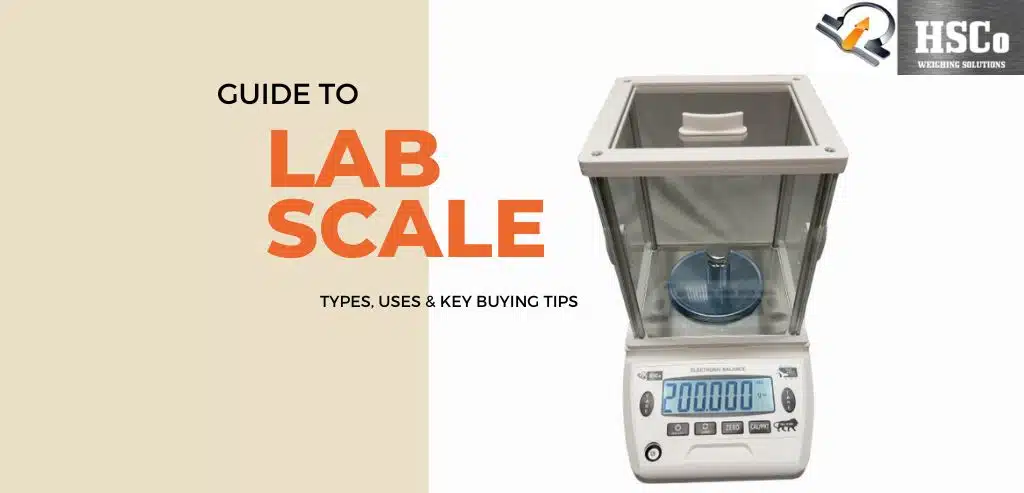
In every laboratory environment measurement is paramount. Whether in research, pharmaceuticals, food analysis or quality assurance, precise weighing equipment guarantees reliable results. Laboratory balances and laboratory scales are constructed to fulfill diverse accuracy demands from measuring minute chemical samples to heavy industrial components.
See HSCo lab scales
HSCo's precision scales start from Rs. 700 (ex-GST) and go up to laboratory balances. See the range and ask which model suits your samples. See precision scales
Choosing the right lab scale can be challenging, given the many options available. This blog helps lab professionals, researchers, and quality control specialists to cover different types of lab scales, their uses, and key points to consider when choosing the right one. By the end of this article, you’ll understand laboratory weighing instruments. You’ll also know how to make a smart purchase.
Types of Laboratory Scales
Analytical Balances
Analytical balances are very sensitive devices that can measure to 0.0001 grams. They are widely used in chemical analysis, formulation, and pharmaceutical research where extreme accuracy is needed. Because of their sensitivity, analytical balances are usually located in controlled environments to avoid errors from outside influences like vibrations and air currents.
Precision Balances
Precision balances provide readability ranging from 0.001 grams to 0.1 grams making them suitable for general laboratory use. While not as accurate as analytical balances, they are ideal for applications where a high level of precision is necessary but ultra-fine measurements are not critical. These balances are widely used in research labs, education, and quality control.
Microbalances
Microbalances are specialized laboratory balances with the ability to weigh extremely small masses with readability up to 0.000001 grams. They are employed in very advanced fields like nanotechnology, pharmacy, and forensic science, where tiny differences in weight can affect research results critically.
Moisture Analyzers
Moisture analyzers combine weighing and heating functions to determine the moisture content in samples. These instruments are essential in industries such as food processing, pharmaceuticals, and environmental testing, where moisture levels can affect product stability and quality.
Top-Loading Balances
Top-loading balances have an open weighing pan and are less accurate than analytical balances. They are typically employed in everyday weighing operations, sample preparation, and overall laboratory use where ultra high accuracy is not demanded. The balances are a compromise between price and functionality.
Platform Scales
Platform scales are made for weighing bigger, heavier loads with less accuracy. Platform scales are typically used in industrial laboratories, manufacturing facilities, and quality control environments where bulk materials must be weighed quickly.
Applications of Lab Scales

Chemical Laboratories
Laboratory balances play a crucial role in chemical labs by ensuring precise measurements of reagents and compounds. Accurate weighing is vital for successful chemical reactions, sample preparation, and formulation development.
Pharmaceutical Industry
The pharmaceutical industry uses lab weighing instruments to measure active ingredients and excipients in drug formulation. Precise weighing ensures consistency, compliance with regulatory standards, and product efficacy.
Food and Beverage Industry
Moisture analyzers and precision balances are common in food testing labs. They help find ingredient amounts, check moisture levels and keep products consistent. Weighing instruments help maintain food safety and quality standards.
Environmental Science
Lab scales are essential in environmental research for weighing samples used in pollutant analysis and other assessments. Accurate measurements help scientists study contaminants, soil compositions, and water quality.
Educational Institutions
Universities and research institutions utilize various lab scales for academic experiments and practical demonstrations. Precision balances and analytical balances are frequently used in teaching laboratories for research purposes.
Key Considerations When Buying a Lab Scale
Accuracy and Precision
Knowing the degree of accuracy needed for a particular application is important. Analytical balances have the highest accuracy, followed by top-loading and platform scales, which have moderate accuracy.
Capacity
Various lab scales also have different weight capacities. Make sure the scale you use can support the highest sample weight needed in your laboratory procedures.
Readability
Readability is the smallest increment of weight a scale will register. Select a scale that has readability corresponding to your need for precision.
Calibration
Calibration is crucial for maintaining measurement accuracy. Some scales offer internal calibration, while others require external calibration. Consider ease of calibration when selecting a scale.
Environmental Factors
The accuracy of weighing may be influenced by external conditions like vibrations, temperature, and air movement. Select a scale that can work best under your laboratory conditions.
Compliance and Certification
Make sure the lab scale is up to industry standards and regulatory needs, particularly in pharmaceuticals, food, and industries where compliance is a necessity.
Budget Constraints
Balancing quality, features, and budget is crucial. While high-precision lab scales may be costly, investing in a durable, accurate instrument ensures long-term value.
Maintenance and Care Instructions

Routine Calibration
Intermittent calibration helps ensure that measurements are correct. Refer to manufacturer instructions or hire professional calibrations for performance maintenance.
Clean Maintenance
Lab scale cleaning prevents contamination and increases the lifetime of the lab scale. Apply suitable cleaning fluids and do not use strong chemicals that can affect sensitive parts.
Environmental Control
Installing the scale in a constant environment reduces error. Keep away from excessive vibration, dust, and temperature variation.
Regular Checkup
Check the scale on a regular basis for wear or damage.Addressing minor issues promptly can prevent costly repairs and ensure continuous accuracy.
Conclusion
Choosing the appropriate laboratory balance is critical in order to gain accurate and consistent measurements. By knowing the various kinds of lab scales, their uses and most important purchasing considerations, you can make the right choice that will best address your laboratory requirements.
Hindustan Scale Company provides a wide variety of high-performance laboratory scales from analytical balances to platform scales suitable for multiple laboratory applications. Our expert team is ready to assist you in finding the perfect weighing solution for your specific requirements.
For more on laboratory weighing machines, check our website and our range of precision balances, microbalances, moisture analyzers, and more. Choose the best with Hindustan Scale – your precision weighing partner!