
Blogs
Frozen fish glaze: does the ice count in the net weight?

Quick answer
Frozen fish glaze is the thin coat of ice that packers put on frozen fish. The 2014 edition of the Codex standard for quick frozen fish fillets says the declared net contents exclude the glaze [1]. It covers fillets sold for direct consumption, not for further processing. You can check a sample by washing the glaze off and weighing what is left.
Seafish is a UK public body for the seafood industry. Its guidance of February 2016, archived [7], said prepacked glazed seafood for final consumers or mass caterers should show only the net weight, which is the weight without the glaze [2]. The same guidance set out different rules for fish sold loose, packed on site, or supplied in bulk for repacking or processing [2]. In India, the FSSAI standards for frozen shrimp, frozen finfish and frozen fish fillets, in the chapter dated 7 May 2025, allow glazing and set the quality of the glazing water. Those three standards do not say how glaze is counted in the net weight [3].
What is glaze on frozen fish?
Glaze is a layer of frozen water on the surface of the fish. The FSSAI standards set the quality of the water: potable water to IS 10500, or clean sea water that meets the same microbiological standards and is free from potential contaminants (potential food contaminants, for fillets) [3]. For fillets within its scope glazed with sea water, the 2014 edition of the Codex standard requires a statement saying so on the label [1].
Does the glaze count in the net weight of frozen fish?
Not for quick frozen fish fillets covered by the Codex standard. Section 6.2 of its 2014 edition says that where the food has been glazed, the declaration of net contents shall be exclusive of the glaze [1].
Check your market’s current rules, and write in the contract whether the price is on glazed or net weight.
How much of a 10 kg glazed block is fish?
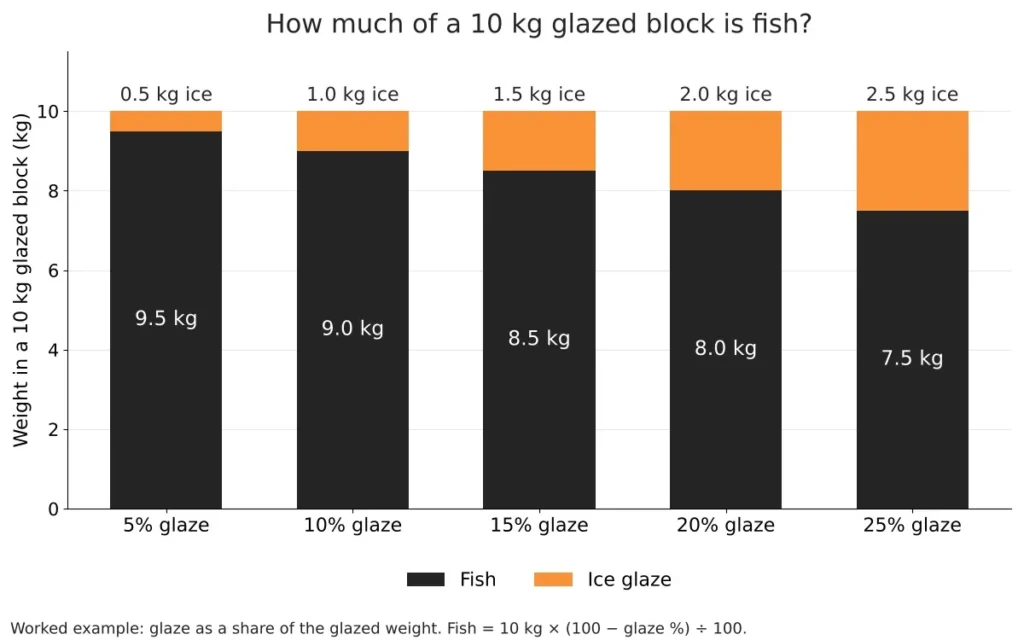
The table shows the fish and ice in a 10 kg glazed block and the ice in a 1,000 kg lot. It assumes an unwrapped block of fish and glaze only, with the same glaze percentage across the lot.
Fish weight = glazed weight × (100 − glaze %) ÷ 100
| Glaze, % of glazed weight | Fish in a 10 kg block | Ice in a 10 kg block | Ice in a 1,000 kg lot |
|---|---|---|---|
| 5% | 9.5 kg | 0.5 kg | 50 kg |
| 10% | 9.0 kg | 1.0 kg | 100 kg |
| 15% | 8.5 kg | 1.5 kg | 150 kg |
| 20% | 8.0 kg | 2.0 kg | 200 kg |
| 25% | 7.5 kg | 2.5 kg | 250 kg |
How do you check frozen fish glaze on a sample?
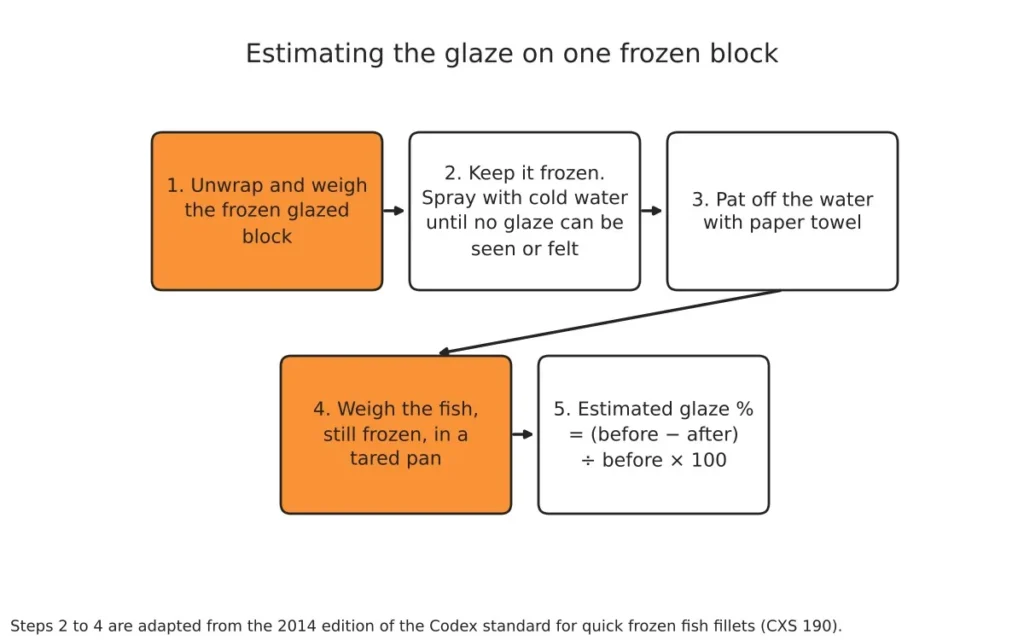
Steps 2 to 4 below are adapted from the method in the 2014 edition of the Codex standard for finding the net weight of a frozen sample, in which the pack is opened and sprayed as soon as it leaves the cold store [1]. Steps 1 and 5 are our additions. Step 1 delays the spray, so this check gives an estimate of the glaze and is not the Codex net-weight test. For a formal net-weight check, use the method that the rules for your sale or contract prescribe.
- Take one sample out of the cold store, take the fish out of its wrapper and weigh it straight away, still frozen.
- Keep the fish frozen through steps 2 to 4. Hold it under a gentle spray of cold water. Turn it carefully so it does not break, and keep spraying until no glaze can be seen or felt [1].
- Take the water off the surface with paper towel [1].
- Weigh the fish, still frozen, in a tared pan [1].
- Estimate the glaze as a share of the glazed weight: weight before minus weight after, divided by the weight before, times 100. Leftover surface water or changes in the fish also shift this result.
For example, a block that weighs 1,000 g frozen and 880 g after de-glazing shows a 120 g weight difference, giving an estimated glaze share of 12%. The difference can include changes other than glaze removal. One sample does not decide a whole lot; the 2014 edition of the Codex standard calls for an appropriate sampling plan [1].
What weighing scale do you need for a glaze check?
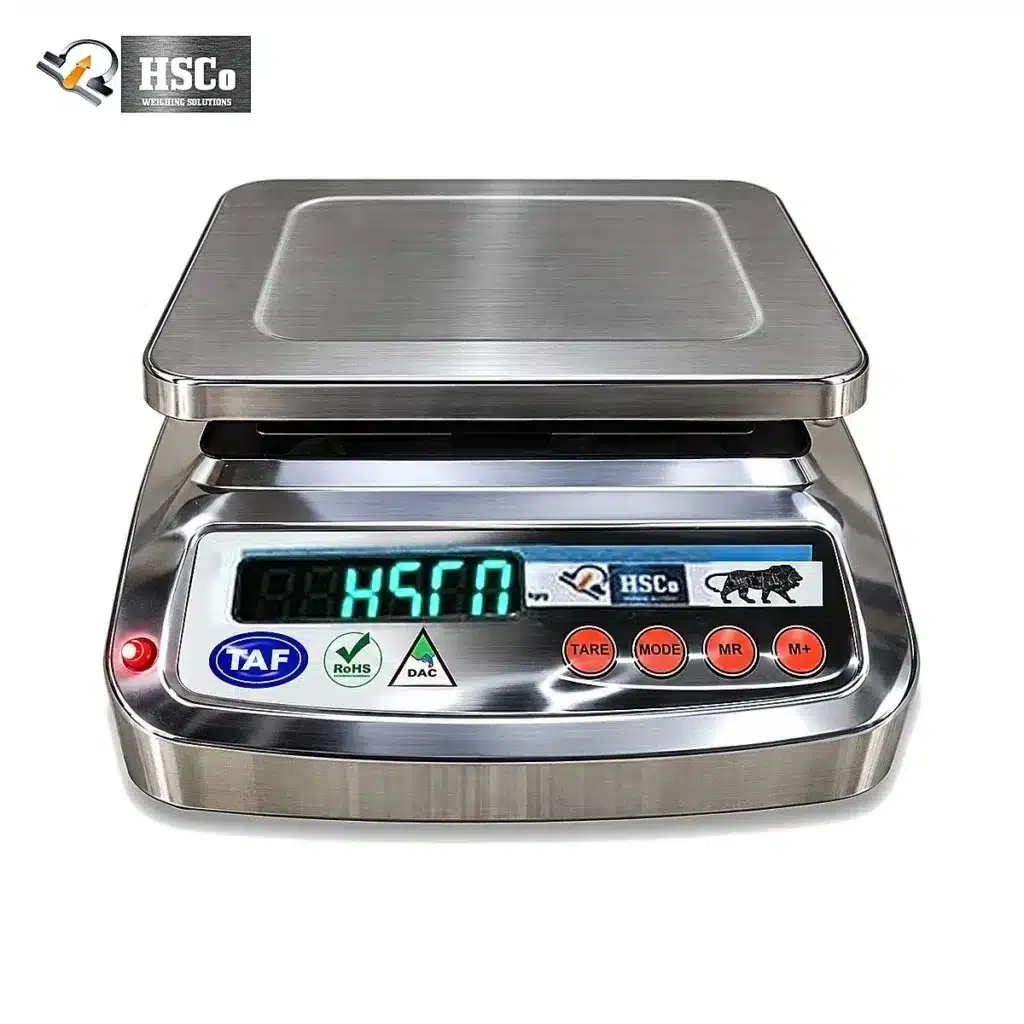
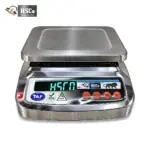
For the sample, use a table-top scale that reads in grams. On a 1,000 g sample, a 1 g display step is 0.1% of the weight. The SSSWR reads in 1 g steps up to 10 kg and in 2 g steps from 10 to 20 kg [5], so check the step the display shows with the pan and the sample on it.
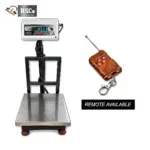
For whole cartons at the receiving bay, use a water-resistant platform scale. The PLSSWRR has a stainless-steel platter and a key-fob remote for tare and zero [4]. Our post on government stamping explains the Legal Metrology stamp.
Which HSCo scale fits a receiving bay or QC table?
All three below are water resistant and Legal Metrology stamped [4, 5, 6]. Their working temperature is 0 to 40 °C [4, 5, 6], so use them outside the cold store, in a room within that range.
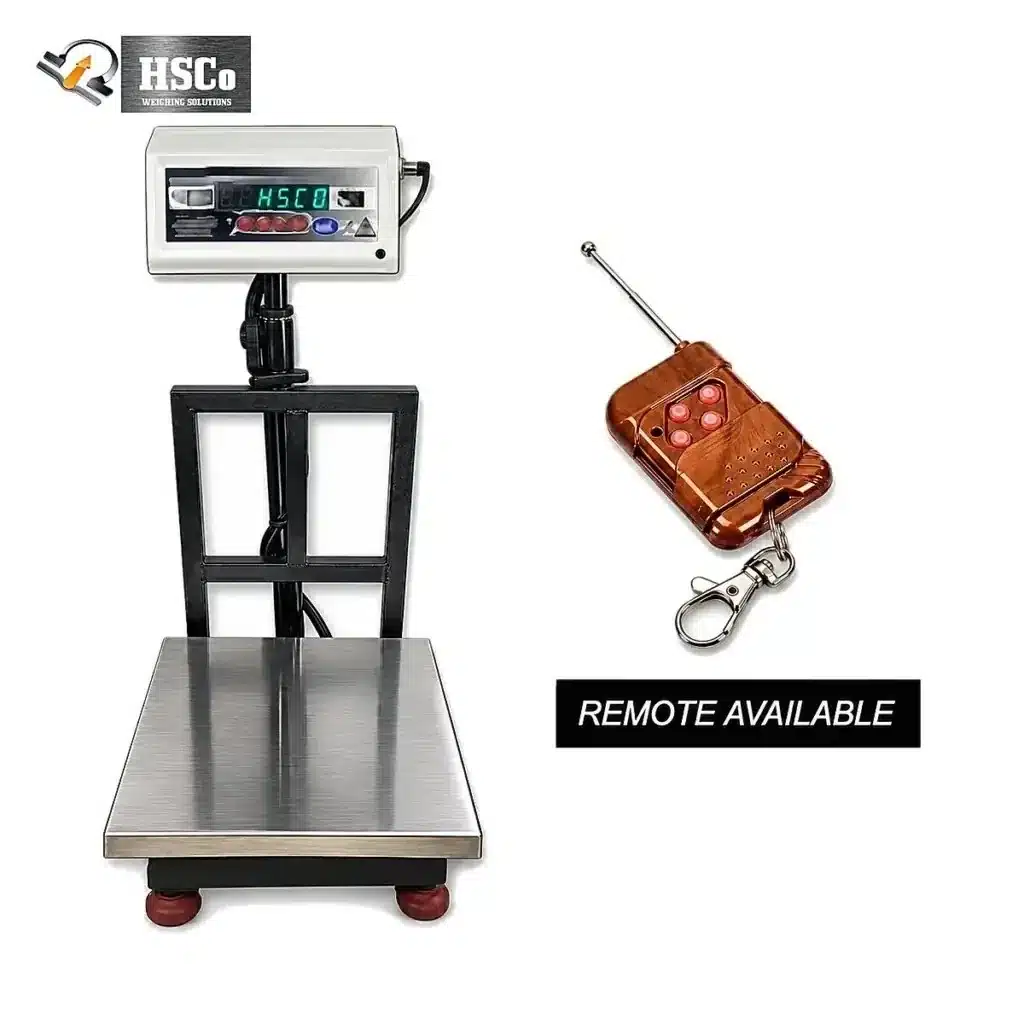
 PLSSWRR water resist platform scale with remote: stainless-steel platter, water-resistant circuit board, 100, 150, 250, 300 or 500 kg, double-sided green display and a key-fob remote for tare and zero. For cartons at the receiving bay [4].
- SSSWR water-resistant table-top scale: up to 30 kg, in 1 g steps up to 10 kg, on a 200 × 180 mm stainless tray, with a water-resistant PCB. For de-glazed samples at the QC table [5].
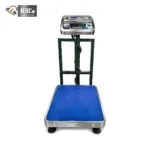
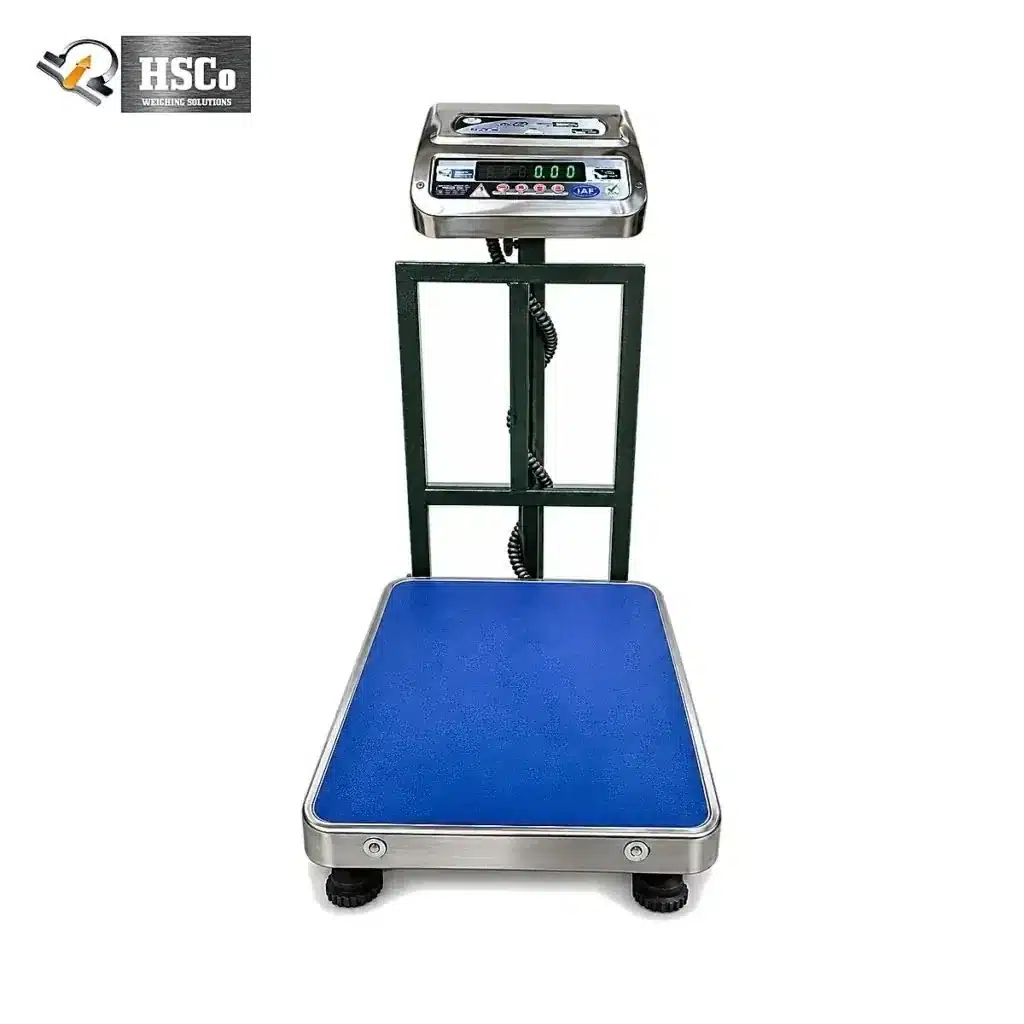
- PLSSTW250 water resist platform scale: 250 kg in 10 g steps on a 400 × 500 mm platform, with a water-resistant PCB and displays front and back. For a damp packing area [6].
For crates of shrimp packed in crushed ice, see our post on shrimp crate weight. Tell us what you weigh and how heavy your largest carton is: call +91-7045922250 or write to hsc@hindustanscale.com.
Frequently asked questions
Is glaze included in the net weight of frozen fish?
Not for quick frozen fish fillets covered by the Codex standard. Section 6.2 of its 2014 edition says the declared net contents of glazed fillets shall be exclusive of the glaze [1]. Archived 2016 UK guidance from Seafish said prepacked glazed seafood for final consumers or mass caterers should show only the net weight [2, 7]. Fish sold loose, packed on site or sold in bulk for repacking followed other rules [2].
How do you remove glaze to weigh frozen fish?
The 2014 edition of the Codex standard for fillets says to open the pack as soon as it leaves the cold store and spray the contents gently with cold water, agitating carefully, until no glaze can be seen or felt [1]. Then remove the surface water with paper towel and weigh the product, still frozen, in a tared pan [1]. Done as written, that gives the measured net weight of that one sample, not of the whole lot.
Can sea water be used to glaze frozen fish in India?
Yes, within limits. The FSSAI standards for frozen fish fillets and frozen finfish say glazing water must be potable water to IS 10500, or clean sea water that meets the same microbiological standards as potable water and is free from potential contaminants, or potential food contaminants for fillets [3].
Sources
- Codex Alimentarius Commission (FAO and WHO), “Standard for Quick Frozen Fish Fillets, CODEX STAN 190-1995, 2014 edition (amended 2011, 2013, 2014)” (fao.org). Historical 2014 edition: sections 1, 6.1, 6.2, 7.1, 7.3, 7.3.1 and 9.
- Seafish, “Glazed Seafood Weight Indication Guidance” (seafish.org). Seafish lists it with publication date 01/02/2016; the PDF itself carries no date.
- Food Safety and Standards Authority of India, “Food Product Standards, Chapter 2.6: Fish and Fish Products (Version 3, 07.05.2025)” (fssai.gov.in, 7 May 2025).
- Hindustan Scale Company, “PLSSWRR Water Resist Platform Scale with Remote – 100 to 500 kg” (hindustanscale.com).
- Hindustan Scale Company, “SSSWR Water Resistant Table Top Scale – 30 kg, Stainless Steel” (hindustanscale.com).
- Hindustan Scale Company, “PLSSTW250 Water Resist Platform Scale – 250 kg × 10 g, 400 × 500 mm, Double-Sided Display” (hindustanscale.com).
- Seafish, “Fish Labelling and Supply Chain Traceability” (seafish.org). Lists the glazed seafood guidance among archived documents produced when the UK was a member of the EU.