
NBTC SETS THE DRAW TO THE GRAM — 350 ML AT 45–55 KG, 450 ML ABOVE — AND A WEIGHING CORE THAT IS NOT CALIBRATED MAKES THE NUMBER ON THE MONITOR MEANINGLESS
How accurate, NABL-traceable weighing of every blood donation protects the donor, the unit and the downstream platelet yield — and how a calibrated weighing core with an immutable Blue Whale record turns each draw into defensible evidence, for the Blood Bank Medical Officer, Transfusion Services In-charge and Lab Director at licensed blood centres, hospital blood banks and research biobanks.

Executive summary
A blood collection monitor does one decisive thing — it weighs the draw in real time and cuts off at target — so every clinical and regulatory promise of that draw rests on a single number
NBTC sets the draw to the gram: 350 ml from a donor weighing 45–55 kg, 450 ml from a donor weighing 55 kg and above, with 450 ml bags recommended for platelet separation. Under-draw and the unit is wasted; over-draw and you harm the donor and skew the anticoagulant ratio; either way, downstream separation into 350/450 ml component systems depends on an accurate starting mass — and because the monitor measures grams and back-calculates millilitres, an uncalibrated weighing core quietly corrupts all of it.
This white paper makes one narrow argument: the patient-safety and yield-protection backbone of transfusion and sample science is accurate, traceable weighing — not the branded monitor, but the calibrated mass-measurement and audit layer beneath and around it.
Hindustan Scale Co., a weighing-instrument manufacturer since 1955, and its digital division Blue Whale Technology, supply that layer: sensitive load cells and calibrated precision and analytical balances for the collection-monitor weighing core and the biobank aliquot station, NABL-traceable calibration so a recorded gram means the same to you and to an auditor, and an immutable, time-stamped Blue Whale cloud log that ties every donation’s weight, time and operator to a queryable record feeding hospital systems.
The weighed mass of the draw is the one number that protects the donor, fills the unit and feeds the component — and it is set in real time at the chair, before anything downstream can correct it.
01 — WHERE THE DRAW IS RIGHT OR WRONG
Between the needle and the cut-off, the monitor weighs the bag continuously and clamps at target. If that weighing core is wrong, every decision built on it — donor safety, unit volume, anticoagulant ratio, component yield — is wrong at the source, and no downstream check recovers the lost or over-drawn blood.
A draw error is invisible by design. The monitor displays a tidy volume, the bag looks full, the donation is logged — and a draw that is short by a unit or long enough to harm the donor passes without alarm, because the only instrument watching is the scale itself. This paper is narrowly about that weighing core: not the branded collection monitor, but the calibrated mass measurement it depends on, and the traceable record built around it.
Three risks, one weighment
| Risk in the draw | How it shows up | Who carries the loss |
|---|---|---|
| Under-draw | Cut-off fires below target because the weighing core reads high or drifts; the bag is below the 350/450 ml standard for the donor’s weight band | The unit — a short collection that cannot meet component specification is wasted, along with the donor’s donation |
| Over-draw | Cut-off fires late because the core reads low; more blood is taken than the donor’s weight permits, and the fixed anticoagulant volume is now under-dosed for the larger draw | The donor and the product — donor harm from excess removal, plus a skewed blood-to-anticoagulant ratio that degrades the unit |
| Untraceable mass | The monitor’s number is never anchored to a calibrated, traceable standard, so neither the recorded volume nor the cut-off it triggered can be defended on audit | Compliance and confidence — a draw record that cannot be shown to mean what it says under a Schedule F audit |
Most blood centres trust the monitor’s display, never calibrate the load cell underneath it to a traceable standard, and discover a drift only when component yields fall or an audit asks how the volume was assured. The weighed draw, accurate and traceable, is where all three risks are controlled at once — at the chair, in real time.
A blood collection monitor does not measure millilitres — it measures grams and back-calculates the rest. Every promise of a 350 or 450 ml draw, and every component built on it, rests on whether the load cell under the bag is telling the truth.
NBTC fixes the draw volume to the donor’s weight and ties each band to a minimum platelet yield — and that standard sits inside a statutory licensing regime that treats blood as a drug.
02 — THE STANDARD IS TO THE GRAM, AND IT IS ENFORCEABLE
Two facts make this the moment to get the weighing core right: the technical standard is precise and downstream-consequential, and it operates under an enforceable licence — so an unverifiable draw is both a clinical and a regulatory exposure.
The draw is set by donor weight, to the gram
Under India’s National Blood Transfusion Council standards, a donation drawn from a donor weighing 45–55 kg should be 350 ml, while a donor weighing 55 kg and above gives 450 ml. NBTC further recommends that only 450 ml bags be used for platelet separation — because the starting volume sets the platelet ceiling: a platelet concentrate from a 450 ml unit is expected to contain at least 4.5 × 10¹⁰ platelets versus 3.5 × 10¹⁰ from a 350 ml unit, in at least 75% of units tested. The weight band a donor falls into therefore decides not just the unit size but the components it can yield.
NBTC draw volume steps up at the 55 kg donor-weight line (so does platelet yield)
| Band | ml of whole blood collected |
|---|---|
| Donor 45–55 kg (350 ml unit) | 350 ml |
| Donor 55 kg and above (450 ml unit) | 450 ml |
And the standard is licensed, not advisory
In India, blood is regulated as a drug: blood centres are licensed under the Drugs and Cosmetics Act, 1940 and must meet the standards in Schedule F Part XII-B (whole blood) and XII-C (components) of the Drugs and Cosmetics Rules, 1945, with CDSCO/DCGI as the central licence approving authority. NBTC sets the apex technical standards alongside this statutory framework. A draw whose volume cannot be shown to have been measured accurately is therefore exposed on two fronts at once — clinical and licensing.
NBTC sets technical standards and policy; it is not the licensing authority. Licensing rests with CDSCO / DCGI under the Drugs and Cosmetics Act, 1940 and Rules 122-G to 122-O, with Schedule F Part XII-B/XII-C as the binding standard. NBTC, NACO, MoHFW and CDSCO are named for factual reference only and do not endorse Hindustan Scale Co. or Blue Whale Technology.
A wrong gram at the chair propagates into a wrong volume, a wrong anticoagulant ratio and a failed component — in five recurring ways, each a place where a calibrated core would have caught it.
03 — HOW A WEIGHING ERROR BECOMES A CLINICAL FAILURE
A short or harmful draw is rarely a single mistake; it is a small, uncorrected weighing error amplified through the chain that depends on it.
The path from an uncalibrated load cell to a wasted unit or a harmed donor clusters around five failure modes, each one a point where true, traceable mass could have been known but was not.
- Drifted weighing coreThe load cell or balance behind the monitor drifts over time with no NABL-traceable calibration, so the cut-off fires at the wrong mass and the displayed volume no longer corresponds to what is in the bag.
- Mass error read as volume errorThe monitor measures grams and back-calculates volume via specific gravity (about 1.053); a few grams of weighing error become millilitres of reported-volume error, pushing the unit out of its 350/450 ml band.
- Skewed anticoagulant ratioThe anticoagulant volume in the bag is fixed for a target draw. An over-draw the core failed to stop leaves that fixed anticoagulant under-dosing a larger blood volume — degrading the unit even when it looks full.
- Component yield missA 350 ml unit logged as 450 ml — or a genuinely short 450 ml draw — cannot deliver the platelet yield the standard expects, so the unit fails the 75%-of-units QC line downstream rather than at the chair.
- Unprovable on auditWith no calibrated, captured weight tied to the donation, neither the volume nor the cut-off can be defended when a Schedule F audit asks how the draw was assured — the failure becomes a record gap as well as a clinical one.
Each mode is a weighing question answered too late: not at the chair where the calibrated core could have stopped it, but downstream, when the unit is already wasted, the donor already over-drawn, or the audit already asking.
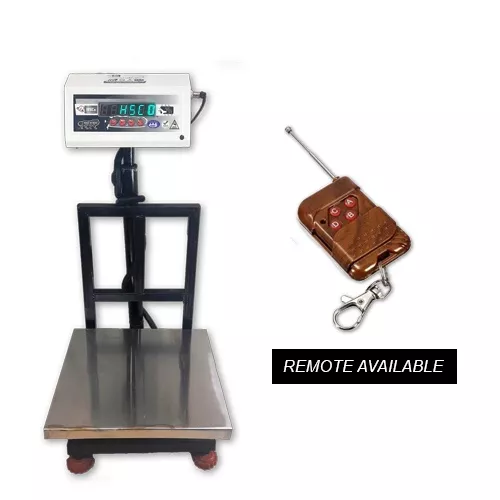
Make the weighing core accurate and traceable, and the monitor’s number becomes trustworthy — because the resolution it shows is only as honest as the load cell behind it.
04 — CALIBRATE THE CORE THE MONITOR READS
A draw is wrong because the mass measurement under it was never anchored to a calibrated standard. Supplying a sensitive, NABL-traceable weighing core — for the collection monitor and the aliquot station — is the engineering answer, and the chart below shows exactly why a few grams matter.
Why a few grams become millilitres
Because a collection monitor actually measures mass, draw volume is back-calculated from weight using the specific gravity of whole blood (about 1.05–1.06 g/ml; the conventional screening value is 1.053), so a 450 g target corresponds to roughly 427 ml. The chart shows the consequence: an error in grams converts almost one-for-one into an error in millilitres, so an uncalibrated core does not produce a small inaccuracy — it produces a volume that is wrong by the same magnitude it is mis-weighing.
How a few grams of scale error becomes millilitres of draw error on a 450 g target
| Band | resulting volume error (ml) |
|---|---|
| 0 g | 0.0 ml |
| 1 g | 0.95 ml |
| 2 g | 1.9 ml |
| 5 g | 4.75 ml |
| 10 g | 9.5 ml |
A sensitive, traceable weighing core
The fix is a weighing element that is both sensitive enough for the draw and traceable to national standards: calibrated load cells feeding the collection-monitor weighing path, and precision or analytical balances for the biobank aliquot and sample-integrity station. NABL-traceable calibration anchors what each records to national standards, so the recorded gram — and the volume derived from it — means the same to the medical officer, the auditor and the downstream component lab. Without that traceability, the 1 ml / 1 g resolution a monitor displays is precision without accuracy.
The blood collection monitor (for example, devices from Terumo Penpol, Labtron or Labmate) is a third-party instrument; HSCo/Blue Whale supply the calibrated weighing core, load cells, balances and NABL-traceable calibration, not the branded monitor. The ‘±1 ml/g’ figure is a representative display resolution from vendor datasheets, not an OIML-certified accuracy class, and the ~1% band on the chart is a representative reference, not a regulatory limit. Terumo Penpol, Labtron and Labmate are named for factual reference only and do not endorse HSCo or Blue Whale Technology.
A weight that scrolls off the monitor proves nothing; captured with its time and operator and tied to the donation, it becomes the record that satisfies an audit and feeds the hospital system.
05 — TURN EVERY DRAW INTO A DEFENSIBLE RECORD
Accurate weighing is necessary but not sufficient. To be defensible under a Schedule F regime, each draw’s weight must be captured, time-stamped, attributed to an operator and linked to the donation — not left to scroll off a local display.
Capture every weight off the instrument
Blue Whale Technology’s IoT data capture, built on embedded-controller hardware, reads each weight directly off the weighing core and streams it into an immutable, time-stamped Blue Whale cloud log — a permanent record of the donation weight and cut-off, rather than a value that disappears when the next donor sits down. This capture layer is the confirmed HSCo/Blue Whale capability that makes a defensible draw record possible.
Tie the weight to the donation and the hospital system
A draw weight is evidence only when it is tied to a specific donation, operator and time. Linking each captured reading to the donor record, the bag identifier and the operator — and feeding it through Blue Whale integration into hospital and laboratory systems — produces a queryable record that answers the audit question directly: this unit was drawn to this mass, at this time, by this operator, on a calibrated core. The specific fields and integration are configured at commissioning.
- Step 1WeighThe draw is weighed in real time on a NABL-traceable calibrated core; the collection monitor cuts off at the target mass for the donor’s 350/450 ml band.
- Step 2CaptureBlue Whale IoT capture streams the donation weight, time and operator into an immutable, time-stamped cloud log — no value is lost to a local display.
- Step 3LinkEach reading is tied to the donor record, bag identifier and operator and fed into hospital/LIMS systems through Blue Whale integration, building a per-donation traceable record.
- Step 4DefendThe traceable record is the evidence a blood centre presents to show a Schedule F auditor — or a component lab investigating a yield miss — exactly how each draw was assured.
The instrument earns its place by weighing the draw and the aliquot precisely and traceably — the monitor, the protocol and the record are built around that clean weight.
06 — COMPLIANT DRAW, DEFENSIBLE RECORD
Honest architecture is itself an asset. HSCo weighing hardware supplies precise, traceable mass; the collection monitor, the aliquot protocol and the audit record are engineered around it and confirmed at supply — and the boundary is stated, not blurred.
What each element provides for gravimetric integrity
The table below describes the weighing and record elements by function, matched to job. No HSCo product is asserted to be a blood collection monitor; the listed balances suit the biobank aliquot and sample station, while the collection-monitor weighing path is served by a calibrated, sensitive load cell. All specifications are manufacturer-stated and confirmed at the point of supply.
| Element (manufacturer-stated) | Job it does | What it assures |
|---|---|---|
| Sensitive calibrated load cell (collection-monitor weighing core) | Senses the draw mass in real time so the monitor can cut off at the 350/450 ml target | The cut-off and displayed volume rest on a traceable sensing element, not an unverified one |
| LAB110.01 analytical balance (~110 g capacity, 0.01 mg readability, EMFR) and LAB220.2I (~220 g, 0.1 mg) | Weighs biobank aliquots and small samples for gravimetric QC and integrity checks | Aliquot mass is read to the readability the QC method needs, supporting sample-integrity verification |
| LAB300 precision balance (~300 g capacity) | Precision weighing for larger aliquots and sample sets at the bench | A traceable precision reading for sample and aliquot work above the analytical range |
| NABL-traceable calibration (service wrapper) | Anchors every recorded weight to national standards | The recorded gram means the same to the medical officer, the auditor and the component lab |
| Blue Whale immutable audit log + hospital/LIMS integration | Captures weight, time and operator and links them to the donation and hospital systems | A time-stamped, tamper-evident, queryable record that stands up under a Schedule F audit |
Read together, the table draws one line: HSCo hardware weighs the draw and the aliquot precisely and traceably and exports the data cleanly; the collection monitor, the aliquot protocol and the record links are built around that clean weight, for your centre and your systems, at commissioning.
All HSCo specifications (capacities, readabilities, technologies) are manufacturer-stated and confirmed at the point of supply. The listed HSCo balances (LAB110.01, LAB220.2I, LAB300) suit biobank aliquot and sample-integrity weighing, not the weighing of a full 350/450 ml draw, which is served by a calibrated load cell in the monitor’s weighing path; HSCo does not manufacture the branded blood collection monitor.
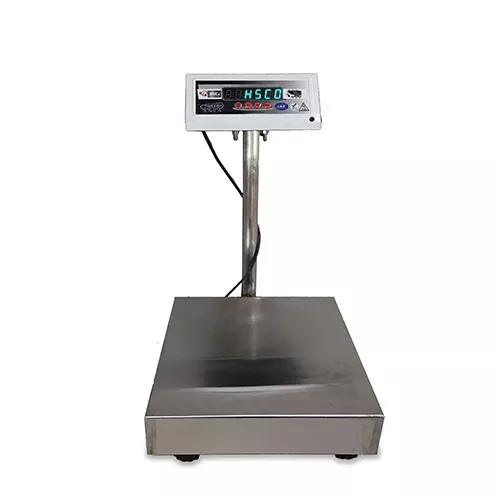
Seventy years of weighing, certified for the records and the regulated-medicine environment a blood centre and a biobank have to defend.
07 — WHY YOU CAN TRUST THE WEIGHT
For an instrument whose weight decides donor safety and unit integrity, accreditation is not decoration — each standard answers a question a medical officer, transfusion in-charge or lab director must ask before trusting the number behind a draw.
What each credential assures you
| Standard / accreditation | What it assures you |
|---|---|
| ISO 13485:2016 | A quality-management system specific to medical devices — assurance that the weighing instruments serving your transfusion workflow are built to medical-device discipline. |
| 21 CFR Part 11 | Electronic-record and electronic-signature controls — time-stamped, attributable, tamper-evident draw records of the kind a Schedule F audit and a quality system expect. |
| NABL | Calibration traceable to national standards — the draw mass and back-calculated volume you record mean the same to you, your auditor and your component lab. |
| GMP | Manufacturing aligned to good-manufacturing-practice expectations for equipment serving a regulated medicine supply chain — blood is a drug under the D&C Act. |
| ISO 9001:2015 | A consistent, audited quality-management system behind the instruments your donor-safety and yield decisions depend on. |
| CE · RoHS | Conformity for equipment use and restricted hazardous substances — relevant for instruments in a clinical and laboratory environment. |
- ISO 9001:2015
- ISO 13485:2016
- ISO 14001:2015
- 21 CFR Part 11
- GMP
- NABL
- PESO
- CE
- RoHS
- IP68
- IP69
- MSME
- CMMI Level 3
Built on seven decades, certified across the stack
Hindustan Scale Co. has manufactured weighing instruments since 1955; the Blue Whale Technology division adds the connected, audit-grade data layer that turns a draw weight into a defensible transfusion record. The credentials above are not a back-page list — each maps to a question a medical officer, transfusion in-charge or lab director is right to ask before trusting a weight that decides donor safety, unit integrity and component yield.
Certifications and accreditations are held by Hindustan Scale Co. / Blue Whale Technology; the specific certification applicable to a given product configuration is confirmed at the point of supply. NABL refers to HSCo’s calibration capability traceable to national standards, not to a certified accuracy rating of any individual instrument; 21 CFR Part 11 and ISO 13485 alignment refer to record-keeping and quality-system controls, not to regulatory clearance of any product or donation.
The cost of an unverifiable weighing core recurs on every donation; the cost of calibrating it correctly is paid once.
08 — WHAT A TRACEABLE DRAW PAYS BACK
Set what an uncalibrated, unrecorded draw risks against what a traceable, captured weight returns, and the payback is rarely in doubt — because the downside is donor safety and wasted units, every day.
Under-drawn units wasted and over-drawn donors put at risk, because the cut-off fires on an unverified mass.
Skewed anticoagulant ratios and missed platelet yields, traced back too late to a starting mass nobody could confirm.
Draw records that cannot be defended on a Schedule F audit, because the weight was never calibrated, captured or attributed.
Every draw weighed on a NABL-traceable core, so the donor is protected and the unit meets its 350/450 ml band.
Accurate starting mass that holds the anticoagulant ratio and lets the component reach its expected platelet yield.
An immutable, queryable Blue Whale record of weight, time and operator — audit-ready evidence for every donation.
Next step — a weighing-core and calibration review of your collection and aliquot stations. We assess the load cells and balances behind your monitors and biobank bench, fit NABL-traceable calibration so the displayed volume is true, and scope a Blue Whale record that logs every donation’s weight, time and operator into an immutable, queryable trail feeding your hospital systems — sized to your centre and your draw volumes. Talk to Hindustan Scale Co. and Blue Whale Technology to schedule it.
Evidence base
Figures and regulations cited here are current as of June 2026. Standards and legal provisions are attributed to their primary source; vendor, representative and computed figures are identified as illustrative or manufacturer-stated. The chart in section 02 is plotted from the NBTC standard as published; the chart in section 04 is illustrative, computed from the gravimetric conversion volume = mass / 1.053. No statistic appears that is not listed below.
- Standards for Blood Banks / Blood Centres — National Blood Transfusion Council (NBTC), NACO, MoHFW, Government of India
Primary. - Regulatory Requirements of Blood and/or its Components — Guidelines for Blood Bank (CDSCO, MoHFW, Government of India)
Primary. - Schedule F (See rule 78 and Part X) — Drugs and Cosmetics Rules, 1945 (statutory text); Section 122G — The Drugs and Cosmetics Rules, 1945 (Indian Kanoon)
Primary statutory text. Part XII-B/XII-C standards and licensing Rules 122-G to 122-O. - A review of legal, regulatory, and policy aspects of blood transfusion services in India (Asian J Transfus Sci / PMC8628249)
Peer-reviewed secondary. - Specific gravity of blood components, Change Notification No 20, 2015 (JPAC / UK Transfusion Guidelines)
Primary guideline body. Whole-blood density commonly cited ~1.05–1.06 g/ml; basis for back-calculating volume from measured mass. - Blood Hemoglobin Screening (Specific Gravity Method) — 1.053 = 12.5 g/dL Hb minimum (Ricca Chemical, CLIA method reference); Determination of the Volume of Apheresis Products Based on Weight in Grams (Blood, ASH, peer-reviewed)
Method/peer-reviewed reference. - Blood Collection Monitor specifications — LBMO-A11 (Labtron), LMBCM-A100 (Labmate), D601 (Terumo Penpol)
Vendor / representative spec. - ISO 20387:2018 — Biotechnology — Biobanking — General requirements for biobanking (ISO); ISBER Best Practices: Recommendations for Repositories (ISBER)
Primary standard / recognised best practice.